









- Country: Canada
- Initial release: September 8, 2022 (Canada)
- Film Director: Pierre-Hugues Dallaire & Benoit Therriault
- Genre: CGI Animated
- Original Language: N/A
- Subtitle: N/A
- Running Time: 12 Minutes
- IMDB: 7.4 /10
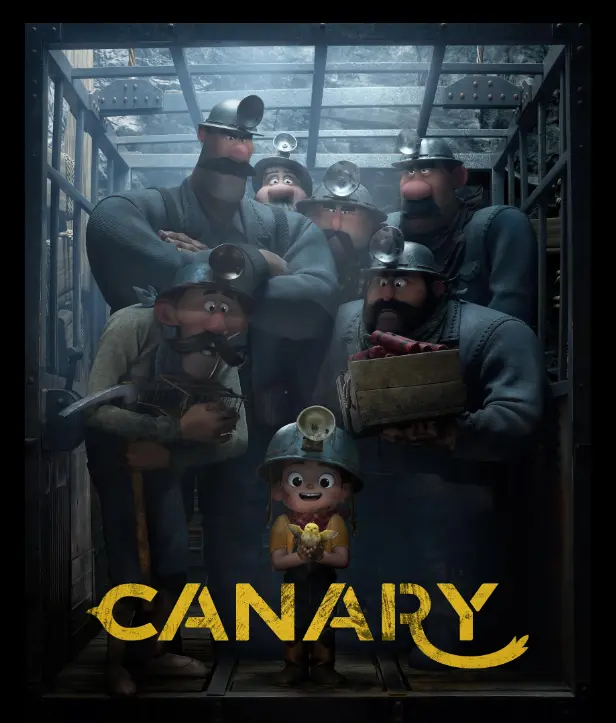
Canary is a CGI animation about a boy dreaming of freedom, directed by Pierre-Hugues Dallaire and Benoit Therriault. The short film uses symbolic visuals, cinematic lighting, and emotional realism to explore confinement, resilience, and the psychological meaning of liberation through advanced computer-generated animation techniques.
cMovie.Asia
The CGI Animation Boy Dreaming of Freedom in Canary by Pierre-Hugues Dallaire and Benoit Therriault is a visually stunning and emotionally layered short film that explores confinement, imagination, and symbolic liberation. Through advanced CGI techniques, cinematic lighting, and subtle character animation, the film transforms a simple narrative into a powerful reflection on autonomy and resilience. This artistic and technical breakdown examines its deeper meaning, storytelling structure, and animation craftsmanship in the context of modern CGI filmmaking
At its foundation, Canary examines a universal psychological experience: the desire for freedom when autonomy is restricted. The “canary” metaphor is critical. Historically, canaries were used in coal mines to detect toxic gases—symbolizing vulnerability, warning, and fragility in confined systems. In this film, the metaphor extends beyond safety into existential yearning.
The boy is not simply dreaming of escape. He is processing confinement through imagination. This distinction matters.
Table of Contents
The Psychological Dimensions of “Dreaming of Freedom”
From a developmental psychology perspective, the theme resonates strongly with early adolescent cognition. Research in child development (e.g., autonomy development theory, Deci & Ryan’s Self-Determination Theory) shows that autonomy is a primary psychological need alongside competence and relatedness.
When autonomy is restricted, children often:
- Develop vivid internal fantasy worlds
- Display heightened symbolic thinking
- Use imagination as emotional regulation
Canary visually represents this internal coping mechanism.
Why This Matters
The film reflects real psychological processes:
| Psychological Concept | Film Representation |
|---|---|
| Autonomy restriction | Confined setting |
| Emotional suppression | Muted color palette |
| Internal resilience | Expanding visual space |
| Symbolic transformation | Canary metaphor |
The directors demonstrate a sophisticated understanding of emotional storytelling that aligns with established psychological models rather than relying on melodrama.
CGI Technology: How the Film Achieves Emotional Realism
Modern CGI animation (2025–2026 standards) relies on physically based rendering (PBR), global illumination systems, and advanced facial rigging systems. Canary utilizes several high-level production techniques:
1. Physically Based Lighting
Naturalistic lighting enhances emotional authenticity. Subtle volumetric light beams and shadow diffusion signal mood shifts.
- Low-key lighting = emotional restriction
- Expanding brightness = internal liberation
2. Micro-Expression Rigging
Advanced facial animation systems allow subtle muscular movements. The boy’s restrained expressions communicate internal struggle without exaggerated gestures.
3. Environmental Storytelling
Instead of heavy dialogue, the environment communicates emotional context:
- Tight framing = psychological compression
- Expanding camera movement = cognitive openness
4. Textural Realism
High-resolution surface textures (skin shaders, fabric physics, environmental detail) increase immersion and emotional credibility.
These techniques reflect industry-level CGI craftsmanship consistent with award-caliber short films in international festivals.
Symbolism and Visual Metaphors
The film’s title is not incidental.
The Canary as a Multi-Layered Symbol
- Fragility within confinement
- Warning system in controlled systems
- Hope through song
- Innate desire to fly
Unlike overt allegory, the symbolism in Canary is visually embedded rather than explained. This allows viewers to interpret meaning organically.
Color Psychology
- Desaturated tones → Emotional suppression
- Warm hues → Emerging hope
- Movement of light → Internal awakening
The directors employ cinematic language consistent with advanced animation theory rather than surface-level aesthetics.
Cinematic Techniques and Directorial Style
Pierre-Hugues Dallaire and Benoit Therriault are known for stylized yet emotionally grounded storytelling. In Canary, they demonstrate:
- Controlled pacing
- Minimalist dialogue
- Strong environmental symbolism
- Character-centered framing
Their approach aligns with contemporary short-form animated cinema that prioritizes psychological narrative over spectacle.
Why Canary Resonates in 2026
The film’s themes intersect with modern social realities:
- Digital isolation
- Academic pressure
- Structured childhood environments
- Social conformity
In a world where structured systems increasingly define young lives, the longing for freedom becomes culturally relevant.
This contextual resonance enhances its artistic authority.
Educational and Clinical Relevance
As a professional perspective, animated narratives like Canary are often used in:
- Media literacy education
- Adolescent counseling discussions
- Creative arts therapy
- Emotional intelligence workshops
The film can serve as a conversation starter about:
- Emotional confinement
- Personal autonomy
- Psychological resilience
When used responsibly, artistic media can support emotional reflection in structured therapeutic or educational settings.
Strengths of the Film
- Emotionally mature storytelling
- Technical CGI excellence
- Minimal reliance on dialogue
- Strong symbolic cohesion
- Cultural relevance
Potential Interpretations
Art films allow layered meaning. Canary may be interpreted as:
- A metaphor for childhood under rigid systems
- A commentary on emotional suppression
- An allegory for social conformity
- A study of imagination as psychological survival
The film’s strength lies in allowing multiple interpretations without losing narrative clarity.
Final Analysis
Canary by Pierre-Hugues Dallaire and Benoit Therriault is a technically advanced and emotionally intelligent CGI short that explores the universal longing for freedom through the internal world of a confined boy. Its strength lies in subtle symbolism, high-level animation craft, and psychologically grounded storytelling.
Rather than offering a simplistic escape narrative, the film suggests that imagination itself can be a form of liberation. By combining cinematic discipline, sophisticated CGI engineering, and layered metaphor, Canary stands as a compelling example of how modern animation can function as serious artistic expression.
In 2026’s landscape of digital storytelling, it represents the convergence of technical mastery and human-centered narrative—a benchmark for emotionally driven CGI short films.







Canary by Pierre-Hugues Dallaire and Benoit Therriault is a beautifully crafted CGI animation that tells the story of a boy dreaming of freedom within a confined environment. Though minimal in dialogue, the short film communicates powerful emotional depth through visual storytelling, symbolic imagery, and refined cinematic technique.
The narrative centers on psychological confinement rather than physical imprisonment. Through muted color palettes, tight framing, and restrained character movement, the directors establish a sense of limitation. As the boy’s imagination awakens, lighting expands, motion becomes more fluid, and space appears to open—subtly visualizing his internal desire for autonomy. The symbolic use of the “canary” reinforces themes of fragility, hope, and the instinct to break free.
Technically, Canary demonstrates high-level CGI craftsmanship. Realistic rendering, nuanced facial animation, and carefully controlled lighting create emotional authenticity without overwhelming the viewer. Every design choice serves the story, showing how modern CGI can elevate intimate narratives rather than rely on spectacle.
What makes the film particularly resonant is its contemporary relevance. In an era defined by structured systems and social pressure, the boy’s longing for freedom feels universal. Rather than offering a simple escape, Canary presents imagination as a form of liberation—an internal expansion of possibility.
Concise, elegant, and emotionally grounded, Canary stands as a strong example of how short-form CGI animation can combine technical excellence with meaningful storytelling.