








- Country: Korea
- Initial release: 2019 (Korea)
- Film Director: Lee Hae Jun, Kim Byung Seo
- Genre: Action, Intense, Thrilling
- Rate: 16+
- Original Language: Korean
- Subtitle: English
- Running Time: 128 Minutes
- IMDB: 6.2/10
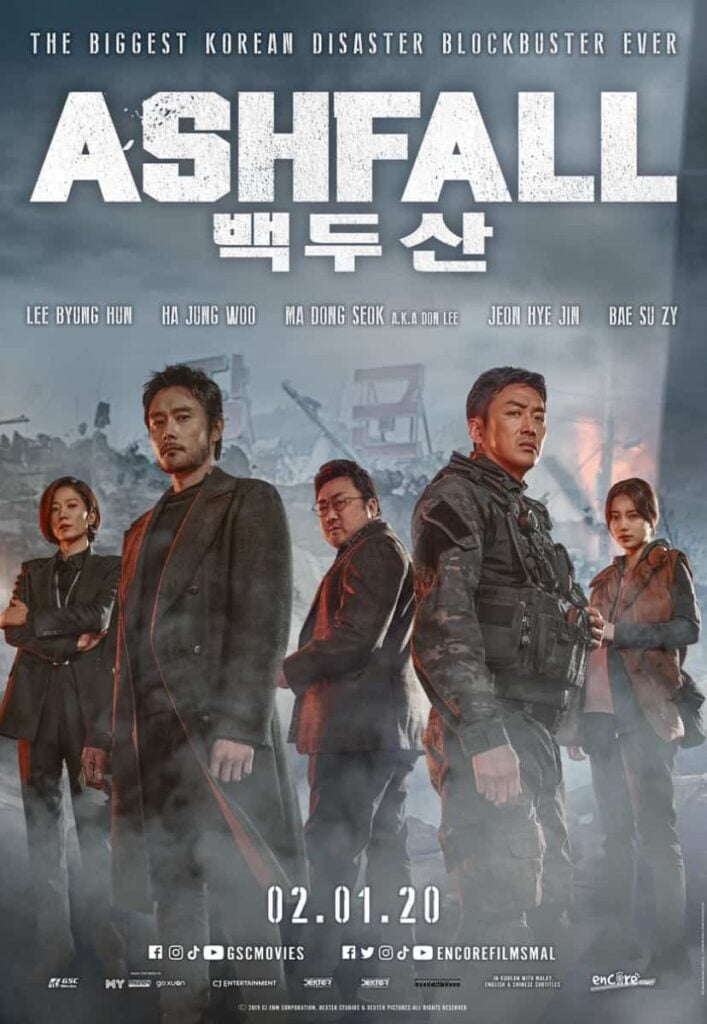
“Ashfall” (2019) is a Korean disaster-action film about a joint North–South mission to stop Mount Baekdu’s catastrophic eruption. It combines large-scale visual effects, strong performances, and geopolitical tension to create an engaging, emotional blockbuster experience.
cMovie.Asia
“Ashfall” (2019), a South Korean disaster-action blockbuster starring Lee Byung-hun, Ha Jung-woo, Jeon Hye-jin, Ma Dong-seok, and Suzy, delivers an explosive premise centered on the catastrophic eruption of Mount Baekdu. Blending emotional depth with geopolitical tension, the film attempts to merge high-scale spectacle with human-driven storytelling. This review examines its plot, performances, technical execution, and broader themes—all optimized to help readers searching for detailed insights on the film. Let’s dive into Ashfall (2019) Korean Movie Review
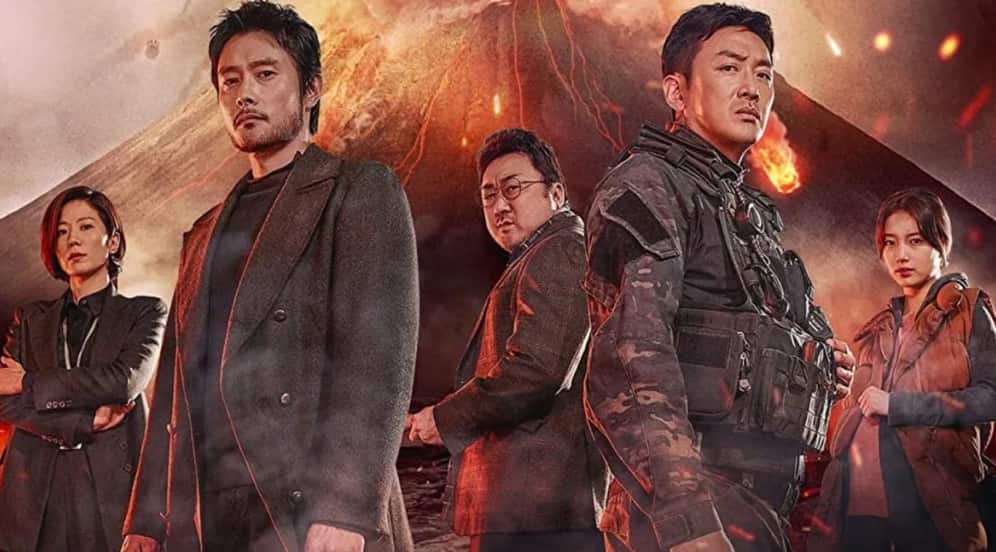
Table of Contents
What Is Ashfall (2019) About? — Plot Summary
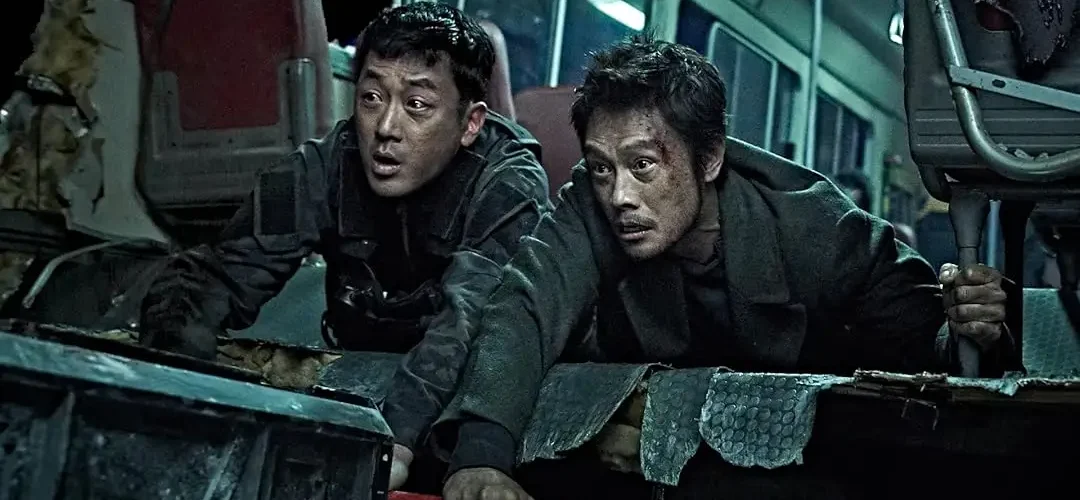
In a near-future Korean Peninsula, Mount Baekdu erupts with catastrophic force, threatening to devastate both North and South Korea. Captain Jo In-chang (Ha Jung-woo), a South Korean explosives expert, is tasked with leading a high-risk mission: prevent a second, even larger eruption that could annihilate the entire peninsula. To execute the plan, he must partner with Lee Jun-pyeong (Lee Byung-hun), a North Korean special agent whose shifting loyalties create tension, unpredictability, and reluctant cooperation. As governments grapple with political pressure, these two men embark on a desperate mission rooted in survival, sacrifice, and uneasy unity.
Performances: A Strong Cast Anchors the Chaos
Lee Byung-hun
Lee Byung-hun delivers a standout performance, portraying a morally ambiguous North Korean agent with cold precision and buried emotional conflict. His complex presence elevates the film’s stakes.
Ha Jung-woo
Ha Jung-woo grounds the story with human warmth, determination, and humor. His ability to shift between tension and levity brings balance to the film.
Ma Dong-seok
As the geologist whose theories form the backbone of the mission, Ma Dong-seok brings intellectual charm and comedic relief. His scientific authority adds credibility to the disaster elements.
Jeon Hye-jin and Suzy
Jeon Hye-jin portrays a government official under immense pressure, adding political depth. Suzy delivers emotional grounding as Jo’s wife, facing survival challenges in Seoul.
Direction and Pacing
Directed by Lee Hae-jun and Kim Byung-seo, “Ashfall” ambitiously mixes disaster spectacle with geopolitics. The pacing remains brisk, maintaining tension through action sequences and character-driven moments. While tone shifts can feel abrupt—jumping between comedy, action, and sentimental drama—the film’s energy and momentum keep viewers engaged throughout.
Visual Effects and Cinematography
“Ashfall” distinguishes itself in Korean cinema with its large-scale visual effects:
- volcanic eruptions
- collapsing infrastructure
- ash-filled skylines
- high-impact explosions
Despite some inconsistent CGI moments, the overall execution is impressive for a domestic production, offering immersive visuals and atmospheric tension comparable to international disaster films.
Themes and Symbolism
Inter-Korean Cooperation
The film’s most daring thematic choice is framing unity between North and South Korea as a literal matter of survival. The eruption symbolizes political pressure and the fragile balance on the peninsula.
Sacrifice and Duty
Characters face life-or-death decisions that emphasize moral responsibility, national duty, and the weight of personal sacrifice.
Human Resilience
Beyond politics and explosions, “Ashfall” explores how individuals endure chaos, focusing on family, trust, and the will to survive.
Strengths
- Strong chemistry between Lee Byung-hun and Ha Jung-woo
- Ambitious disaster sequences rarely seen in Korean cinema
- Emotional storytelling within large-scale chaos
- Fast, engaging pacing
- Balanced mix of action, humor, and drama
Weaknesses
- Tonal shifts may feel inconsistent
- Some scientific logic is stretched for dramatic effect
- Occasional uneven CGI
- Limited development for some supporting characters
Final Verdict — Is Ashfall (2019) Worth Watching?
“Ashfall” (2019) is an ambitious, visually striking, and emotionally impactful blockbuster that demonstrates the evolution of Korean disaster filmmaking. Although uneven in tone at times, the film delivers gripping performances, strong character dynamics, and compelling set pieces that keep viewers invested.
Rating: 4 out of 5
A thrilling and memorable disaster-action film with depth and emotional resonance.
FAQs
What is the main story of Ashfall (2019)?
The Ashfall 2019 movie review highlights how the film follows a dangerous mission to stop a massive Baekdu Mountain eruption, blending Korean disaster film elements with emotional drama and geopolitical tension.
Is Ashfall (2019) worth watching for fans of disaster movies?
Yes. This Ashfall 2019 movie review shows that fans of Korean disaster films will appreciate its explosive sequences, strong performances, and dramatic portrayal of the Baekdu Mountain eruption.
How realistic is the science behind Ashfall (2019)?
According to this Ashfall 2019 movie review, the scientific aspects of the Baekdu Mountain eruption are dramatized for cinematic tension,
Who delivers the strongest performance in Ashfall (2019)?
The Ashfall 2019 movie review notes that Lee Byung-hun and Ha Jung-woo deliver standout performances, elevating the film’s emotional and action-driven scenes within the Korean disaster film genre.
What themes stand out in Ashfall (2019)?
This Ashfall 2019 movie review identifies themes of sacrifice, inter-Korean unity, and survival under extreme conditions, woven into the storyline centered on the Baekdu Mountain eruption.









Ashfall (2019) is a fast-paced Korean disaster blockbuster that blends explosive action with human emotion. The film imagines a catastrophic eruption of Mount Baekdu and follows an unlikely joint mission between South and North Korea to prevent total devastation. What makes Ashfall engaging is not only its scale—collapsing buildings, ash clouds, and chaotic rescue attempts—but also the chemistry between its leads, Ha Jung-woo and Lee Byung-hun. Their dynamic creates tension, humor, and heart in a story that could have easily relied only on spectacle.
The movie balances geopolitical drama with personal stories of sacrifice, especially through characters fighting to reunite with their families amid chaos. While some scientific and political elements lean toward exaggeration, they serve the film’s intention: delivering an entertaining, emotionally charged disaster narrative with a uniquely Korean perspective.
Ashfall may not redefine the genre, but its mix of action, character-driven moments, and regional context sets it apart from typical Hollywood disaster films. It’s an exciting, emotional ride that remains memorable long after the ash settles.