









- Country: South Korea
- Initial release: 2020 (South Korea)
- Film Director: Hong Won-chan
- Genre: Action, Action, Crime, Thriller, Revenge
- Rate: 15+
- Original Language: Korean
- Subtitle: English
- Running Time: 114 Minutes
- IMDB: 6.8 /10
Deliver Us From Evil (2020) is a Korean neo-noir action thriller that follows hitman In-nam on a desperate rescue mission while being hunted by a ruthless assassin. This analysis explores its themes, style, characters, and impact within modern Korean cinema.
cMovie.Asia
Deliver Us From Evil (2020) analysis reveals why this Korean neo-noir action hit became a modern classic. Blending brutal combat, moral ambiguity, and emotional depth, the film follows In-nam’s desperate search for a kidnapped girl while evading Ray, one of Korean cinema’s most chilling villains.
Korea’s 2020 action thriller Deliver Us From Evil stands out as a stylish, brutal, and emotionally charged neo-noir film that blends kinetic action with a gritty narrative of guilt, revenge, and redemption. Directed by Hong Won-chan and starring Hwang Jung-min, Lee Jung-jae, and Park Jung-min, the film became a box-office hit, praised for its striking cinematography, character-driven tension, and relentless pacing. This long-form SEO-optimized analysis explores the film’s story, characters, themes, production style, and cultural impact—crafted for users seeking in-depth commentary with strong Google SERP intent.
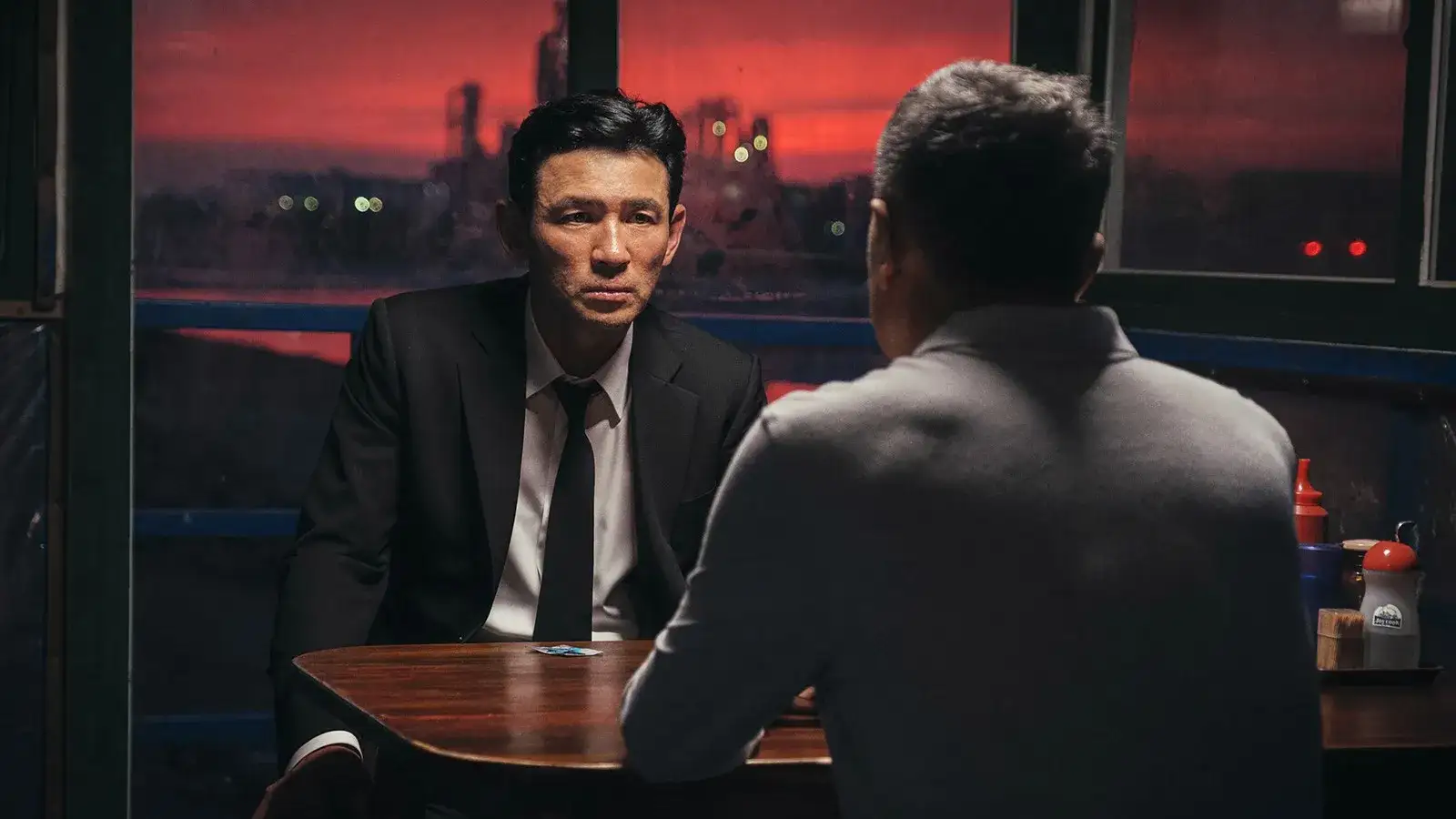
Table of Contents

Plot Overview: A Crime Thriller Fueled by Vengeance
At the center of the story is In-nam (Hwang Jung-min), a former government assassin who has retired to Thailand after his final mission. His life of violence is interrupted when he learns that his former lover has been murdered, and that he may have a daughter he never knew existed. Determined to rescue the kidnapped girl, he travels across Thailand to dismantle the trafficking ring responsible.
Meanwhile, the word of his assassination spreads—and the ruthless enforcer Ray (Lee Jung-jae), known simply as “The Butcher,” is determined to exact revenge for his brother’s death. What follows is a brutal cat-and-mouse chase through Bangkok, with both men tearing through underworld networks as their paths collide.
The narrative is intentionally lean, focusing more on mood, tension, and the deadly pursuit than on complex plot layers. This simplicity allows the emotional undercurrents—especially In-nam’s desperation to save a child he barely knows—to resonate more strongly.
Character Analysis
In-nam: The Ghost of His Own Past
Hwang Jung-min plays In-nam with quiet intensity—cold, stoic, but carrying deep emotional scars. He embodies the classic lone-wolf assassin archetype, but his vulnerability strikes a chord. His journey is not about redemption in a traditional sense, but about responsibility, regret, and the thin line between a killer’s instinct and a father’s love.
Ray: Stylish, Terrifying, and Unrelenting
Ray is one of modern Korean cinema’s most memorable villains. Lee Jung-jae transforms into a flamboyant yet terrifying force—a man with elegance in appearance but absolute brutality in methods. His sadistic precision and theatrical menace give the film an unpredictable edge, elevating the tension each time he appears.
Yoo Yi: Representation and Humanity
Park Jung-min delivers a standout performance as Yoo Yi, a transgender woman who helps In-nam navigate Bangkok’s underworld. Yoo Yi brings humor, emotion, and humanity to the film, avoiding caricature and grounding the story with genuine warmth. Her presence also reflects broader shifts in Korean cinema toward more inclusive character representation.
Themes: Violence, Redemption, and Moral Ambiguity
Violence as Language
In Deliver Us From Evil, violence is not mere spectacle—it’s communication. Both protagonist and antagonist express emotion, motive, and identity through physical confrontation. The choreography is designed to feel weighty, raw, and personal.
Fathers and Children
At its heart, the film explores the painful distance between fathers and their offspring. In-nam’s quest to save his daughter acts as a metaphor for confronting the consequences of a life built on destruction.
The Inescapability of the Past
Every character is defined by their past decisions. Whether it is In-nam’s killings or Ray’s familial vengeance, the story portrays violence as a cycle that traps its participants. The film’s bleak tone embodies this inevitability.
Cinematography and Style
The film’s aesthetic is one of its most striking features. With saturated neon colors, gritty street-level camera work, and moody lighting, it channels the atmosphere of Hong Kong thrillers and classic neo-noir influences.
Action scenes are shot with close-quarters realism, using handheld cameras and minimal CGI to maintain immersion. The physicality of the performers—especially the brutal knife fights—creates a visceral, grounded experience.
The Bangkok and Tokyo locations add cultural depth, amplifying the sense of foreignness, danger, and disorientation experienced by the characters.
Action and Choreography: Precision Over Flashiness
The fight scenes prioritize realism over spectacle. Each punch, slash, and bullet feels consequential. Unlike action films that lean on acrobatics or long tracking shots, Deliver Us From Evil opts for tense, compact choreography that reinforces the characters’ brutality.
The confrontation between In-nam and Ray is built on psychological intensity as much as physical force. Their eventual showdown is one of the most memorable set pieces in recent Korean action cinema—a culmination of tension, rage, and stylistic precision.
Music and Sound Design
The soundtrack combines industrial tones, heavy percussion, and ambient noise to create a haunting soundscape. It mirrors In-nam’s emotional state—cold, tense, and mechanical—while Ray’s scenes often carry sharper, darker audio cues to emphasize his predatory presence.
The film uses silence strategically as well. Moments when sound drops out amplify dread and reflect the character’s inner turmoil.
Cultural Impact and Box Office Success
Released during the pandemic era, Deliver Us From Evil became one of 2020’s highest-grossing Korean films, attracting audiences with its star-powered cast and stylish execution. The movie’s success reaffirmed the global appeal of Korean cinema, especially in the action-thriller genre.
The film also sparked discussion around LGBTQ representation in mainstream Korean movies due to Yoo Yi’s character—an important milestone amid evolving cultural norms.
Why the Film Resonated with Audiences
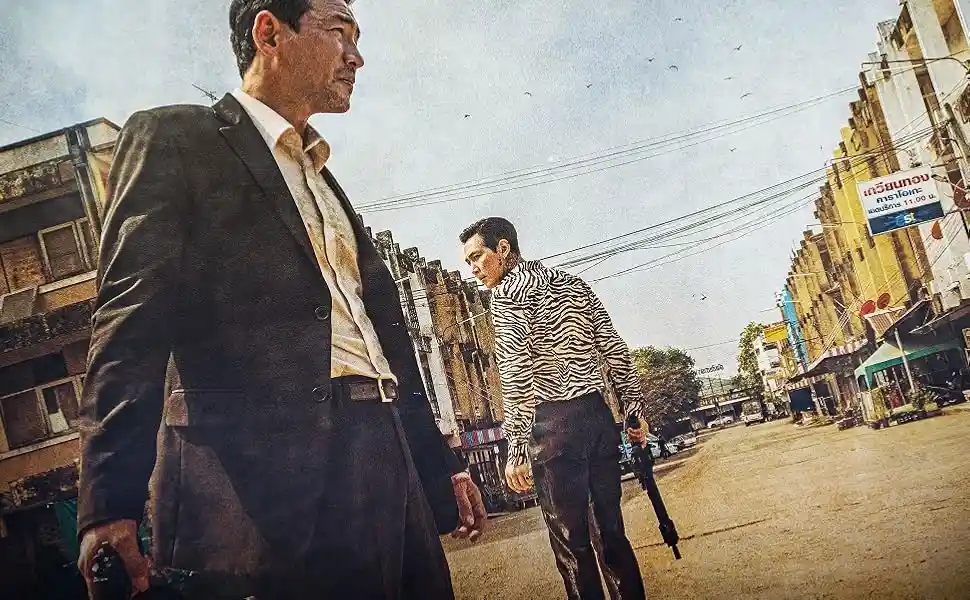
- Star performances: The iconic duo of Hwang Jung-min and Lee Jung-jae drew wide audience interest.
- Stylish, tense atmosphere: The neo-noir aesthetic distinguishes it from typical action thrillers.
- Brutal yet emotional narrative: Its core story of a father figure trying to save a child adds emotional weight to the violence.
- Fresh setting: The Bangkok backdrop provides a distinct visual identity.
Audiences who enjoy gritty thrillers like The Man from Nowhere, A Bittersweet Life, or The Chaser often find Deliver Us From Evil satisfying for its similar thematic DNA.
Critical Reception
Critics praised:
- The intense performances of the leads
- The stylish cinematography
- The high-caliber action sequences
- Park Jung-min’s empathetic portrayal
Some critics noted its narrative simplicity, but many argued that its focus on mood and character made it more effective.
Final Verdict
“Deliver Us From Evil” (2020) is a visually striking, emotionally charged neo-noir action thriller that pushes the boundaries of Korean filmmaking. With powerhouse performances, slick direction, and grounded, visceral action, it remains one of the standout Korean movies of the 2020s. For fans of hard-hitting crime thrillers with depth, it is a must-watch.
FAQs
What makes Deliver Us From Evil (2020) a standout Korean neo-noir thriller?
Deliver Us From Evil (2020) excels through its gritty neo-noir visuals, intense performances, and stylish action scenes. This Korean thriller blends emotional storytelling with relentless pacing, making the Deliver Us From Evil 2020 analysis essential for genre fans.
Who are the main actors in Deliver Us From Evil (2020)?
Deliver Us From Evil (2020) stars Hwang Jung-min as In-nam and Lee Jung-jae as Ray. Their chemistry and contrasting portrayals elevate this Korean neo-noir thriller, adding depth to any Deliver Us From Evil 2020 analysis.
What themes define Deliver Us From Evil (2020)?
Key themes include redemption, violence, fatherhood, and revenge. These topics shape both character arcs and action sequences, enriching a comprehensive Deliver Us From Evil 2020 analysis and enhancing the film’s neo-noir identity.
How does Deliver Us From Evil (2020) differ from other Korean action films?
Deliver Us From Evil (2020) distinguishes itself through its Thai backdrop, neo-noir style, and emotionally driven narrative. Its immersive cinematography and grounded brutality are central to any Deliver Us From Evil 2020 analysis.
Is Deliver Us From Evil (2020) worth watching for action fans?
Absolutely. Deliver Us From Evil (2020) offers tight choreography, layered characters, and a relentless cat-and-mouse structure. Viewers seeking intense Korean neo-noir thrills will find this film a must-see based on any Deliver Us From Evil 2020 analysis.









Deliver Us From Evil (2020) delivers a ruthless, stylish, and emotionally charged blend of neo-noir action and character-driven drama. Hwang Jung-min anchors the film with a restrained but gripping performance as In-nam, a former assassin desperately trying to save a child tied to his past. Opposite him, Lee Jung-jae steals every scene as Ray, a flamboyant and terrifying killer whose presence elevates the tension with every appearance.
What makes the film stand out is its sharp visual identity—neon-soaked streets, gritty back alleys, and tightly choreographed close-quarters combat that feels raw and immersive. Director Hong Won-chan balances intensity with surprising emotional weight, helped by Park Jung-min’s heartfelt performance as Yoo Yi, who brings humanity and levity to an otherwise brutal story.
Though its plot is straightforward, the film’s relentless pacing, atmospheric world-building, and powerhouse performances make it one of the most memorable Korean action thrillers of the decade. “Deliver Us From Evil” is brutal, stylish, and unforgettable—essential viewing for fans of grounded, character-driven action.