








- Country: Korea
- Initial release: 2022 (Korea)
- Film Director: Kim Yong-hwa
- Genre: Action, Drama, Intense, Thrilling
- Rate: 16+
- Original Language: Korean
- Subtitle: English
- Running Time: 129 Minutes
- IMDB: 6.6 /10
Hansan: Rising Dragon (2022) is a visually striking historical war film that delivers intense naval battles, strong direction, and an inspiring portrayal of Admiral Yi Sun-sin. This review examines its story, performances, visuals, and historical depth to reveal why the film remains a standout Korean epic.
cMovie.Asia
Hansan: Rising Dragon Review (2022) is a sweeping cinematic retelling of one of Korea’s most iconic naval victories, and this full review explores how the film blends historical authenticity with blockbuster spectacle. Through masterful direction, immersive battle sequences, and a commanding portrayal of Admiral Yi Sun-sin, the movie captures the strategic brilliance and emotional stakes behind the Battle of Hansan while delivering a deeply engaging viewing experience.
Hansan: Rising Dragon (2022) is a sweeping naval war epic that reconstructs one of Korea’s most defining maritime victories through visually powerful filmmaking and disciplined storytelling. Directed by Kim Han-min, the film serves as the second chapter in his ambitious Admiral Yi Sun-sin trilogy, exploring the roots of courage, strategy, and leadership that shaped one of Korea’s greatest historical icons. More than a period blockbuster, this film is a study in precision — in tactic, tone, and emotional restraint — that results in one of the most compelling naval battle films of the decade.
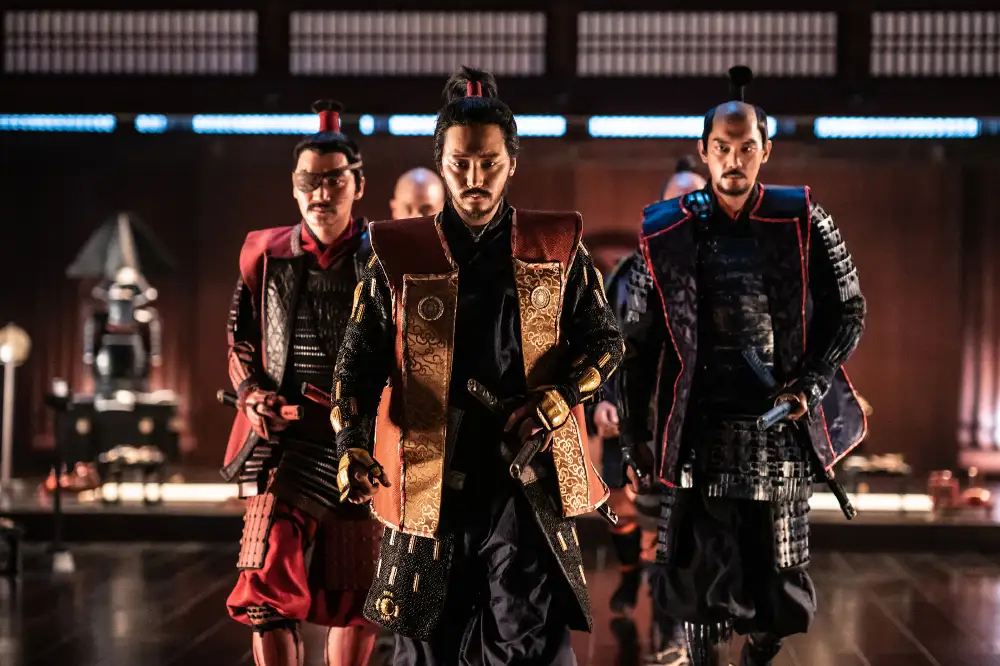
Table of Contents

A Strong Foundation: Setting the Stage
Set during the early phase of the Imjin War, Hansan: Rising Dragon dramatizes the 1592 Battle of Hansan Island, a confrontation that secured strategic control of the Korean coastline. Rather than relying solely on patriotic spectacle, the film frames the conflict as a high-stakes strategic duel between two commanders locked in a psychological contest long before their fleets exchange fire.
The narrative unfolds with deliberate pacing. Maps, scouting reports, enemy movements, and tactical predictions establish the storyline. By the time ships finally clash, the audience understands the logic behind every formation and maneuver, making the eventual explosion of warfare feel inevitable rather than accidental.
Direction: Tactical Cinema at Its Finest
Kim Han-min directs the film with complete commitment to detail. His cinematic language is built around clarity: clear geography, clear stakes, and clear strategic intention. Many war films fall into chaotic motion during battle scenes, but Hansan takes the opposite approach. The camera glides wide across the ocean, tracking formations, positioning, and the slow unfolding of Admiral Yi’s famous “crane-wing” tactic.
The pacing is steady, almost meticulous. Even quiet moments — officers preparing weapons, soldiers sharing glances of tension, or Admiral Yi alone with his thoughts — carry a sense of gathering pressure. Nothing in the film feels accidental. Kim constructs the battle like a conductor assembling an orchestra before the crescendo.
The result is commanding: a war film that values strategic suspense as highly as explosive action.
Cinematography and Visual Craft
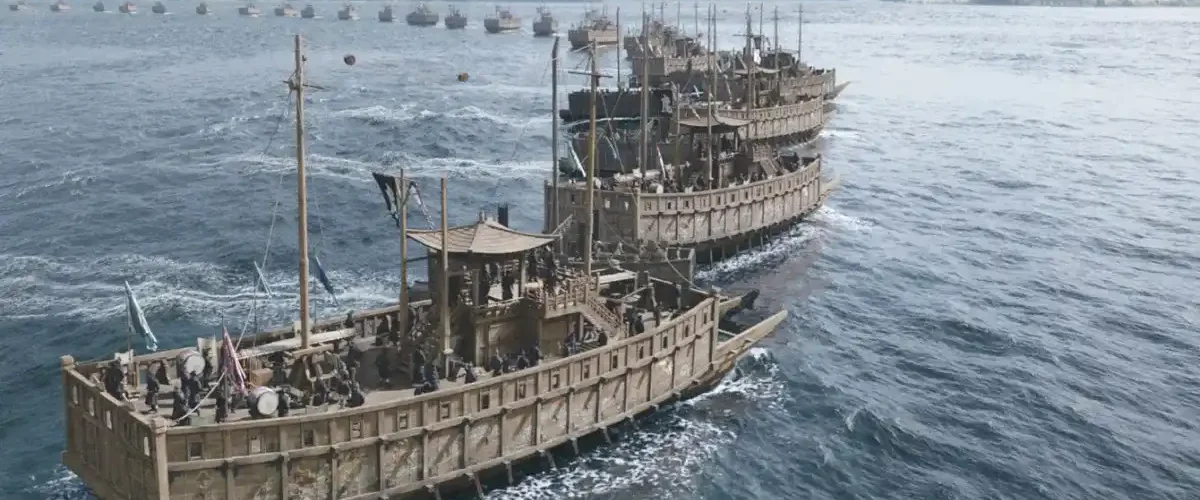
Visually, Hansan: Rising Dragon is a triumph. The cinematography captures the shimmering expanse of the ocean, the weighted movement of warships, and the interplay of smoke, fire, and sunlight across the battlefield. Wide shots are used extensively, allowing viewers to read the battle like a map. This clarity is crucial, because naval warfare can easily devolve into confusion; here, viewers always understand who is moving where and why.
Close-ups, by contrast, are deployed sparingly but effectively. They show sweat on brows, trembling hands gripping spears, or Admiral Yi’s deep, calculating gaze. These intimate frames humanize the story amid the mechanical choreography of war.
Visual effects enhance the spectacle without overwhelming realism. The destruction of hulls, the eruption of cannon fire, and the iconic turtle ship slicing through enemy lines feel weighty and grounded. The VFX team balances drama with historical plausibility, making the action thrilling without drifting into fantasy.
Sound Design and Score
The soundscape is immersive: creaking wood, snapping ropes, the pound of waves against armor, the roar of cannon fire. Each sound contributes to a sense of scale and danger.
The musical score shifts between restrained tension and sweeping orchestral bursts. Brass-heavy motifs underscore Yi Sun-sin’s command, while percussion heightens the urgency of battle preparations. The score never overwhelms the scene; instead, it binds emotion and strategy into a cohesive experience.
Performance Analysis
Park Hae-il as Admiral Yi Sun-sin
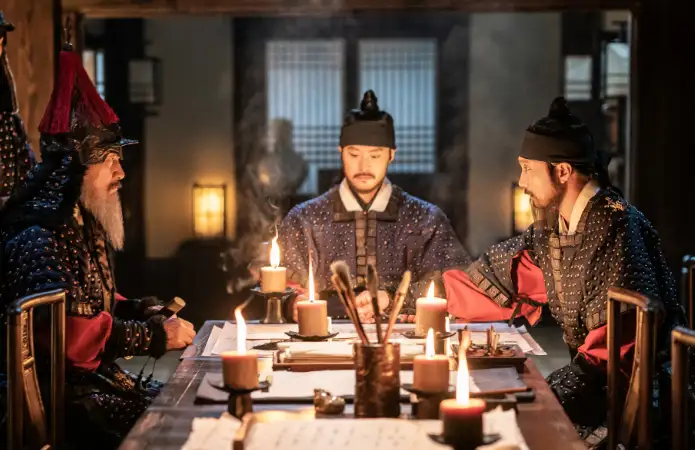
Park Hae-il delivers a portrayal defined by quiet authority. His Admiral Yi is calm, introspective, and deeply strategic — not the loud, bombastic general often found in war epics. Instead, he shows leadership through subtle expression: a tightened jaw, a lingering pause before issuing orders, a silent calculation of risks. This restrained performance reflects a commander constantly evaluating the greater cost of war and the responsibility he carries.
Byun Yo-han as the Antagonist
Byun Yo-han provides the film’s narrative tension. His antagonist is not a simplistic villain but a formidable tactician with his own convictions, pride, and ambition. This mutual competence between the opposing commanders elevates the stakes of the story. The battle becomes not a clash of nations, but a duel of brilliant minds.
Supporting Ensemble
The ensemble cast offers well-rounded performances. Crewmen reveal fear and bravery in equal measure, officers grapple with loyalty and doubt, and minor characters help show the wide human cost of war. While the film’s focus remains heavily on strategy, these smaller performances anchor the narrative emotionally.
Historical Interpretation
The film interprets the Battle of Hansan through a lens of strategic brilliance. It highlights Admiral Yi’s preparation, his emphasis on information gathering, and his disciplined use of formation-based tactics. Rather than turning Yi into an untouchable legend, the film humanizes him as someone who feels the weight of lives in every decision.
While certain dramatic liberties are inevitable, the core tactics — the feigned retreat, the crane-wing formation, and the calculated ambush — remain central to the story’s defensive and offensive balance. This fidelity to strategic detail makes the film not just entertaining but educational.
Themes: Leadership, Discipline, and Duty
Hansan: Rising Dragon is propelled by deep thematic undercurrents:
1. Leadership through restraint
Yi Sun-sin demonstrates that true leadership is not about aggression, but wisdom. His calm deliberation, measured risks, and unshakeable integrity form the thematic spine of the film.
2. Sacrifice and responsibility
The film constantly reminds viewers that every tactical decision carries human cost. Wide-angle battle scenes are punctuated with close, intimate shots of sailors facing death, reminding the audience that war is both a grand strategy and a deeply personal tragedy.
3. The power of unity
Korean forces succeed because they work cohesively — ship to ship, officer to soldier, leader to crew. The collective discipline contrasts sharply with the rivalry and fractured command of the opposing fleet.
Comparisons to Other Historical Films
Many historical war films rely on emotional melodrama or heavy sentimentalism. Hansan instead commits to intellectual tension. Compared to fast-paced or explosive war movies, it leans more on:
- tactical buildup rather than nonstop action
- strategic logic over emotional excess
- measured pacing instead of spectacle-driven chaos
This style sets it apart and gives it a unique place within the historical war genre.
Strengths
- Clear and coherent battle sequences that allow viewers to follow complex naval maneuvers.
- Stunning cinematography with a balanced use of VFX and practical effects.
- A powerful, grounded performance from Park Hae-il that redefines how historical heroes can be portrayed.
- Strong thematic depth focusing on leadership, duty, and collective strength.
- Meticulous direction that respects both history and audience intelligence.
Weaknesses
- Emotional distance:
Some viewers may find the film’s restrained character development too subdued compared to its heavily tactical focus. - Slow initial pacing:
The early exposition-heavy sequences may feel slow for those expecting immediate action. - Limited personal storytelling:
Side characters, while compelling, could have benefited from more individual arcs to enrich the emotional stakes.
Final Verdict
Hansan: Rising Dragon is a meticulous, visually commanding war epic that honors history while offering thoughtful cinematic craftsmanship. It diverges from typical war blockbusters by prioritizing strategy over spectacle, clarity over chaos, and moral leadership over dramatic exaggeration.
For viewers who appreciate intelligent filmmaking, detailed historical reconstruction, and large-scale naval combat rendered with both art and respect, Hansan stands out as one of the strongest Korean historical epics of recent years.
Rating: 8.7 / 10
A must-watch for fans of historical strategy, naval action, and character-driven leadership stories.
FAQs
What makes Hansan: Rising Dragon stand out among Korean naval battle films?
According to this Hansan Rising Dragon review, the film stands out for its realistic battle choreography, strategic brilliance, and strong historical grounding, making it a top Korean naval battle film review favorite.
Is Hansan: Rising Dragon historically accurate?
This Hansan Rising Dragon review highlights that the movie closely follows real events, though some scenes are dramatized. Fans seeking a Korean naval battle film review will appreciate the balance of accuracy and cinematic tension.
How does Admiral Yi Sun-sin’s portrayal contribute to the film’s impact?
The Hansan Rising Dragon review emphasizes that Admiral Yi Sun-sin is depicted as both strategic and deeply human, a portrayal that strengthens this Hansan movie analysis and deepens emotional engagement.
Are the naval battle scenes worth watching?
Yes. This Hansan Rising Dragon review praises the large-scale battle sequences, calling them some of the most impressive in modern Korean cinema, reinforcing its status in Korean naval battle film reviews.
Should international audiences watch Hansan: Rising Dragon (2022)?
Absolutely. As noted in this Hansan Rising Dragon review and Hansan movie analysis, the film’s storytelling, visuals, and universal themes make it compelling for global viewers.









Hansan: Rising Dragon (2022) delivers a gripping and visually commanding portrayal of one of Korea’s most defining naval victories. Centered on Admiral Yi Sun-sin’s strategic brilliance during the Battle of Hansan, the film blends historical authenticity with powerful cinematic execution. Its large-scale naval battles—meticulously staged with sweeping camera work and impressive VFX—capture the intensity of war while maintaining emotional clarity.
What elevates the movie is its disciplined storytelling. Rather than relying solely on spectacle, it builds tension through tactical planning, political obstacles, and Yi Sun-sin’s quiet but unwavering leadership. The performances are grounded, especially in moments that highlight sacrifice, loyalty, and national resilience.
While the narrative may feel straightforward compared to other Korean war epics, its strength lies in its restraint and precision. Hansan: Rising Dragon succeeds as both an inspiring tribute to a legendary commander and a sharp, memorable entry in historical action cinema.