








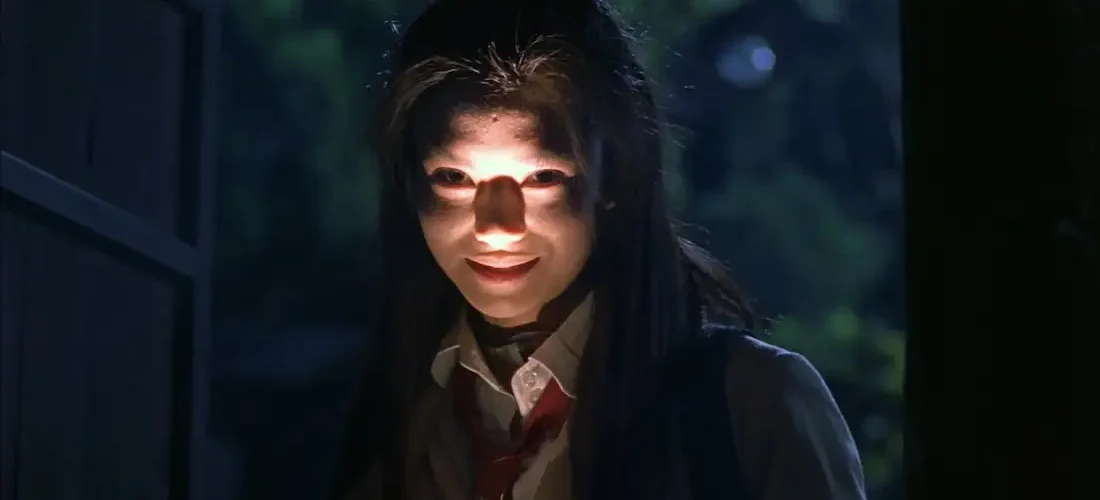
- Country: Japan
- Initial release: 2001 (Japan)
- Film Director: Kinji Fukasaku
- Genre: Action, Adventure, Dark, Intense
- Rate: 16+
- Original Language: Japanese
- Subtitle: English
- Running Time: 110 Minutes
- IMDB: 7.5 /10
Battle Royale 2001 Japanese Movie is a groundbreaking Japanese cult classic that redefined survival cinema by placing 42 students in a deadly government-enforced battle. Its intense themes, emotional depth, and social commentary continue influencing modern films, TV dramas, and survival-based entertainment worldwide.
cMovie.Asia
Battle Royale 2001 Japanese Movie remains one of the most influential and controversial films in modern cinema. This cult classic thrusts 42 students into a brutal survival game engineered by a collapsing government, blending raw action with sharp social commentary. Its emotional intensity and political relevance continue to redefine the survival genre and captivate global audiences.
Few films have left a deeper cultural imprint than Battle Royale (2001), the controversial Japanese dystopian thriller that ignited global debates, inspired future franchises, and changed the landscape of survival-themed storytelling. Directed by the legendary Kinji Fukasaku, Battle Royale blends high-stakes action with psychological realism, delivering a brutal yet emotionally resonant portrait of youth, fear, and the will to survive.
More than two decades after its release, Battle Royale remains as provocative as ever—an explosive film that continues to challenge viewers with its unsettling themes, razor-sharp social commentary, and unforgettable characters.
This article explores the film’s origins, themes, controversies, filmmaking techniques, and its lasting impact on global pop culture, while offering a fresh critical lens for today’s streaming audiences.

Table of Contents
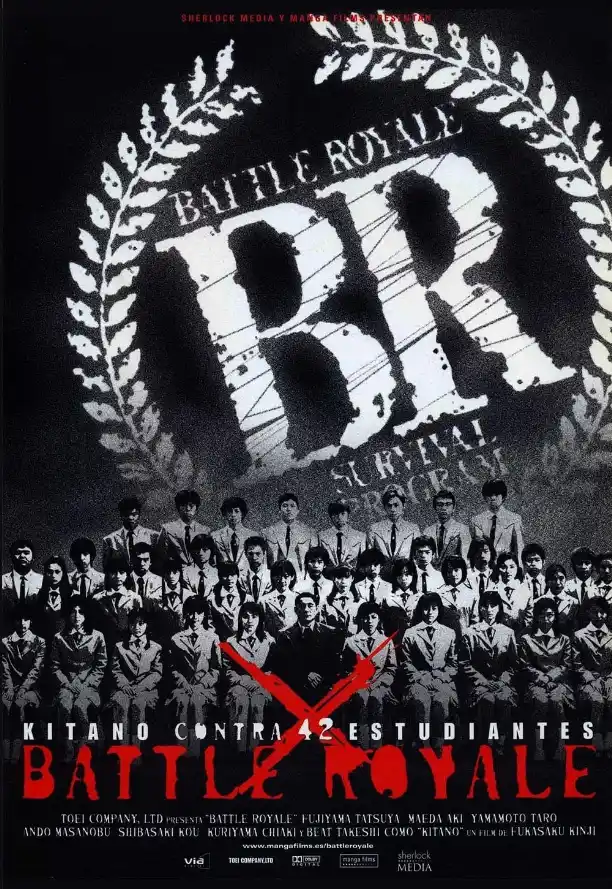
A Dystopian Premise Built on Social Tension
At the heart of Battle Royale lies a deceptively simple premise:
a classroom of 42 ninth-grade students are forced by law to fight to the death on a remote island—until only one student remains.
Set in an alternate-reality Japan plagued by economic instability, mass unemployment, and a youth rebellion crisis, the government enforces the “BR Act”, a radical solution meant to control unruly teenagers. Each year, one class is randomly selected to participate in the deadly program.
Fukasaku’s portrayal of state control, generational conflict, and social collapse provides more than shock value. Beneath its violent surface, Battle Royale is a story about:
- Friendship under pressure
- The fragility of trust
- Fear as a political tool
- The struggle between innocence and survival
The film’s intensity comes not just from the carnage, but from its emotional honesty—every act of violence is intertwined with loyalty, betrayal, romance, or desperation.
Characters That Elevate the Chaos
While the film is filled with unforgettable performances, three characters define the emotional core:
Shuya Nanahara (Tatsuya Fujiwara)
An orphaned student struggling with grief, Shuya represents the possibility of compassion in a collapsing society. His refusal to abandon his moral compass anchors the narrative.
Noriko Nakagawa (Aki Maeda)
Quiet, kind, and often underestimated, Noriko embodies hope and empathy. Her loyalty to Shuya stands in stark contrast to the violence around them.
Kazuo Kiriyama & Mitsuko Souma
Two of the most chilling antagonists in modern Japanese cinema, Kazuo and Mitsuko personify a world where cruelty is born from emptiness, trauma, or sheer sociopathy. Their presence elevates the stakes and forces viewers to confront uncomfortable truths about human nature.
Even minor characters leave strong impressions—each death feels meaningful because the film invests in its cast through flashbacks, brief emotional beats, and realistic teenage interactions.
A Masterclass in Tension and Pacing
Battle Royale is a film where every minute matters. The story moves with relentless momentum, blending:
- Kinetic action sequences
- Claustrophobic tension
- Moments of quiet reflection
- Unexpected humor and satire
Fukasaku’s handheld camera techniques give the film a raw, documentary-like feel. Instead of glorifying violence, the cinematography captures the chaos, confusion, and emotional turbulence of adolescents forced into impossible decisions.
The soundtrack—an intense mix of classical orchestration and modern arrangements—heightens the contrast between beauty and brutality, creating a haunting emotional experience.
Violence With Purpose, Not Exploitation
Though Battle Royale is infamous for its graphic violence, the film’s approach is fundamentally thematic, not exploitative. The violence serves three critical functions:
- A metaphor for social competition
The film exaggerates the pressures Japanese teens face—academics, conformity, expectations—by placing them in a literal life-or-death environment. - A critique of authoritarianism
The BR Act symbolizes political institutions weaponizing fear and punishment to maintain control. - An exploration of human behavior under extreme conditions
Every student reacts differently—some panic, some form alliances, some turn to violence, others renounce it entirely.
The result is a film that is less about slaughter and more about the human condition, filtered through the lens of youth.
Global Controversy and Censorship
Upon release in 2000 (Japan) and globally in 2001, Battle Royale immediately sparked controversy:
- Banned or restricted in multiple countries
- Criticized for involving minors in depictions of violence
- Debated in relation to real-world school violence issues
- Initially refused U.S. distribution for over a decade
But controversy only amplified its appeal. Bootlegs, imports, and online buzz fueled the film’s underground popularity, transforming it into a cult phenomenon long before streaming platforms existed.
The Legacy: A Blueprint for Modern Survival Genres

Battle Royale didn’t just influence pop culture—it reshaped it.
Its DNA is visible in:
- The Hunger Games
- Squid Game
- Alice in Borderland
- Fortnite, PUBG, Apex Legends, and countless other battle-royale games
- Modern dystopian films and thrillers
- Youth-focused survival stories worldwide
Although later franchises often softened the brutality or added sci-fi elements, Battle Royale remains the uncompromising original—raw, grounded, and emotionally ruthless.
Themes That Still Resonate Today
More than 20 years later, Battle Royale feels eerily relevant. Its themes echo contemporary concerns:
- Government distrust
- Economic instability
- The pressures placed on young people
- Fear-driven policies
- Social competition exacerbated by technology
- Isolation and mental health struggles
- The fragility of community during crises
The film communicates these ideas not through lectures, but through lived experience—students navigating terror, loyalty, love, manipulation, and sacrifice.
Why Battle Royale Still Matters
Battle Royale persists not because of its violence, but because of its emotional and philosophical depth. It asks questions that remain timeless:
- How far will people go to survive?
- What happens when a society stops listening to its youth?
- Does crisis reveal true character, or create it?
- Can compassion survive in a system built on fear?
The film’s ending offers no easy answers—only the haunting reminder that the real battle begins after survival.
A New Generation Discovers the Classic
In today’s streaming age, global audiences are re-evaluating Battle Royale with fresh eyes. Younger viewers, raised on modern survival franchises, often see the film as:
- More realistic
- More emotionally grounded
- More politically charged
- Less stylized but more impactful than newer media
Its resurgence has solidified its role as one of the most important Japanese films ever made—a masterpiece that blends action, emotion, philosophy, and rebellion.
Final Thoughts
Battle Royale (2001) stands not only as a cornerstone of Japanese cinema but also as a defining cultural artifact that continues to spark conversation, analysis, and creative inspiration. Its commentary on society, youth, and survival remains as sharp as ever, proving that the film is more than a thriller—it’s a mirror reflecting our deepest fears and collective struggles.
For viewers seeking a film that is gripping, challenging, and emotionally unforgettable, Battle Royale remains essential viewing.
FAQs
Why is Battle Royale (2001) considered a Japanese cult classic?
Battle Royale (2001) Japanese movie is considered a cult classic because its bold storyline, intense survival themes, and social commentary set a new standard for Japanese survival film narratives, influencing global cinema for decades.
What makes Battle Royale (2001) different from other survival films?
Unlike many modern cult classic cinema titles, Battle Royale (2001) Japanese movie focuses on emotional realism, student relationships, and political tension, making it a uniquely powerful Japanese survival film.
How did Battle Royale (2001) impact global entertainment?
The film inspired many works across movies, TV, and gaming. The Battle Royale analysis reveals its influence on titles like The Hunger Games, Squid Game, and popular battle-royale video games.
What themes stand out most in Battle Royale (2001)?
The strongest themes in Battle Royale (2001) Japanese movie include authoritarian control, youth rebellion, moral conflict, and psychological survival—core elements often explored in Japanese survival film discussions.
Is Battle Royale (2001) still relevant today?
Yes. As shown in every major Battle Royale analysis, the film’s examination of fear, social decay, and competition remains deeply relevant, securing its place in cult classic cinema and current pop-culture discourse.








Battle Royale (2001) remains one of Japan’s most provocative and influential films, blending shocking intensity with sharp social commentary. Director Kinji Fukasaku turns a brutal premise—students forced into a deadly government program—into a gripping exploration of fear, loyalty, and the darker edges of human nature.
What makes the film extraordinary is its emotional honesty. Each student’s response to survival reveals fragile friendships, buried tensions, and heartbreaking vulnerability. The raw handheld cinematography heightens the chaos, while the classical score adds an unsettling elegance to the violence. Performances by Tatsuya Fujiwara and Aki Maeda ground the film with sincerity and warmth, balancing the brutality with genuine humanity.
More than 20 years later, Battle Royale remains startlingly relevant, influencing everything from dystopian movies to modern survival games. It is not simply a violent spectacle but a bold reflection on authority, youth, and the cost of fear. This is a true cult classic—uncompromising, unforgettable, and still capable of sparking conversation.