









- Country: Japan
- Initial release: 2010 (Japan)
- Film Director: Takeshi Kitano
- Genre: Action, Crime, Thriller, Revenge
- Rate: R
- Original Language: Japanese
- Subtitle: English
- Running Time: 110 Minutes
- IMDB: 6.8 /10
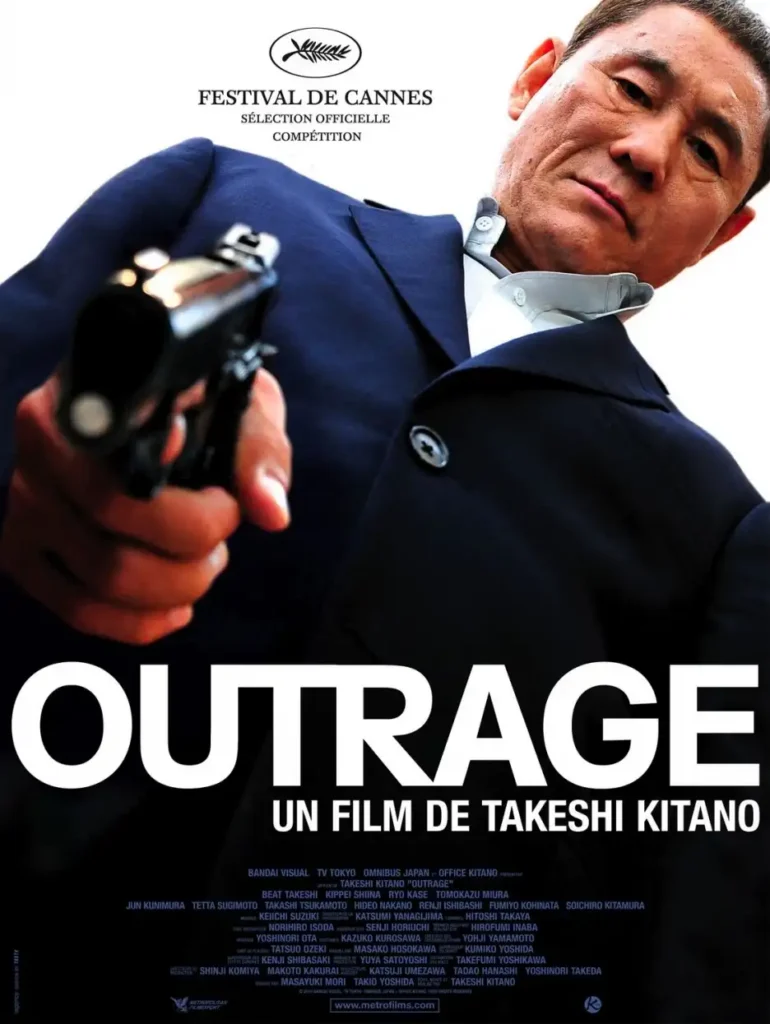
Outrage: Way of the Yakuza (2011) is a brutal, tightly structured crime film by Takeshi Kitano that exposes the violent hierarchy and internal politics of Japan’s yakuza world. Its stark realism, sudden violence, and minimalist style make it one of the most defining modern gangster films.
cMovie.Asia
The Outrage: Way of the Yakuza 2011 analysis reveals how Takeshi Kitano constructed a cold, calculated portrait of organized crime in Japan. Through brutal power struggles, rigid hierarchy, and Kitano’s signature minimalist direction, the film exposes the yakuza system as both a corporate machine and a violent trap where loyalty is merely a temporary currency.
When Outrage: Way of the Yakuza (2011) hit Japanese theaters, fans immediately recognized the film as Takeshi Kitano’s uncompromising return to the yakuza genre. The film is a raw, meticulously structured dive into betrayal, shifting loyalties, and violent ambition within Tokyo’s underworld. Unlike Kitano’s more contemplative works, Outrage embraces a cold, detached brutality that mirrors the emotionless efficiency of organized crime. Over the years, the film has gained international acclaim for its minimalistic style, razor-sharp dialogue, and ruthless pacing, cementing it as one of the most influential yakuza films of the 21st century.
This analysis breaks down the film’s themes, characters, directorial style, and cultural impact—while optimizing naturally for Google Search with strong keyword placement throughout.
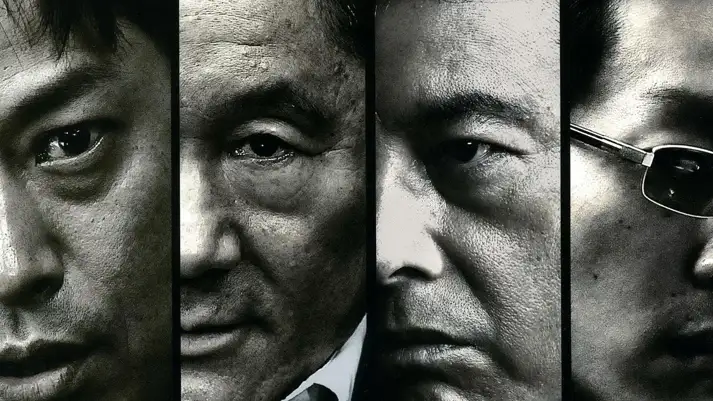
Table of Contents
A Story Built on Betrayal, Hierarchy, and Tradition
At its core, Outrage: Way of the Yakuza is a darkly satirical look at the internal politics of organized crime. The plot revolves around a series of escalating conflicts among factions within the powerful Sanno-kai crime syndicate.
A Hierarchy On the Verge of Implosion
The story begins with Sekiuchi, the deceivingly calm chairman of the Sanno-kai, who suspects one of his allied clans of disloyalty. His underboss, the cunning and manipulative Kato, pressures Ikemoto, the boss of a mid-level family, to “correct” the situation. Ikemoto then delegates the dirty work to Otomo, played by Kitano himself.
This chain of command—Chairman → Kato → Ikemoto → Otomo—is the backbone of the film’s narrative, highlighting the rigid hierarchy that governs yakuza operations. But the hierarchy is a trap. Every order becomes distorted, every loyalty becomes transactional, and every man becomes a pawn in a larger game. Kitano uses this structure to show that violence is not a chaotic outburst but an institutionalized routine, performed with the same regularity as business meetings.
Otomo: A Reluctant Warrior in a System Built to Devour Its Own
Kitano’s character, Otomo, is one of the most memorable yakuza protagonists in modern Japanese cinema. He is neither a noble antihero nor a charismatic villain. Instead, Kitano portrays Otomo as a weary soldier whose life is defined by obedience. His motivations remain ambiguous, which makes his violent actions feel unsettlingly realistic.
A Man Following Orders—Until Orders Destroy Him
Otomo is not driven by greed or ambition. He inflicts violence simply because he is told to, and because the world around him allows no other path. This makes him tragic rather than heroic. The more he follows commands, the deeper he sinks into conflicts he never intended to ignite.
Kitano intentionally refuses to romanticize Otomo. There are no grand speeches, no emotional backstory, no moral redemption—only the relentless forward motion of a man trapped in a system designed to eliminate him.
Kitano’s Signature Directorial Style: Minimalism, Precision, and Sudden Violence
Takeshi Kitano is known globally for his unique approach to yakuza cinema, and Outrage represents one of his most refined stylistic achievements.
1. The Power of Minimal Dialogue
Kitano famously prefers silence over unnecessary lines. Conversations in Outrage are brief, clipped, and filled with subtext. Many scenes rely entirely on body language, timing, and actors’ expressions. This creates a world where meaning is conveyed through silence, giving the film a tense, almost suffocating atmosphere.
2. Sudden, Unpredictable Violence
Unlike Hollywood crime films that glorify gunfights or choreographed action sequences, Outrage uses violence sparingly but explosively. When it occurs, it feels painfully real—quick, shocking, and deeply unsettling. Kitano understands that restraint intensifies impact, and he uses that principle masterfully.
3. Crisp Cinematography and Urban Stillness
The camera often remains static, capturing the yakuza in sterile environments such as offices, restaurants, and garages. These cold settings mirror the emotional emptiness of the characters. The clean, symmetrical compositions also make the bursts of violence feel even more jarring.
Themes: Power, Loyalty, and the Illusion of Honor
While Outrage can be enjoyed as a straightforward crime thriller, its deeper themes elevate it to classic status.
The Corruption of Power
The film portrays power as a force that corrupts absolutely. Those at the top manipulate those below them, pushing them into conflict for personal gain. The Sanno-kai is less a crime organization and more a machine of exploitation, where survival depends on eliminating rivals before they eliminate you.
Loyalty as Currency
Loyalty in Outrage is not emotional—it’s transactional. Characters swear allegiance only to benefit themselves. This leads to a chain of betrayals that ultimately exposes the hollow nature of the yakuza code.
Honor is an Illusion
Kitano dismantles the myth of the honorable gangster. The yakuza in Outrage talk about tradition, discipline, and loyalty, yet their actions contradict everything they claim to uphold. The film exposes honor as a performance used to justify cruelty and maintain hierarchy.
A Modern Evolution of the Yakuza Genre
Japanese cinema has a long tradition of yakuza stories, but Kitano’s approach in Outrage offers something distinct. Older yakuza films often portrayed gangsters as noble outlaws navigating moral dilemmas.
Outrage rejects this romanticism. Instead, it embraces a clinical realism where criminal life is a monotonous cycle of meetings, alliances, threats, and retaliations. This aligns the film closer to contemporary crime dramas than to classic yakuza films, giving it a modern tone that appeals to international audiences.
A Cold, Satirical Critique of the Corporate World
Interestingly, many critics have noted that the film’s structure mirrors corporate politics. The Sanno-kai syndicate resembles a strict Japanese corporation with its emphasis on hierarchy, obedience, and performance.
Kitano reinforces this comparison through visual cues—boardroom-like meetings, formal business attire, and meticulous reporting structures.
The message is subtle but powerful:
yakuza organizations and corporations may differ in legality, but the mechanisms of power are strikingly similar.
Performances: Understated, Naturalistic, and Intensely Human
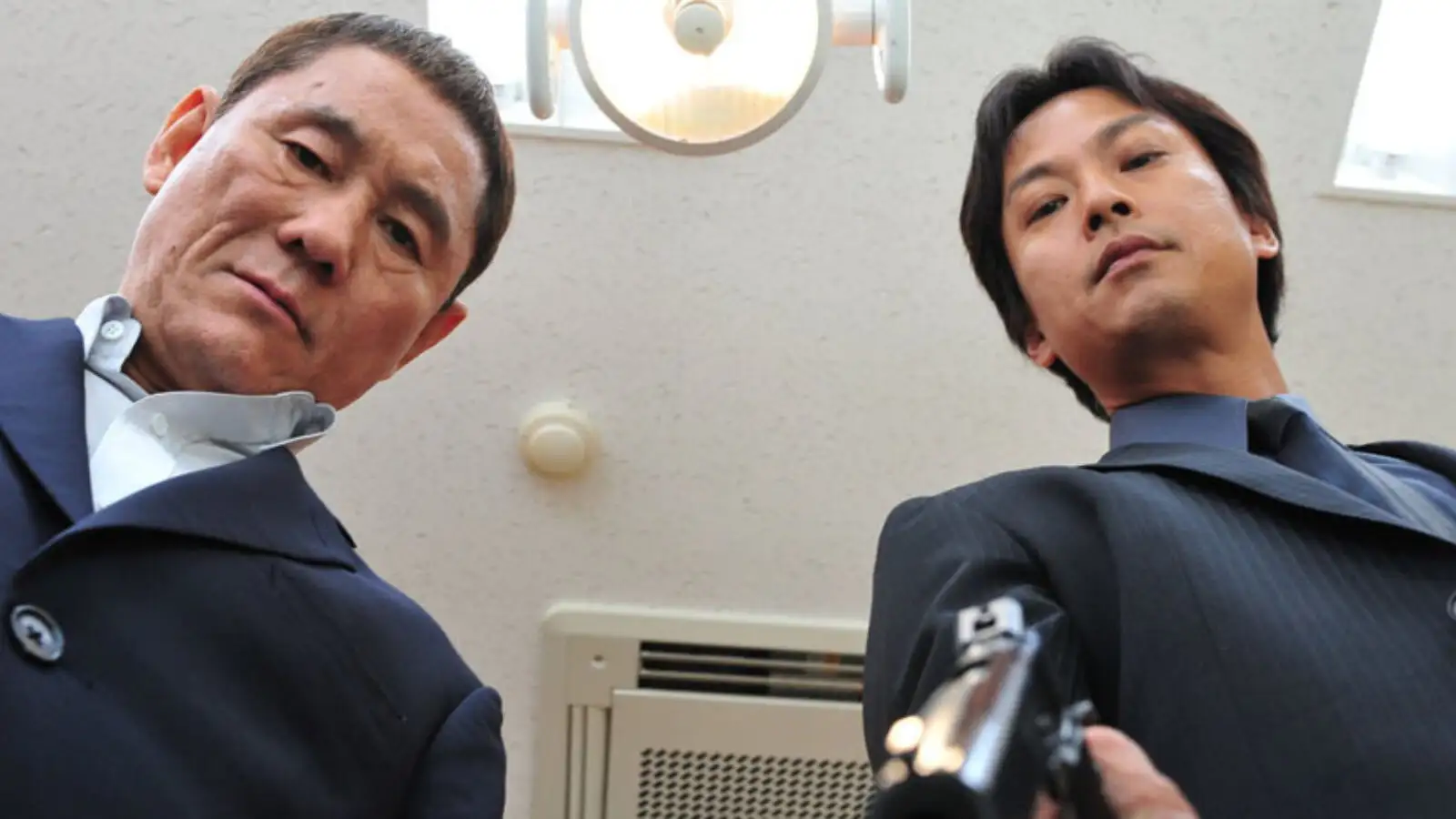
The cast of Outrage delivers exceptional performances that contribute to the film’s realism.
Takeshi Kitano as Otomo
His quiet, detached delivery enhances the character’s depth. Every small gesture carries meaning, and his cynicism gives the film its emotional anchor.
Kippei Shiina as Ishihara
His morally ambiguous and calculating demeanor creates one of the film’s most compelling antagonistic forces.
Jun Kunimura as Ikemoto
Known for his versatility, Kunimura brings tension and uneasiness to a boss who is both powerful and powerless.
Tomokazu Miura as Kato
Cold, manipulative, and decisive—Miura plays the perfect corporate-style villain.
Every actor avoids melodrama, grounding the film in a believable world where emotions are buried beneath social roles and obligations.
Cultural Impact and Legacy
Outrage: Way of the Yakuza was successful enough to generate two sequels—Outrage Beyond (2012) and Outrage Coda (2017)—forming a complete trilogy that explores the long-term consequences of the first film’s events.
The movie has influenced modern depictions of organized crime in Japan by pushing the genre toward more realistic and socially critical narratives. Internationally, it strengthened Kitano’s reputation as one of the defining voices in crime cinema.
Why the Film Still Resonates Today
More than a decade after its release, Outrage continues to hold relevance for several reasons:
- It captures universal themes of ambition, betrayal, and survival.
- It offers a brutally honest portrayal of human behavior under pressure.
- Its minimalist style stands apart from mainstream action cinema.
- It provides a stark critique of hierarchical power—whether criminal or corporate.
The film’s world is brutal, but it is also painfully recognizable.
Conclusion: A Sharp, Unforgiving Look at the Yakuza World
Outrage: Way of the Yakuza (2011) is one of Takeshi Kitano’s strongest achievements—a film that blends violent realism with precise storytelling and thematic depth. It is a chilling exploration of the yakuza system as a machine that destroys even the men who uphold it. For fans of Japanese cinema, crime dramas, or Kitano’s unique artistic voice, the film is essential viewing and remains a cornerstone of modern yakuza storytelling.
FAQs
What is Outrage: Way of the Yakuza (2011) about?
This Outrage: Way of the Yakuza 2011 analysis shows that the film explores internal power struggles, betrayals, and violent politics within Japan’s underworld, making it a defining Takeshi Kitano crime film.
Why is Outrage (2011) considered a major modern yakuza movie?
The Outrage: Way of the Yakuza 2011 analysis highlights its realistic brutality, minimalist style, and focus on hierarchy, making it a standout in modern yakuza movie analysis.
What filmmaking techniques does Takeshi Kitano use in Outrage (2011)?
According to this Outrage: Way of the Yakuza 2011 analysis, Kitano uses static camerawork, sudden violence, and minimal dialogue to create a chilling form of Japanese gangster cinema.
Who is the central character in Outrage: Way of the Yakuza (2011)?
The film centers on Otomo, played by Kitano. This Outrage: Way of the Yakuza 2011 analysis shows how Otomo embodies the weary enforcer trapped in a collapsing Takeshi Kitano crime film power structure.
What themes define Outrage (2011)?
Key themes from the Outrage: Way of the Yakuza 2011 analysis include betrayal, corrupted loyalty, power imbalance, and the corporate-like machinery of modern yakuza, defining top-tier Japanese gangster cinema.









Outrage: Way of the Yakuza (2011) is one of Takeshi Kitano’s most brutally precise crime films, delivering a cold, razor-sharp portrayal of Japan’s criminal underworld. Rather than glorifying the yakuza, Kitano exposes their world as a rigid, corporate-style machine driven by fear, betrayal, and violent ambition. The film’s minimalist dialogue and static camerawork create a tense atmosphere where every silence feels dangerous and every gesture carries weight.
Kitano’s performance as Otomo stands out—quiet, weary, and explosive when required. Violence arrives suddenly and without fanfare, making it feel disturbingly real. The layered hierarchy, shifting alliances, and power grabs keep the narrative unpredictable, pulling viewers deeper into a system designed to consume the very men who uphold it.
While some may find the emotional detachment unsettling, it is precisely this coldness that gives Outrage its unique edge. The film is a masterclass in controlled brutality, dark humor, and criminal politics, marking it as a modern essential in Japanese gangster cinema.