








- Country: South Korea
- Initial release: 2015 (South Korea)
- Film Director: Soo Sung Lee
- Genre: Romance, Historical, Thriller
- Rate: R
- Original Language: Korean
- Subtitle: English
- Running Time: 100 Minutes
Lost Flower: Eo Woo-dong is a 2015 Korean historical drama that explores the scandalous life of Eo Woo-dong, revealing themes of forbidden love, societal control, and female agency. This analysis breaks down the film’s storytelling, cultural backdrop, and emotional impact.
cMovie.Asia
Lost Flower: Eo Woo-dong is a Korean movie that reimagines the turbulent life of Eo Woo-dong, a figure remembered for her beauty, boldness, and defiance of rigid Joseon-era norms. This comprehensive Lost Flower Eo Woo-dong analysis explores the film’s narrative depth, sensual cinematography, and the societal pressures that shaped her notorious legacy. By blending emotion, politics, and romance, the movie offers a provocative portrayal of a woman determined to reclaim her identity in a restrictive world.
Lost Flower: Eo Woo-dong is a 2015 South Korean period drama that reimagines the life and legend of Eo Woo-dong, one of the most controversial and culturally significant women of the Joseon Dynasty. The film blends historical speculation, emotional drama, romantic fantasy, and social critique, resulting in a richly stylized portrayal of a woman whose name continues to evoke fascination centuries later.
Directed by Lee Su-sung, the film follows the transformation of a noblewoman who becomes one of the most famous courtesans in Korean history. While many storytellings of Eo Woo-dong reduce her to a scandalous figure known for seducing powerful men, this adaptation attempts to uncover her psychological depth, motivations, vulnerabilities, and the oppressive social structures that shaped her destiny. The result is a film that is visually elegant, thematically layered, and emotionally resonant.
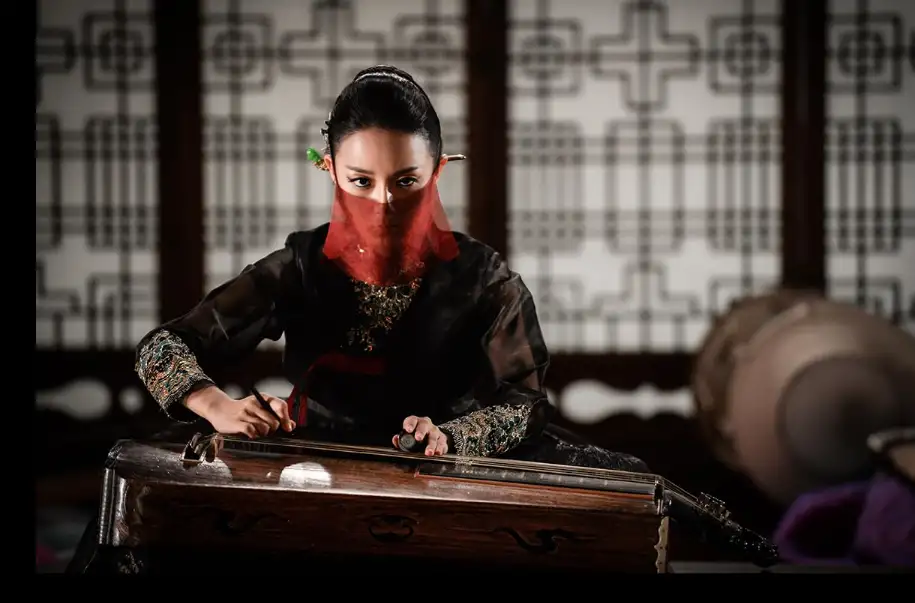
Table of Contents

Plot Overview
The film begins with Hye-in, a noblewoman born into an elite family and celebrated for her intelligence, beauty, and artistry. She is raised with strict Confucian expectations and is admired as an ideal woman of the aristocracy. When Lee Dong, a distant royal relative, aggressively pursues her, she agrees to marry him, believing he represents security, love, and honor.
However, her married life collapses quickly. Lee Dong reveals himself as a pleasure-seeking libertine who openly drinks, visits courtesans nightly, and shows little interest in his wife’s emotional needs. His neglect and humiliation slowly erode Hye-in’s belief in marriage, loyalty, and morality.
At the same time, she becomes aware of Moo-gong, a mysterious man whose presence seems to blur the line between reality and imagination. He represents the love, devotion, and emotional connection she longs for but has never received.
The breaking point arrives when Lee Dong, driven by cruelty or insecurity, brings another woman into their home and forces Hye-in to witness the affair. Devastated, Hye-in decides to reclaim her identity and her destiny. She renames herself “Eo Woo-dong,” abandoning her noble status and choosing instead to enter the world of the gisaeng — the courtesans known for their beauty, talent, and ability to influence the most powerful men of the era.
Woo-dong quickly becomes a sensation. Her poetry, elegance, artistic mastery, and charismatic presence draw noblemen, scholars, generals, and even royals. Men compete for the chance to spend a single night with her. As she rises in prominence, Woo-dong transforms into a figure who possesses more influence and freedom as a courtesan than she ever did as a nobleman’s wife.
This rise is both revenge and rebirth. Through her new life, she confronts the hypocrisy of the ruling class, exposes the fragility of men who once believed they owned her, and asserts her autonomy in a society designed to silence women. Yet beneath the glamour and power, her emotional struggle — torn between vengeance, love, and self-discovery — remains the core of the narrative.
Themes and Interpretation
1. Female Agency in a Confucian World
One of the film’s central themes is the reclamation of female power in a rigidly patriarchal society. The historical Joseon Dynasty placed strict controls on women: their behavior, speech, clothing, and even emotions were governed by Confucian norms.
Hye-in’s transformation into Eo Woo-dong represents a dramatic rebellion against those norms. Rather than passively enduring humiliation, she reinvented herself in a role that allowed her not only freedom but influence. While the gisaeng profession carries stigma, it also historically gave women access to education, intellectual circles, and political conversations that noblewomen were forbidden from entering.
Woo-dong’s journey demonstrates how agency can emerge even in restricted social systems — and how a woman denied power may seize it by redefining the terms of her identity.
2. The Hypocrisy of the Elite
The film openly criticizes the contradictions of Joseon high society. Officials, the aristocracy, and even royalty publicly uphold rigid morality while privately indulging in the very behaviors they condemn. As Woo-dong’s fame spreads, men who once claimed to be paragons of virtue seek her in secret, revealing the gulf between public image and private desire.
Woo-dong, fully aware of their hypocrisy, turns their desire into leverage. The film uses this dynamic to comment on how patriarchal structures both enforce and violate their own rules.
3. Fantasy vs. Reality
The character of Moo-gong introduces a dreamlike layer to the story. Whether he represents a real person, a romantic ideal, or a manifestation of Woo-dong’s inner emotional world is intentionally ambiguous. His presence allows the film to explore internal conflicts — longing, hope, disillusionment — in a poetic and symbolic manner.
This contrast between Moo-gong’s “pure” love and Lee Dong’s cruelty highlights Woo-dong’s inner battle between emotional healing and the seductive pull of revenge.
4. Revenge and Reinvention
Revenge is a driving force of the narrative, but the film does not frame it as destructive alone. Woo-dong’s revenge is an act of self-creation: she uses the tools available to her — beauty, intellect, social awareness — to reclaim the control she lost in marriage.
Her reinvention as a courtesan becomes an assertion of survival. Instead of breaking her, betrayal becomes a catalyst for awakening.
Cinematic Qualities

Visual and Period Detail
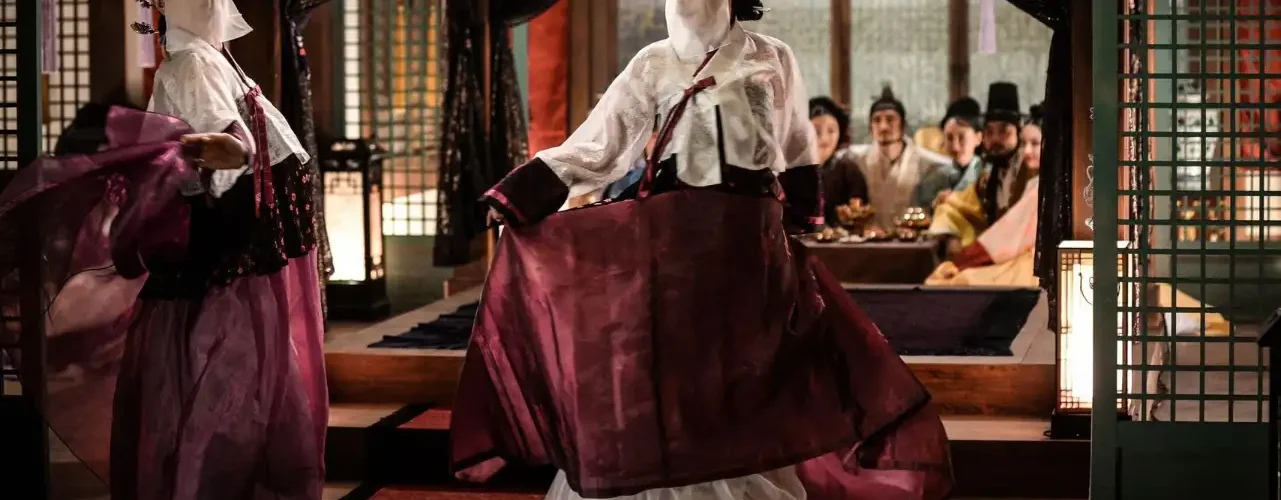
The film’s greatest aesthetic strength is its detailed reconstruction of Joseon aristocratic life. Elegant hanbok costumes, traditional houses, grand palaces, lantern-lit courtyards, and lush interiors immerse viewers in a carefully crafted world. The cinematography emphasizes soft light, rich textures, and symbolic color contrasts — particularly the use of white (purity), red (passion), and black (power and secrecy).
Music and Atmosphere
The musical score blends traditional Korean instruments with modern emotional tones. This fusion complements the film’s stylistic approach — historical yet contemporary in emotional resonance.
Performance and Character Depth
The actors deliver layered performances. The portrayal of Woo-dong is especially noteworthy for its emotional range, capturing sorrow, rage, seduction, and resilience. Lee Dong is depicted as both charming and cruel, embodying the contradictions of a privileged yet insecure man. Moo-gong’s presence adds emotional softness and contrast, supporting the film’s symbolic duality.
Cultural Significance
Eo Woo-dong has long been a subject of fascination in Korean literature, folklore, and theater. She appears alternately as a victim, a seductress, an artist, and a misunderstood woman. This film adopts a modern perspective that frames her neither as a villain nor merely a tragic figure but as a woman asserting her identity in a restrictive world.
Her story resonates today because it reflects universal themes: gender inequality, social double standards, emotional betrayal, and the complex ways people reclaim personal power.
Strengths and Limitations
Strengths
- Deep emotional and psychological portrayal of a historical figure
- Stunning period visuals and costume design
- Strong thematic exploration of gender, class, and autonomy
- A compelling reinterpretation of a legendary woman
- Rich symbolic storytelling through fantasy elements
Limitations
- The blend of fantasy and realism may confuse viewers seeking a strictly historical narrative
- The erotic and mature themes may not appeal to all audiences
- Because Woo-dong’s real life is semi-legendary, some may wish for more historical grounding
Conclusion
Lost Flower: Eo Woo-dong is a bold, emotionally powerful, and visually striking reinterpretation of one of Korea’s most iconic female figures. Rather than presenting her as a scandalous footnote in history, the film reclaims her story as one of transformation, autonomy, and resistance. Through poetic imagery, complex characters, and compelling themes, it explores the timeless struggle for identity and freedom within a society bound by restrictive traditions.
More than a historical drama, it is a meditation on love, betrayal, self-reinvention, and the enduring power of a woman determined to define herself on her own terms.
FAQs
What is the main theme of Lost Flower: Eo Woo-dong?
The main theme of Lost Flower: Eo Woo-dong is the struggle between personal desire and social restriction, a central idea in many Korean historical dramas. This Lost Flower Eo Woo-dong analysis highlights how forbidden love and rigid class expectations drive the film’s conflict.
Is Lost Flower: Eo Woo-dong historically accurate?
While inspired by real records of Eo Woo-dong, the movie takes creative liberties for dramatic impact. This Korean historical drama review shows that the film prioritizes emotional storytelling over strict historical accuracy.
What makes Lost Flower: Eo Woo-dong unique among Korean period films?
The film stands out for its bold portrayal of female agency and sensuality. As this Eo Woo-dong movie analysis explains, it challenges traditional depictions of Joseon women in Korean cinema.
Who should watch Lost Flower: Eo Woo-dong?
Viewers interested in character-driven stories, romance, and Korean historical drama will appreciate this film. This Lost Flower Eo Woo-dong analysis also appeals to audiences exploring cultural narratives about gender and power.
What is the cultural significance of Lost Flower: Eo Woo-dong?
The film reintroduces a controversial historical figure who symbolizes independence and defiance. As noted in this Lost Flower 2015 film evaluation, her story reflects deeper themes of freedom, morality, and societal judgment.


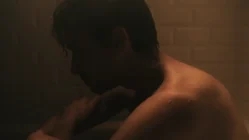
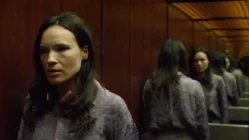



Lost Flower: Eo Woo-dong is a visually striking and emotionally charged Korean historical drama that reimagines one of Joseon’s most controversial women. Though the film is often labeled for its erotic elements, it offers more than sensual imagery—it explores desire, repression, and the rigid moral codes that shaped Woo-dong’s downfall.
Song Eun-chae delivers a compelling performance, portraying Woo-dong as a woman trapped between societal expectation and personal longing. Her journey from noblewoman to courtesan is depicted not as scandal but as survival, revealing the hypocrisy of a world eager to judge women more harshly than men.
The cinematography enhances the narrative with warm palettes, intimate lighting, and carefully staged tension. While the story occasionally leans too heavily on physicality at the expense of deeper psychological exploration, it remains engaging throughout.
Ultimately, Lost Flower: Eo Woo-dong stands out as a tragic and textured portrait of a woman punished for asserting her agency. It’s a bold, visually rich film that resonates beyond its provocative surface.