









- Country: Korea
- Initial release: 2013 (Korea)
- Film Director: Park Hoon-jung
- Genre: Action, Drama, Suspense
- Rate: 18+
- Original Language: Korean
- Subtitle: English
- Running Time: 135 Minutes
- IMDB: 7.5 /10
New World (2013) is a Korean crime film that follows an undercover police officer trapped inside a powerful crime syndicate. Known for its intelligent storytelling, moral ambiguity, and intense performances, the film is widely regarded as a genre-defining gangster epic.
cMovie.Asia
New World (2013) movie review examines one of the most influential Korean crime films of the past decade. Directed by Park Hoon-jung, the film combines psychological depth, violent realism, and complex characters to deliver a tense story about power, loyalty, and identity.
When New World (Sinsegye, 2013) premiered, it did more than deliver a gripping crime thriller — it redefined the modern Korean gangster film. Directed by Park Hoon-jung, New World stands as a meticulously constructed exploration of loyalty, power, and identity within the brutal hierarchy of organized crime. Over a decade later, the film remains not only relevant but essential viewing for anyone interested in Korean cinema or intelligent crime storytelling.
At its heart, New World is not merely about gang warfare. It is about the psychological erosion of a man trapped between duty and survival, and the moral cost of living too long inside a lie. Through its layered narrative, commanding performances, and restrained yet explosive violence, the film delivers a cinematic experience that lingers long after the final frame.
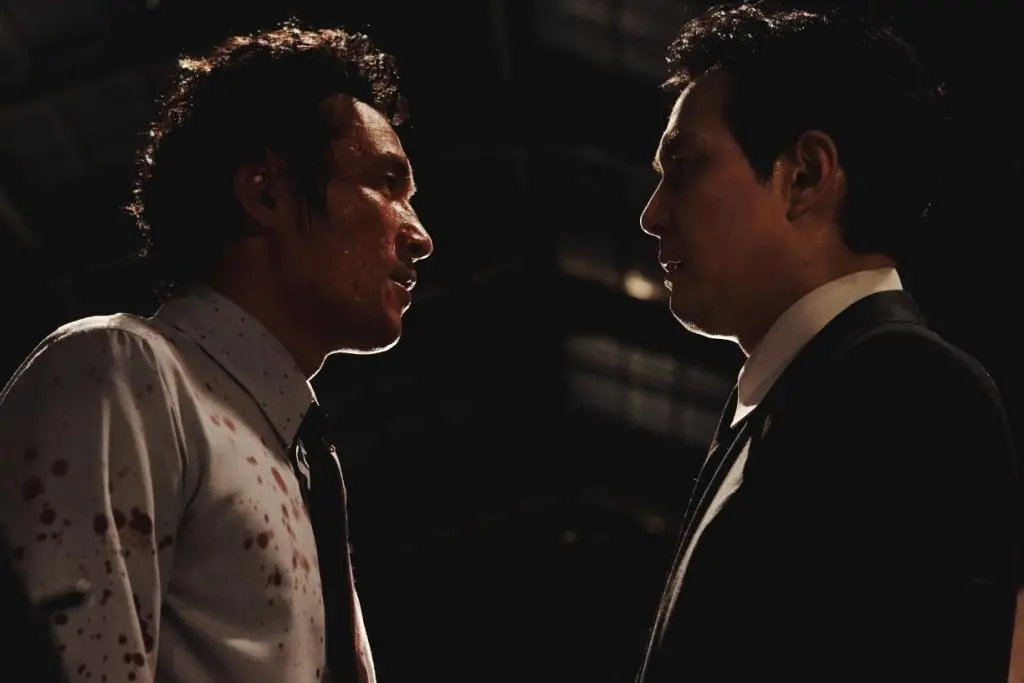
Table of Contents

A Story of Infiltration, Loyalty, and Moral Collapse
The narrative centers on Lee Ja-sung, an undercover police officer who has spent eight years embedded within Goldmoon International, Korea’s most powerful crime syndicate. As the organization’s leadership collapses following the sudden death of its chairman, a violent succession war erupts. Ja-sung, now deeply entrenched in the criminal world, becomes a key player in deciding who will inherit the empire.
Unlike many undercover crime films that rely on constant action, New World builds tension through quiet manipulation and psychological pressure. The story unfolds methodically, allowing the audience to feel the same exhaustion and moral ambiguity experienced by its protagonist. Ja-sung is no longer simply pretending to be a gangster — he has become one, and the line separating his real identity from his fabricated one grows increasingly thin.
This internal conflict forms the emotional backbone of the film. The question is no longer whether Ja-sung will complete his mission, but what will be left of him if he does.
Complex Characters in a World Without Heroes
One of New World’s greatest strengths lies in its character construction. Every major figure operates within shades of gray, making the film morally complex and narratively unpredictable.
Lee Ja-sung: The Man Caught Between Worlds
Lee Jung-jae delivers a restrained, deeply internalized performance as Ja-sung. His character is defined not by bravado but by quiet desperation. As years pass, Ja-sung’s loyalty to the police becomes increasingly abstract, while his bonds within the criminal organization feel painfully real.
His journey is tragic not because of a single catastrophic decision, but because of a series of compromises — each seemingly small, yet cumulatively devastating. This slow erosion of identity is what gives New World its emotional weight.
Jung Chung: Charisma and Chaos
Choi Min-sik’s Jung Chung is one of the most memorable gang leaders in Korean cinema. Volatile, crude, and fiercely loyal, Jung Chung is both terrifying and oddly endearing. His unpredictability injects constant tension into the narrative, and his emotional attachment to Ja-sung complicates the undercover operation in deeply human ways.
Jung Chung is not a villain in the traditional sense. He is a product of his environment — brutal, loyal, and driven by instinct rather than strategy. This complexity makes his presence impossible to ignore.
Kang Hyung-chul: The Cold Architect
In stark contrast stands Kang Hyung-chul, the calm, calculating rival within Goldmoon. His quiet intelligence and corporate demeanor reflect a modern evolution of organized crime — less emotional, more strategic. The clash between Jung Chung’s raw aggression and Kang Hyung-chul’s cold precision mirrors the film’s central conflict between old-world loyalty and new-world ambition.
Direction and Narrative Control
Director Park Hoon-jung demonstrates exceptional restraint and confidence. Rather than relying on excessive exposition, the film trusts its audience to follow subtle power shifts and unspoken motivations. Conversations often carry more weight than gunfire, and silence is used as a weapon just as effectively as violence.
The pacing is deliberate but never sluggish. Each scene serves a narrative purpose, steadily tightening the noose around its characters. When violence erupts, it feels earned and consequential, not gratuitous. This controlled approach elevates the film from genre entertainment to serious cinematic storytelling.
Violence as a Tool, Not a Gimmick
New World does not shy away from brutality, but it never glorifies it. Violence is portrayed as sudden, ugly, and irreversible — a constant reminder of the cost of power. Some of the film’s most harrowing moments occur not during action sequences, but in the aftermath, where characters must live with what they have done.
This approach reinforces the film’s central message: there are no clean victories in a corrupt system. Every gain comes with loss, and survival often requires sacrificing one’s humanity.
Themes: Power, Identity, and the Illusion of Choice
At its thematic core, New World interrogates the idea of choice. Ja-sung believes he is working toward freedom — one final operation before reclaiming his life. Yet the film systematically dismantles this illusion, revealing how institutions, whether criminal or governmental, exploit individuals for their own ends.
The title New World itself is deeply ironic. The “new world” promised by power, promotion, or victory is merely another version of the old one — governed by betrayal, fear, and control. The film suggests that systems do not change simply because leadership does; only the faces do.
Cinematography and Atmosphere
Visually, New World embraces a cold, muted palette that mirrors its moral bleakness. Corporate offices feel just as oppressive as underground meeting rooms, reinforcing the idea that crime and legitimacy are often separated only by appearance.
Camera movements are purposeful and unobtrusive, allowing performances to take center stage. Close-ups emphasize emotional isolation, while wide shots underscore the insignificance of individuals within larger power structures.
A Lasting Impact on Korean Crime Cinema
Since its release, New World has influenced an entire wave of Korean crime films and television dramas. Its emphasis on psychological realism, morally ambiguous protagonists, and corporate-style criminal organizations set a new standard for the genre.
What distinguishes New World from its contemporaries is its refusal to provide easy answers. The ending is powerful not because it resolves every conflict, but because it forces the audience to confront the uncomfortable reality of what survival truly costs.
Conclusion: A Modern Crime Masterpiece
New World (2013) is a masterclass in restrained storytelling, complex characterization, and thematic depth. It is a film that respects its audience, demanding attention and rewarding patience. Through its exploration of loyalty, power, and identity, it transcends genre boundaries and stands as one of the most significant Korean films of the 2010s.
For viewers seeking more than surface-level thrills — for those interested in the psychological toll of ambition and the quiet tragedy of moral compromise — New World remains essential viewing. It is not just a gangster film; it is a portrait of a man losing himself in the name of duty, and a world that offers no true escape.
FAQs
Is New World (2013) worth watching?
Yes, New World (2013) movie review consensus highlights it as a must-watch Korean crime film, praised for its intelligent plot, intense performances, and realistic portrayal of the criminal underworld.
What is New World (2013) about?
This New World 2013 plot analysis reveals a story about an undercover police officer embedded in a crime syndicate, forced to choose between duty and survival as a brutal power struggle unfolds.
Why is New World considered a great Korean gangster movie?
The New World Korean crime film stands out for its psychological tension, morally complex characters, and realistic depiction of power, making it a benchmark in Korean gangster movie reviews.
How does New World compare to other Korean crime films?
According to many Korean gangster movie reviews, New World (2013) is more character-driven and emotionally complex than typical crime films, focusing on loyalty and identity rather than nonstop action.
Who should watch New World (2013)?
New World (2013) movie review recommends the film for viewers who enjoy dark, intelligent crime dramas, Korean cinema, and slow-burn stories about betrayal and moral compromise.









New World (2013) is a razor-sharp Korean crime thriller that elevates the gangster genre through intelligence, restraint, and psychological depth. Centered on an undercover police officer embedded deep within a powerful crime syndicate, the film explores loyalty, identity, and the heavy cost of survival in a corrupt system. Rather than relying on constant action, New World builds tension through quiet power plays, morally ambiguous choices, and richly drawn characters.
Lee Jung-jae delivers a controlled, haunting performance as a man slowly losing himself between two worlds, while Choi Min-sik’s volatile gang leader injects both menace and tragic humanity into the story. Director Park Hoon-jung’s confident pacing and precise direction allow every betrayal and decision to resonate with lasting impact.
Bleak yet gripping, New World refuses easy heroes or clean victories. Its final act is both devastating and unforgettable, cementing the film’s reputation as one of the most intelligent and influential Korean crime movies of the 2010s.