









- Country: Korea
- Initial release: 2024 (Korea)
- Film Director: Han-min Kim
- Genre: Action / Drama / Intense / Heavy
- Rate: 16+
- Original Language: Korean
- Subtitle: English
- Running Time: 152 Minutes
- IMDB: 6.3 /10
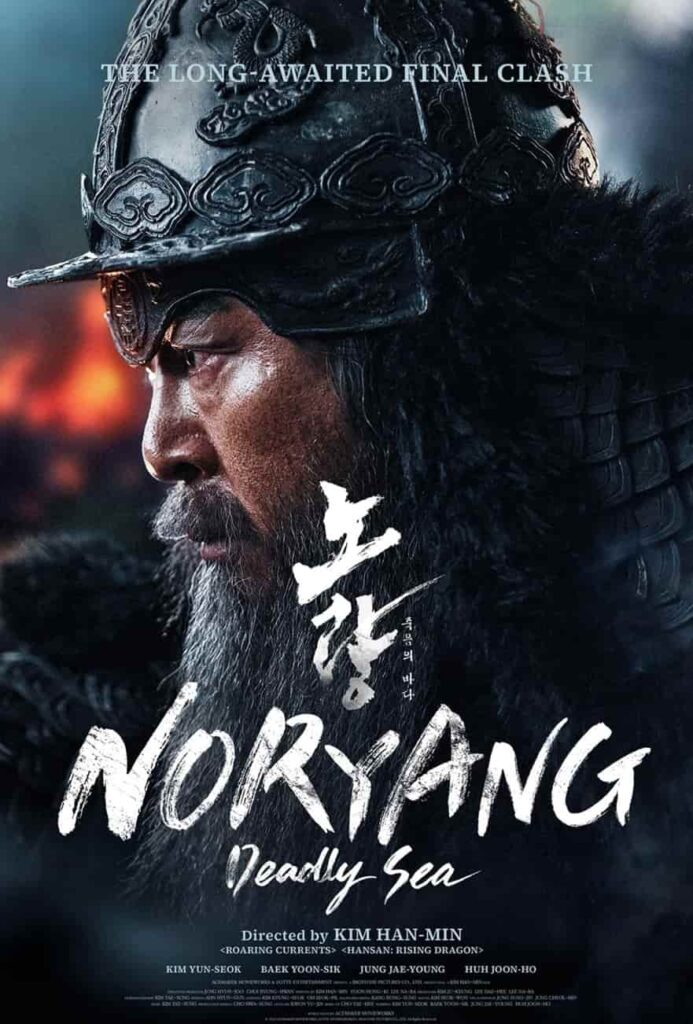
Noryang: Deadly Sea is a Korean historical war film portraying Admiral Yi Sun-sin’s final naval battle. This Noryang: Deadly Sea review highlights its emotional storytelling, large-scale sea combat, and lasting cultural significance as the epic conclusion to a legendary trilogy.
cMovie.Asia
This Noryang: Deadly Sea review examines the film’s portrayal of Admiral Yi Sun-sin’s final battle, combining large-scale naval warfare with tragic emotional depth to deliver one of Korea’s most powerful historical epics.
Noryang: Deadly Sea is a powerful historical war film that brings one of the most defining moments in Korean history to the big screen with emotional weight, cinematic scale, and reverence for legacy. As the final chapter in director Kim Han-min’s trilogy centered on Admiral Yi Sun-sin, the film delivers not only breathtaking naval combat but also a deeply human portrait of leadership, sacrifice, and destiny.
Set during the final days of the Imjin War, Noryang: Deadly Sea captures the climactic Battle of Noryang Strait in 1598. More than a spectacle-driven war movie, it is a somber meditation on the cost of victory and the burden carried by those who lead from the front. The film stands as one of the most ambitious Korean historical epics ever produced, both technically and emotionally.

Table of Contents
A Story Rooted in History and National Memory
The narrative unfolds at a critical juncture: the Japanese forces are retreating after years of devastating conflict, but the war is not yet over. Admiral Yi Sun-sin recognizes that allowing the enemy to escape would invite future invasions. Determined to bring a decisive end to the conflict, he prepares for one final, dangerous naval engagement in the narrow waters of Noryang.
Rather than framing the battle as a straightforward clash of good versus evil, the film emphasizes strategic tension and moral complexity. Yi is portrayed not as an untouchable legend, but as a commander fully aware that this final stand may cost him his life. His resolve is calm, unwavering, and deeply tragic — a man choosing duty over survival.
The film’s strength lies in how it contextualizes this final battle. Viewers are not simply watching history unfold; they are invited to feel the weight of accumulated sacrifice from years of war. Every cannon blast and command issued carries the gravity of finality.
Character-Driven War Storytelling
At the heart of Noryang: Deadly Sea is Admiral Yi Sun-sin himself. This portrayal focuses less on heroics and more on inner resolve. He is a leader who has already proven himself countless times and now faces the quiet certainty that victory may demand the ultimate price.
The supporting cast enriches the narrative by presenting multiple perspectives on the conflict — allied commanders, rival generals, and soldiers whose loyalty and fear coexist in every moment. These characters are not merely functional; they embody the broader human experience of war: hesitation, pride, desperation, and loyalty.
Notably, the film avoids romanticizing combat. Even moments of triumph are framed with restraint, reinforcing the idea that true victory in war is always incomplete.
Direction and Visual Spectacle
Director Kim Han-min demonstrates complete command over large-scale historical filmmaking. The naval battle sequences are meticulously choreographed, maintaining clarity while conveying chaos. The geography of the sea matters — currents, wind direction, and narrow passages are integral to the strategy, and the film takes care to make these elements understandable without exposition-heavy dialogue.
Visually, Noryang: Deadly Sea is striking. The contrast between dark, smoke-filled battle scenes and quiet, reflective moments on deck creates a rhythm that mirrors the emotional pulse of the story. The ocean itself becomes a character — unpredictable, merciless, and indifferent to human ambition.
Sound design plays a critical role. The thunder of cannons, the creaking of ships, and the shouted commands immerse the viewer fully in the battle. At the same time, the film knows when to embrace silence, allowing moments of stillness to speak louder than action.
Themes That Elevate the Film
Leadership and Responsibility
One of the film’s most compelling themes is the nature of leadership. Admiral Yi is portrayed as a commander who leads not through bravado, but through example and moral clarity. His decisions are guided by long-term responsibility rather than short-term survival.
Sacrifice and Legacy
Noryang: Deadly Sea repeatedly asks what it means to be remembered. Legacy is not defined by glory alone, but by the willingness to endure suffering so that others may live without fear. The film treats this idea with solemn respect, avoiding melodrama while embracing emotional truth.
The Cost of War
Despite its epic scale, the film remains grounded in the reality that war is devastating, even when justified. Victory does not erase loss, and peace is portrayed as fragile rather than triumphant.
Performances That Anchor the Epic
The lead performance as Admiral Yi Sun-sin is measured, dignified, and deeply moving. Rather than relying on grand speeches, the actor conveys emotion through restraint — a quiet gaze, a steady voice, a pause before giving an order. This subtlety enhances the film’s authenticity and emotional impact.
Supporting performances add texture to the story, particularly in scenes depicting strategic disagreements and moments of doubt. The ensemble cast ensures that the narrative never feels one-dimensional, even during prolonged battle sequences.
Cultural Significance and Audience Impact
Noryang: Deadly Sea resonates strongly with Korean audiences because it engages directly with national history and collective memory. However, the film’s themes are universal. Viewers unfamiliar with Korean history can still connect to its exploration of leadership, sacrifice, and moral duty.
The film’s success lies in its balance — honoring history without turning it into propaganda, and delivering spectacle without losing emotional sincerity. It invites reflection rather than simple admiration.
Pacing and Narrative Balance
With a lengthy runtime, the film takes its time building tension. While some viewers may find the deliberate pacing challenging, it ultimately serves the story. The gradual buildup allows the final battle to feel earned, not rushed.
The structure mirrors the inevitability of history — a slow march toward a known conclusion, filled with moments of uncertainty and hope along the way.
Final Verdict: A Fitting and Powerful Conclusion
Noryang: Deadly Sea is more than a historical war film. It is a cinematic tribute to leadership defined by responsibility rather than ambition. As the final chapter in a trilogy, it succeeds in delivering emotional closure while standing firmly on its own as a powerful piece of filmmaking.
Through its commanding direction, strong performances, and thematic depth, the film transforms a historical battle into a timeless story about what it means to lead, to sacrifice, and to leave something greater behind.
★★★★☆ Rating: 4.5 / 5
A solemn, visually stunning, and emotionally resonant epic that honors history while speaking powerfully to the present.
FAQs
Is Noryang: Deadly Sea worth watching?
Yes, this Noryang: Deadly Sea review praises it as a powerful Korean naval war film with emotional depth and historical significance.
What is Noryang: Deadly Sea about?
The film depicts Admiral Yi Sun-sin’s final naval battle, focusing on sacrifice, leadership, and the cost of war.
Is this film historically accurate?
While dramatized, this Admiral Yi Sun-sin movie closely follows the historical Battle of Noryang.
Do I need to watch earlier films first?
No, but watching earlier trilogy entries enhances the emotional impact.
What makes this Korean naval war film unique?
Its large-scale sea battles, tragic tone, and focus on leadership set it apart.









Noryang: Deadly Sea review examines a powerful and tragic Korean naval epic that brings the legendary Admiral Yi Sun-sin’s final battle to the screen with emotional weight and historical gravity. As the concluding chapter of the Yi Sun-sin trilogy, the film delivers both large-scale naval warfare and an intimate portrait of sacrifice.
Set during the climactic Battle of Noryang, the story balances strategic tension with deeply human moments, portraying Admiral Yi not as a mythic hero but as a leader burdened by duty. The naval combat sequences are meticulously staged, combining practical realism with modern visual effects to create relentless momentum.
What sets Noryang: Deadly Sea apart is its somber tone. Victory comes at a devastating cost, reinforcing the film’s central theme: true leadership is measured by sacrifice rather than triumph. The restrained performances and mournful atmosphere elevate the action into historical tragedy.
Epic yet elegiac, Noryang: Deadly Sea stands as a fitting and emotionally resonant finale to Korea’s greatest naval saga.