








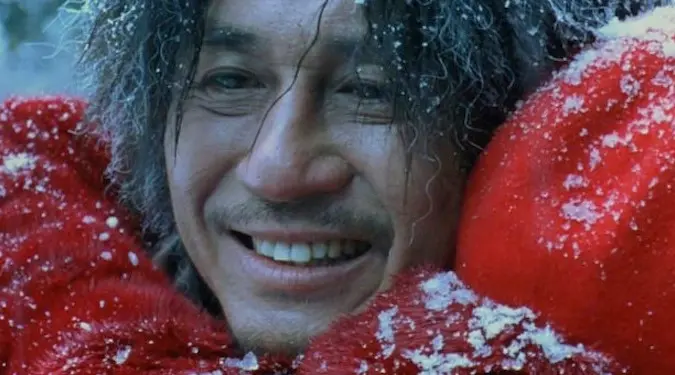
- Country: Korea
- Initial release: 2003 (Korea)
- Film Director: Park Chan-wook
- Genre: Suspense, Action, Dark, Psychological
- Rate: R
- Original Language: Korean
- Subtitle: English
- Running Time: 115 Minutes
- IMDB: 8.3 /10
Oldboy (2003) is a brutal and psychologically rich Korean revenge thriller that blends haunting storytelling, shocking twists, and masterful direction. This review breaks down how Park Chan-wook’s film explores identity, trauma, and morality, making it one of cinema’s most unforgettable masterpieces.
cMovie.Asia
This Oldboy 2003 review dives into one of Korea’s most iconic revenge films—a brutal, stylish, and emotionally devastating masterpiece by Park Chan-wook. Blending psychological depth with explosive storytelling, Oldboy forces viewers to confront identity, trauma, and the darkest corners of human morality.
Few films in modern cinema have left as deep, unforgettable, and disturbing an imprint as Oldboy (2003). Directed by Park Chan-wook and anchored by a haunting performance from Choi Min-sik, the film is a violent psychological thriller that elevates itself far beyond its genre. More than twenty years after its release, Oldboy still stands as one of the most influential Korean movies ever made—an intense, stylish, and morally devastating exploration of revenge, trauma, guilt, and the fragility of human identity.
This review examines the film’s storytelling, themes, visual style, performances, and lasting cultural impact, while addressing what makes Oldboy not just memorable, but utterly legendary.

Table of Contents

A Premise That Hooks You Instantly
The film opens with an ordinary man, Oh Dae-su, being abducted without explanation on a rainy night. He awakens in a private makeshift prison—a shabby, windowless room where he is kept for fifteen long years. No human contact. No answers. Only a television, the same fried dumplings every day, and the growing suspicion that his own mind is turning against him.
Then, just as suddenly, he is set free.
He is given nice clothes, money, and a phone—then released into the world like a violent experiment. What follows is a frantic, obsessive quest: Who imprisoned him? And more importantly, why?
This premise alone is already charged with mystery and emotional power. But Park Chan-wook chooses not to tell a simple revenge story. Instead, he constructs a labyrinth of motivations, memories, and moral consequences, gradually leading the viewer toward one of the most devastating revelations in modern film.
A Revenge Story That Dares to Go Deeper
Most revenge films offer a straightforward emotional reward: justice, retribution, or catharsis. Oldboy does the opposite.
It asks:
- What if the hero deserves what’s happening to him?
- What if revenge is not a solution, but a disease?
- What if the truth hurts more than the punishment?
The story forces us to confront the darkness within the protagonist himself. Dae-su is not a noble victim. He is flawed, impulsive, violent, and often morally blind. His pursuit of vengeance becomes less like a heroic mission and more like a tragic spiral, as if every step forward traps him further in a psychological maze.
The villain, Lee Woo-jin, is equally complex. He is not a caricature of evil; he is calm, sophisticated, and deeply wounded. His revenge is cruel, but not random. In many ways, Woo-jin mirrors Dae-su—two men who let their pasts consume them until revenge becomes their entire identity.
In this sense, Oldboy becomes a meditation on the human mind’s capacity for self-destruction.
It’s not a film about who wins.
It’s a film about how nobody truly survives.
Visual Storytelling at Its Most Bold and Innovative
Park Chan-wook’s command of cinematic language is masterful, and Oldboy is perhaps his most visually iconic film. The imagery is violent yet poetic, stylized yet grounded in emotional realism.
The Legendary Hallway Fight
Even people who have never watched Oldboy have likely seen the famous one-take hallway fight. Dae-su, armed only with a hammer, fights an entire gang in a narrow corridor. The camera stays in a side-scrolling horizontal frame, refusing to look away as the exhaustion, fear, and desperation intensify.
Unlike most action scenes, it feels physically painful. Every sound, every breath, every stagger tells a story. It is not choreographed to look cool—it is choreographed to feel brutal.
Color, lighting, and psychological texture
The film uses color with intentional precision:
- Greens and yellows for claustrophobia and decay
- Deep reds for violence and emotional breaking points
- Cold blues for moments of revelation or despair
The visual palette constantly reinforces Dae-su’s unraveling mental state. Even without dialogue, the environment communicates the story: walls closing in, shadows swallowing faces, and harsh fluorescent lights exposing ugly truths.
Editing that mirrors fractured memory
The fragmented structure—quick cuts, distorted flashbacks, abrupt transitions—reflects the instability of Dae-su’s mind. Memories appear like broken shards, as if the film itself is struggling to piece together the truth alongside its protagonist.
Performances That Burn Into Your Memory
Choi Min-sik as Oh Dae-su
Choi Min-sik delivers one of the most astonishing performances in Korean cinema. He portrays Dae-su not as a cool revenge hero, but as an actual human being pushed beyond the limits of sanity.
His transformation—from a disheveled drunk to a hardened and emotionally fractured man—is both physical and psychological. Every twitch in his face, every burst of rage, and every quiet moment of despair feels painfully authentic.
Yoo Ji-tae as Lee Woo-jin
Villains like Woo-jin are rare. Calm, elegant, and controlled, yet radiating silent cruelty. Yoo Ji-tae never raises his voice, but his presence dominates every scene. His performance gives the film emotional weight—it’s not just evil for the sake of evil. It’s pain weaponized into precision-engineered revenge.
Kang Hye-jeong as Mi-do
Mi-do plays a crucial role emotionally and thematically. Her innocence contrasts sharply with the violence surrounding her, but her vulnerability also becomes part of the tragedy. Her relationship with Dae-su is tender yet unsettling, adding complexity and moral ambiguity that the film intentionally refuses to resolve cleanly.
A Story That Challenges the Viewer
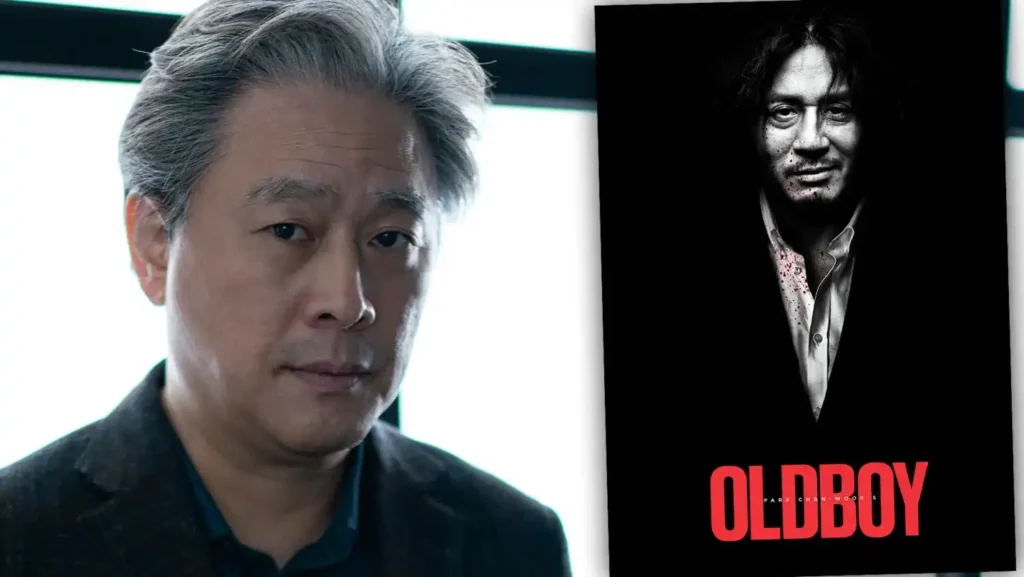
Oldboy contains one of the most shocking twists in film history—not because it is unexpected, but because it is emotionally catastrophic. The twist reframes everything the audience thought it understood, forcing a painful and uncomfortable reevaluation of the protagonist, the villain, and perhaps even ourselves.
The film doesn’t offer moral reassurance. It doesn’t clean up after itself. It leaves viewers disturbed, thoughtful, and full of questions:
- How much of our identity comes from our memories?
- Are we defined by our sins?
- Can revenge ever truly end pain?
- Is ignorance mercy?
- Is truth always necessary—or can truth destroy a soul?
These are not questions many films dare to ask.
Cultural Impact and Lasting Legacy
Oldboy is now widely regarded as:
- One of the greatest Asian films of all time
- A defining work of Korean cinema
- A landmark revenge thriller
- A film that reshaped global perceptions of Korean filmmaking
Its influence can be seen in Western thrillers, music videos, action choreography, and even modern graphic novels. Directors around the world—especially in Hollywood—cite Oldboy as a source of inspiration. Despite a later Western remake, the original remains unmatched in raw power and artistic depth.
More importantly, Oldboy pushed Korean cinema into the global spotlight. It proved that a non-English film could be bold, shocking, emotional, philosophical, and visually groundbreaking—all at the same time. It opened doors for countless Korean films and filmmakers who followed.
Is Oldboy for Everyone?
Absolutely not.
This film contains:
- Disturbing themes
- Graphic violence
- Emotional trauma
- Psychological horror
- A morally challenging narrative
Some viewers may find it overwhelming or even unbearable. Oldboy demands emotional investment and intellectual engagement. It is not entertainment in the traditional sense; it is an experience.
But for those willing to take the journey, few films offer such unforgettable storytelling.
Final Verdict — Why Oldboy Still Matters
Oldboy remains a masterpiece because it dares to confront the darkest corners of the human mind. It transforms a revenge thriller into a philosophical tragedy. It blends shock with beauty, violence with poetry, and despair with artistic brilliance.
Two decades later, it has lost none of its power.
If anything, its themes feel even more relevant today—identity, memory, trauma, and the consequences of our actions.
Oldboy is not just a movie you watch.
It is a movie you endure.
A movie you think about.
A movie that stays with you long after the screen goes black.
For those who appreciate bold cinema that challenges rather than comforts, Oldboy remains essential viewing—a brutal, brilliant, and unforgettable work of art.
FAQs
What makes Oldboy (2003) one of the best Korean revenge films?
Oldboy (2003) stands out for its intense psychological thriller elements, brutal storytelling, and Park Chan-wook’s masterful direction. The film’s twist, themes of identity, and raw emotional impact make it a landmark in Korean revenge cinema.
Is Oldboy (2003) psychologically disturbing?
Yes. Oldboy 2003 is known for its disturbing psychological depth, exploring trauma, manipulation, and identity. Its shocking twists contribute to its reputation as a dark psychological thriller.
Why is Park Chan-wook’s direction praised in Oldboy?
Park Chan-wook’s direction blends stylish visuals, tight pacing, and emotional complexity. His approach transforms Oldboy into a visually striking and psychologically layered masterpiece.
Is Oldboy (2003) suitable for all audiences?
No. Oldboy contains violent scenes, disturbing themes, and intense psychological tension. It is recommended for mature viewers who appreciate dark thrillers.
How does Oldboy (2003) explore identity and revenge?
Oldboy interweaves identity, trauma, and revenge through its characters’ emotional journeys. The film uses psychological thriller elements and brutal narrative twists to examine how vengeance destroys the self.









Park Chan-wook’s Oldboy remains one of the most shocking and masterfully executed revenge thrillers ever made. The story follows Oh Dae-su, a man mysteriously imprisoned for 15 years and then released with no explanation, forcing him into a violent quest for answers. What begins as a stylish action mystery evolves into a disturbing psychological journey that tests the limits of identity, memory, and morality.
Choi Min-sik delivers a raw, unforgettable performance, balancing rage, vulnerability, and desperation with incredible precision. Park’s direction—marked by bold visuals, rhythmic editing, and iconic sequences like the one-take hallway fight—turns the film into a hypnotic experience.
But Oldboy’s true power lies in its devastating twist, which reframes the entire narrative and leaves audiences shaken long after the credits roll. It is brutal yet poetic, shocking yet deeply human.
Twenty years later, Oldboy still stands as a daring masterpiece of modern Korean cinema—fearless, stylish, and emotionally explosive.