









- Country: Korea
- Initial release: 2016 (Korea)
- Film Director: Park Hoon-jung
- Genre: Action, Drama, Dark
- Rate: 18+
- Original Language: Korean
- Subtitle: English
- Running Time: 140 Minutes
- IMDB: 7.2/10
The Tiger: An Old Hunter’s Tale (2016) is a Korean historical film set during the Japanese occupation, following an aging hunter forced to confront the last tiger in Korea. The movie explores survival, national identity, and humanity’s relationship with nature through stunning visuals and emotional storytelling.
cMovie.Asia
The Tiger: An Old Hunter’s Tale (2016) review reveals a deeply symbolic Korean historical epic that goes beyond a simple man-versus-beast narrative. Set in 1920s Korea, the film uses the hunt for the last tiger as a metaphor for cultural identity, resistance, and moral conflict during colonial rule, creating a cinematic experience that is both visually stunning and emotionally resonant.
The Tiger: An Old Hunter’s Tale is a visually striking and emotionally resonant Korean historical drama that blends action, philosophy, and national symbolism into a powerful cinematic experience. Directed by Park Hoon-jung and led by a commanding performance from Choi Min-sik, the film stands as one of the most ambitious Korean period films of the 2010s. Set during the Japanese occupation of Korea in the 1920s, the story uses the hunt for the last tiger in Korea as both a literal conflict and a metaphor for cultural identity, resistance, and the cost of survival.
Rather than functioning solely as a man-versus-beast thriller, The Tiger unfolds as a reflective and often somber exploration of humanity’s relationship with nature and power. It is a film that values atmosphere over speed, symbolism over spectacle, and emotional depth over simple resolution.
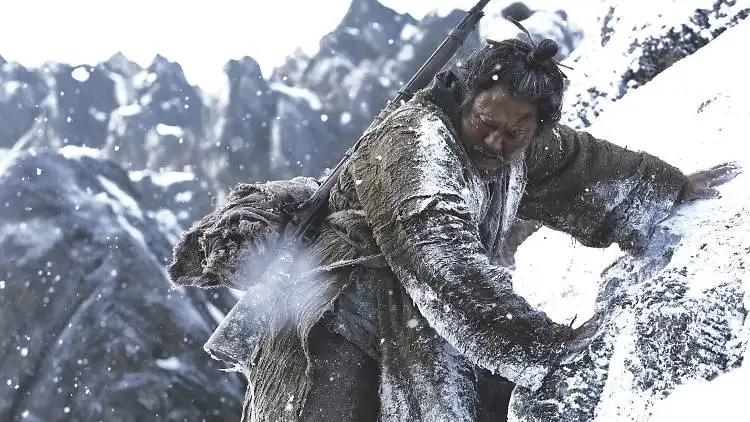
Table of Contents

Story Overview: A Hunter, a Tiger, and a Nation in Conflict
The narrative centers on Chun Man-duk, an aging hunter who has abandoned his violent past to live a quiet life in the mountains as a herb gatherer. Once revered for his unmatched hunting skills, Man-duk now rejects killing, choosing coexistence with nature after enduring deep personal loss. His peaceful existence is disrupted when Japanese authorities, seeking to eliminate the legendary last tiger of Korea, force him back into a world he desperately wants to escape.
The tiger, often referred to as the “Mountain Lord,” has become a symbol of fear and reverence. It cannot be captured by ordinary hunters, and as efforts to kill it fail, the occupiers grow more ruthless. The hunt escalates from a practical mission into a moral confrontation that pits greed, pride, and domination against dignity, restraint, and respect for life.
As Man-duk is drawn back into hunting, the story expands beyond physical pursuit. It becomes a meditation on choice, legacy, and whether survival justifies violence. The tiger is not portrayed as a villain but as a force of nature that mirrors the spirit of a nation under siege.
Choi Min-sik’s Performance: Quiet Power and Emotional Weight
Choi Min-sik delivers one of his most restrained yet powerful performances. Known internationally for intense, explosive roles, here he relies on silence, posture, and subtle expression to convey emotional complexity. His portrayal of Man-duk captures the burden of a man who has seen too much violence and no longer believes in victory.
Every movement feels deliberate. Every pause carries meaning. His physical presence conveys exhaustion without weakness, wisdom without arrogance. Through Man-duk, the film explores aging, regret, and the price of experience. He is not a heroic archetype but a deeply human figure wrestling with impossible choices.
The supporting cast strengthens the emotional landscape. Jung Man-sik brings raw ambition and desperation to his role, acting as a counterpoint to Man-duk’s restraint. The younger characters reflect generational tension, representing ambition, pride, and the desire to prove oneself in a collapsing moral world.
Cinematography and Atmosphere: Nature as a Living Character
One of the film’s greatest strengths lies in its cinematography. The Korean mountains are captured with a sense of scale and reverence rarely seen in historical cinema. Snow-covered peaks, dense forests, and mist-filled valleys create an environment that feels both majestic and unforgiving.
Nature is not a passive backdrop. It is an active participant in the story, shaping decisions, concealing danger, and amplifying isolation. The camera frequently lingers on landscapes, allowing silence to speak louder than dialogue. This deliberate pacing invites viewers to feel the weight of time, distance, and survival.
The tiger itself is introduced sparingly, often through shadows, movement, or aftermath rather than constant visibility. This choice builds tension and respect, reinforcing the animal’s mythical status. While the CGI quality varies across scenes, the emotional impact of the tiger’s presence remains strong due to careful framing and sound design.
Themes and Symbolism: Beyond the Hunt
Nature Versus Domination
At its core, The Tiger questions humanity’s desire to dominate what it does not understand. The tiger is not hunted out of necessity but out of ego, fear, and control. This distinction transforms the film into a critique of violence driven by power rather than survival.
Colonial Allegory and Korean Identity
The historical setting is essential to the film’s meaning. The hunt for the tiger parallels the occupation of Korea itself. The animal represents freedom, dignity, and resistance, while the invading forces symbolize exploitation and erasure. The story never relies on overt political messaging, yet the allegory is unmistakable.
Generational Conflict and Legacy
Man-duk’s relationship with younger characters highlights the tension between experience and ambition. The film questions whether wisdom can be passed down or whether each generation must suffer its own consequences. This theme resonates deeply in a story about extinction, both literal and cultural.
Redemption and Acceptance
Rather than seeking triumph, Man-duk’s journey is about acceptance. The film resists conventional heroism, instead presenting redemption as the ability to choose compassion in a world driven by brutality.
Pacing and Narrative Structure
The film’s pacing is deliberate and, at times, challenging for viewers accustomed to fast-moving action cinema. Scenes often unfold slowly, allowing emotions and atmosphere to settle. While this approach enhances thematic depth, it may feel overly long for some audiences.
However, the extended runtime serves a purpose. It mirrors the exhaustion of the hunt, the inevitability of loss, and the slow erosion of moral certainty. The climactic moments are impactful precisely because the film has taken its time building toward them.
Strengths and Weaknesses
Strengths
- A deeply symbolic and emotionally mature narrative
- Powerful, understated performance by Choi Min-sik
- Exceptional cinematography and atmospheric world-building
- Meaningful historical and cultural allegory
- Respectful portrayal of nature and animal symbolism
Weaknesses
- Uneven CGI in select scenes
- Long runtime may challenge casual viewers
- Some secondary characters lack full development
Critical Impact and Lasting Impression
While The Tiger: An Old Hunter’s Tale may not appeal to viewers seeking constant action, it leaves a lasting impression on those drawn to thoughtful, character-driven cinema. It occupies a unique place in Korean film history as a work that bridges historical epic, philosophical drama, and nature film.
Its ambition lies not in spectacle alone but in emotional sincerity. The film invites reflection long after the final scene, asking difficult questions about humanity’s relationship with power, tradition, and the natural world.
Final Verdict
The Tiger: An Old Hunter’s Tale is a bold and contemplative Korean film that rewards patience and emotional engagement. Anchored by a masterful performance and enriched by symbolic storytelling, it stands as a poignant meditation on loss, dignity, and resistance.
For viewers interested in Korean historical cinema, character-focused drama, or films that explore humanity through the lens of nature, The Tiger is an unforgettable experience that resonates far beyond its final frame.
FAQs
Is The Tiger: An Old Hunter’s Tale (2016) worth watching?
Yes, The Tiger: An Old Hunter’s Tale (2016) review highlights the film as a must-watch for fans of Korean historical movie reviews, offering strong performances, deep symbolism, and powerful commentary on the colonial era.
What is the meaning behind the tiger in the movie?
In The Tiger: An Old Hunter’s Tale (2016) review, the tiger symbolizes Korean identity and resistance, reflecting themes common in Korean colonial era cinema and reinforcing the film’s emotional and historical depth.
Who stars in The Tiger: An Old Hunter’s Tale (2016)?
The film stars Choi Min-sik, whose performance makes this Choi Min-sik period film one of the most emotionally compelling entries in modern Korean historical cinema.
Is The Tiger: An Old Hunter’s Tale based on a true story?
While not based on a true story, The Tiger: An Old Hunter’s Tale (2016) review explains that the film draws inspiration from real historical tensions during the Japanese occupation, a common theme in Korean colonial era cinema.
What genre is The Tiger: An Old Hunter’s Tale (2016)?
According to The Tiger: An Old Hunter’s Tale (2016) review, the film is a Korean historical drama with action elements, blending nature survival storytelling with emotional character study.









The Tiger: An Old Hunter’s Tale is a visually arresting Korean historical epic that blends myth, nature, and human obsession into a haunting cinematic experience. Set during Japan’s colonial era, the film follows a legendary hunter forced to confront a near-mythical tiger—an encounter that becomes a meditation on pride, survival, and the cost of domination. Director Park Hoon-jung balances sweeping mountain landscapes with intimate character moments, allowing silence and atmosphere to speak as powerfully as dialogue. Choi Min-sik delivers a commanding performance, embodying weary wisdom and moral conflict with quiet intensity. While the pacing leans deliberately slow, it reinforces the film’s elegiac tone and respect for nature’s majesty. More than a man-versus-beast story, The Tiger reflects on history’s scars and humanity’s fragile place within the natural world, leaving viewers with a somber, unforgettable resonance.