








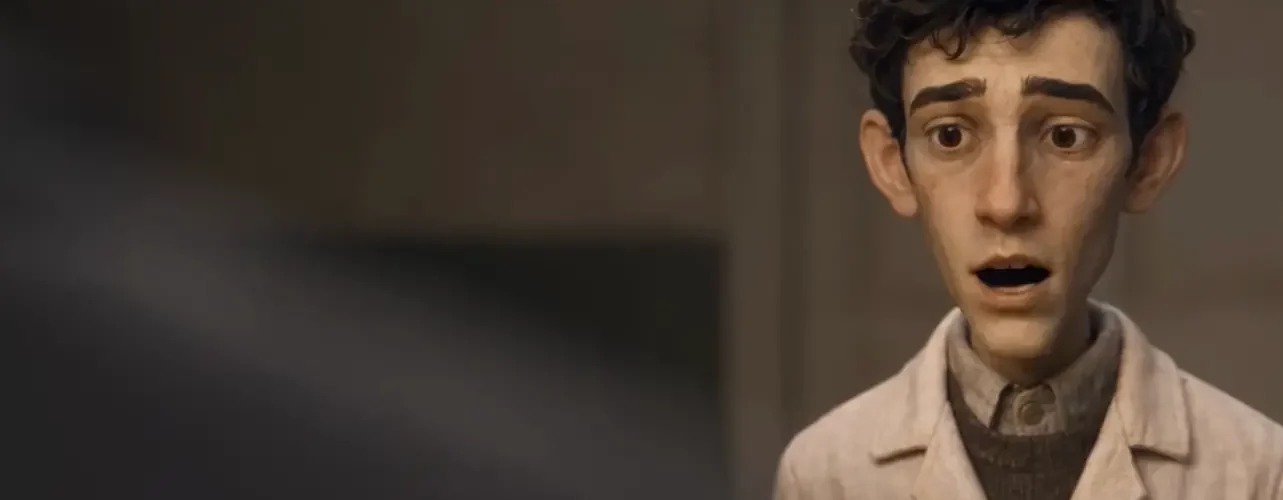

STILL (2026) is an AI short film by Avaren that explores memory, grief, music, and loss through cinematic generative filmmaking. The film examines how someone can remain emotionally present even after they are physically gone, while demonstrating how AI technology can create new visual and storytelling possibilities for contemporary short films.
cMovie.Asia
- Director: Avaren
- Production: The Blue Horizon AI
- Running Time: 11:51
- Release Year: 2026
- Language: English
- Genre: Animation, AI Film, Short Film
STILL (2026) is an AI-generated cinematic short film directed by Avaren and produced by The Blue Horizon AI for the Higgsfield Global Film Festival 2026. The film uses AI filmmaking to tell an intimate story about memory, grief, music, loss, and the human refusal to let someone disappear completely. According to the film’s published description, the story takes place in a psychiatric institution, where a young man notices something—or someone—that others cannot seem to see.
What makes STILL particularly interesting is that it does not appear to treat artificial intelligence merely as a way to generate impressive images. Its stated creative direction combines handcrafted stop-motion aesthetics, generative filmmaking, cinematic storytelling, sound, and music, suggesting an attempt to use AI as part of a broader filmmaking language rather than simply as a visual-effects shortcut.
Table of Contents
What is STILL (2026)?
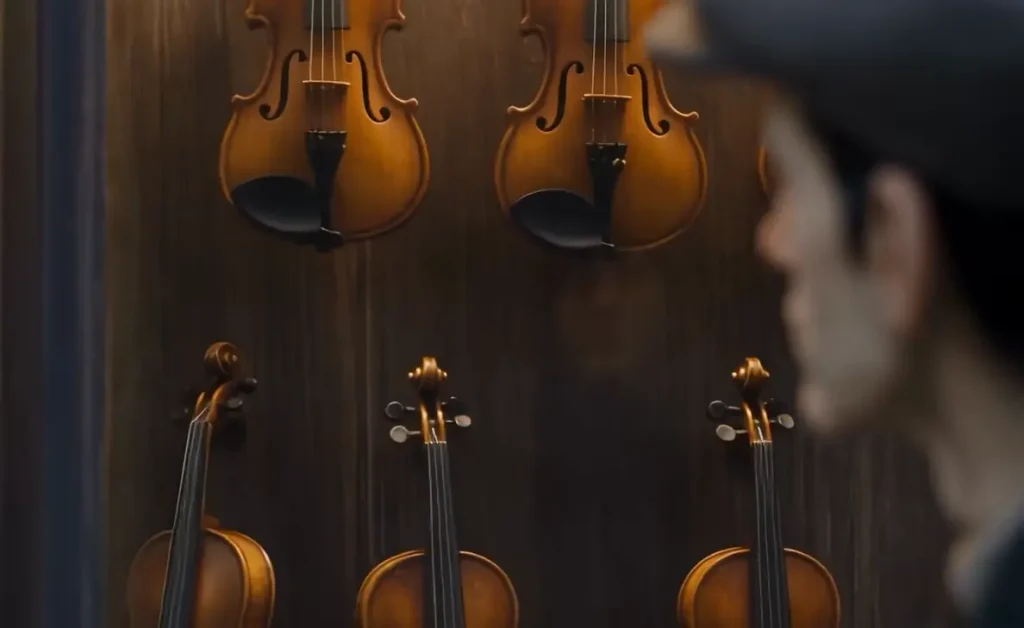
STILL is an approximately 11-minute-51-second AI short film created by The Blue Horizon AI and directed by Avaren. It was published in September 2026 as a submission associated with the Higgsfield Global Film Festival 2026. The production credits identify Higgsfield as the AI filmmaking platform used to create the film.
The film’s central premise is deliberately simple:
A young man in a psychiatric institution notices something that nobody else appears to see.
From there, STILL explores a much more complicated emotional territory: What happens when grief changes the way we perceive reality? Can memory make someone feel present after they are gone? And why do human beings continue holding onto people and experiences they cannot recover?
The official description frames the film around the idea that not everything that is lost is gone. It specifically identifies memory, music, grief, and the refusal to let something disappear as central themes.
STILL (2026) at a glance
| Detail | Information |
|---|---|
| Title | STILL |
| Year | 2026 |
| Format | AI short film |
| Director | Avaren |
| Production | The Blue Horizon AI |
| AI platform credited | Higgsfield |
| Runtime | Approximately 11:51 |
| Festival | Higgsfield Global Film Festival 2026 |
| Themes | Memory, grief, music, loss, perception |
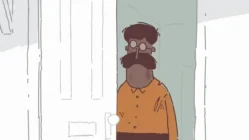
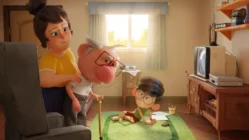
| Visual approach | Cinematic, handcrafted stop-motion-inspired aesthetic |
The runtime and production information are supported by indexed film listings and the creator’s published description.
What Is STILL About?
At its most basic level, STILL is a story about loss.
But the film’s premise introduces an important psychological question: when somebody we love disappears, does that person’s absence necessarily mean that they have disappeared from our lives?
Memory complicates the answer.
A person can be physically absent while remaining psychologically present through photographs, sounds, places, objects, routines, and memories. That tension between physical absence and emotional presence appears to sit at the heart of STILL.
The protagonist’s experience inside a psychiatric institution adds another layer. The film does not simply present grief as sadness. Instead, it asks the audience to consider how memory and perception can become intertwined.
The question becomes:
Is the character seeing something real, remembering something real, or experiencing reality through the emotional distortion created by loss?
Importantly, the available official description does not provide enough information to establish a single literal interpretation of every event in the story. That distinction matters. A responsible analysis should separate the film’s documented premise from interpretations viewers may develop while watching it.
The Meaning of the Title “STILL”
The title STILL is particularly appropriate for a story centered on memory and grief because the word has several meanings.
It can mean remaining.
Something is still there.
It can also mean motionless.
Something has stopped moving.
And it can suggest silence.
The title therefore works on multiple conceptual levels:
- Someone may be gone, but still remembered.
- A relationship may have ended, but still emotionally present.
- A person may appear physically still while experiencing intense internal movement.
- Music may stop, while its emotional effect still remains.
- A memory can freeze a particular moment in time.
This ambiguity is useful for AI cinema because AI-generated imagery often creates an unusual relationship between movement and stillness. A sequence can appear cinematic while retaining the visual qualities of an illustration, photograph, miniature, or stop-motion frame.
That appears to be part of the aesthetic direction behind STILL, which its creators describe as exploring handcrafted stop-motion aesthetics alongside generative filmmaking.
Why the Stop-Motion Aesthetic Matters
One of the most interesting aspects of STILL is its stated interest in handcrafted stop-motion aesthetics.
Stop-motion traditionally creates movement by photographing physical objects or puppets one frame at a time. The audience sees something that is technically artificial but emotionally tangible.
AI-generated cinema presents a different production mechanism.
Instead of physically moving a miniature character between frames, filmmakers can generate visual sequences digitally. Yet the artistic goal can remain similar: create an environment that feels constructed, tactile, stylized, and slightly removed from conventional live-action photography.
This distinction matters because AI filmmaking does not have to imitate conventional Hollywood cinematography.
It can develop its own visual vocabulary.
A filmmaker can intentionally choose:
- miniature-like environments,
- painterly textures,
- stylized characters,
- controlled camera movement,
- unusual lighting,
- dreamlike transitions,
- surreal spaces,
- deliberately imperfect motion.
For a story about memory and grief, such an aesthetic can be especially useful because memories themselves are rarely experienced like objective documentary footage.
We remember fragments.
We remember colors.
We remember faces.
We remember sounds.
We remember specific moments while forgetting everything surrounding them.
That makes stylized visual storytelling particularly relevant to a film like STILL.
How AI Changes the Filmmaking Process
Calling STILL an “AI film” does not mean that the creative process is simply a matter of entering one prompt and receiving a finished movie.
That distinction is important when discussing contemporary AI cinema.
AI video generation can assist with visual production, but filmmaking still involves decisions about:
- Story
- Characters
- Visual identity
- Shot composition
- Camera movement
- Continuity
- Editing
- Sound
- Music
- Pacing
- Emotional structure
The published credits for STILL specifically identify Higgsfield as the creation platform, while the film itself is credited to The Blue Horizon AI and directed by Avaren.
That distinction demonstrates an important point about AI filmmaking:
The AI system is part of the production pipeline; it does not eliminate the need for a filmmaker.
This is becoming increasingly relevant as AI filmmaking develops.
Other work from The Blue Horizon AI also demonstrates a broad range of genres and visual approaches, including sports, animation, drama, and post-apocalyptic science fiction.
STILL and the Future of AI Short Films
STILL is part of a rapidly expanding category of AI-generated narrative filmmaking.
In earlier generations of generative video, AI demonstrations often focused primarily on technical novelty:
“Look what the model can create.”
The newer generation of AI filmmaking increasingly asks a different question:
“What story can we tell with this new visual medium?”
That is a significant shift.
A technically impressive AI video can attract attention for a few seconds. A narrative short film needs something more difficult: emotional continuity.
The audience needs to understand:
- who the character is,
- what the character wants,
- what has been lost,
- what is at stake,
- why a particular scene matters,
- and why the ending deserves emotional attention.
That is why STILL is interesting beyond the simple fact that it was created using AI.
Its subject matter is fundamentally human.
Memory and Grief as the Film’s Central Ideas
The film’s published description explicitly identifies memory and grief among its central themes.
These themes work particularly well together.
Grief is not simply the moment someone dies or disappears.
It can become a continuing relationship with absence.
People may continue to:
- hear a familiar voice in their memory,
- associate songs with someone,
- revisit familiar locations,
- keep personal objects,
- repeat old routines,
- imagine conversations,
- remember particular gestures,
- or mentally reconstruct moments from the past.
This is why the film’s connection between music and memory is especially significant.
Music can function as an emotional memory trigger. A particular song can instantly connect a listener to a specific period, relationship, or person.
In cinema, sound therefore does more than accompany images.
It can become part of the narrative.
For STILL, the relationship between music, memory, and loss is explicitly identified by the creators, making sound an important part of understanding the film rather than treating it as background decoration.
Is STILL Really About Mental Illness?
The film takes place in a psychiatric institution, but that does not mean the film should automatically be interpreted as a clinical representation of mental illness.
That distinction is important.
A fictional film can use a psychiatric institution as a narrative environment without attempting to provide a medical explanation for its protagonist.
Likewise, seeing something that others do not see can have multiple narrative meanings. It could represent:
- memory,
- grief,
- imagination,
- psychological distress,
- metaphor,
- or a deliberately ambiguous cinematic device.
Without additional statements from the filmmaker explaining the intended interpretation, it would be inappropriate to diagnose the character or reduce the film to a medical condition.
Instead, the institution can be understood as a setting that intensifies the film’s central question:
Where is the boundary between what we remember, what we perceive, and what we cannot let go of?
What Makes STILL Different From a Typical AI Video?
A useful way to distinguish STILL from a generic AI video is intent.
A short AI-generated clip might demonstrate:
- realistic faces,
- camera movement,
- spectacular environments,
- visual effects,
- action sequences.
A narrative film has a different objective.
Every visual decision needs to serve the story.
The published description of STILL emphasizes a combination of cinematic storytelling, sound, music, generative filmmaking, and handcrafted stop-motion aesthetics.
That combination suggests an approach where the visual technology is subordinate to the narrative concept.
This is one of the most important developments in AI filmmaking in 2026.
The question is becoming less about:
“Was this made with AI?”
and more about:
“What did the filmmaker accomplish because AI was available?”
The Role of Higgsfield in STILL
According to the film’s published credits, STILL was created with Higgsfield.
Higgsfield is therefore part of the film’s documented production pipeline.
However, it is important not to confuse the production tool with the creative authorship of the film.
The available credits identify:
- The Blue Horizon AI as producer,
- Avaren as director,
- and Higgsfield as the creation platform.
This distinction is increasingly important for understanding AI-generated filmmaking.
Just as a conventional film can use a camera, editing software, visual-effects software, and sound-production tools without those tools becoming the director, AI systems should be understood as components within a creative production workflow.
STILL as an Example of AI Cinema in 2026
The importance of STILL is not necessarily that it proves AI has replaced conventional filmmaking.
There is insufficient evidence to make such a claim.
Its significance is more specific.
It demonstrates how AI filmmaking can be used for short-form narrative cinema with emotional themes, rather than exclusively for advertisements, experiments, visual effects, or viral clips.
The film’s appearance within the Higgsfield Global Film Festival 2026 also places it within a broader community of creators experimenting with AI-native filmmaking. The film’s own published description identifies it as a festival submission.
This is part of a larger transition from AI video as a technological demonstration toward AI video as a filmmaking medium.






Add Short Film Review