


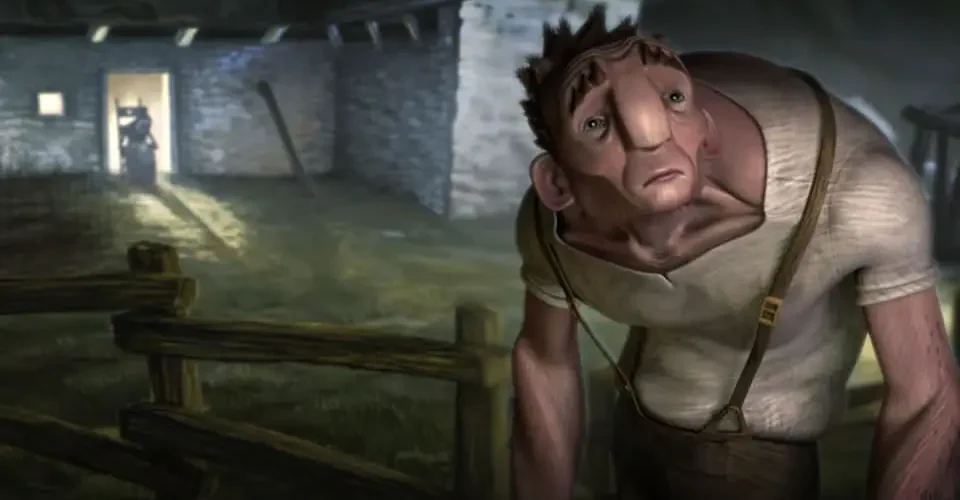

Urs (2009) is an award-winning German animated short film directed by Moritz Mayerhofer. It follows a son carrying his elderly mother up a mountain in search of a better life, exploring family responsibility, caregiving, personal freedom, and the emotional meaning of home.
cMovie.Asia
Urs (2009) is a German animated short film written and directed by Moritz Mayerhofer. Running approximately 10 minutes, the film tells a deeply human story about an adult son who has spent years caring for his elderly mother. When their difficult living conditions become increasingly unbearable, Urs decides to carry her on a dangerous journey up a mountain in search of a better place for both of them. However, his mother does not want to leave the home she knows.
Beneath its adventure-driven premise, Urs explores a universal emotional conflict: the difference between wanting what is best for someone and understanding what that person actually wants. Through its visual storytelling, restrained dialogue, and symbolic journey, the film examines caregiving, personal responsibility, aging, independence, and the complicated relationship between love and control.
Although it lasts only a few minutes, Urs raises questions that are relevant to families and caregivers across generations. Is changing someone’s circumstances always the right decision? Can a person make a better life for another without considering their wishes? And when does responsibility become an emotional burden?
Table of Contents
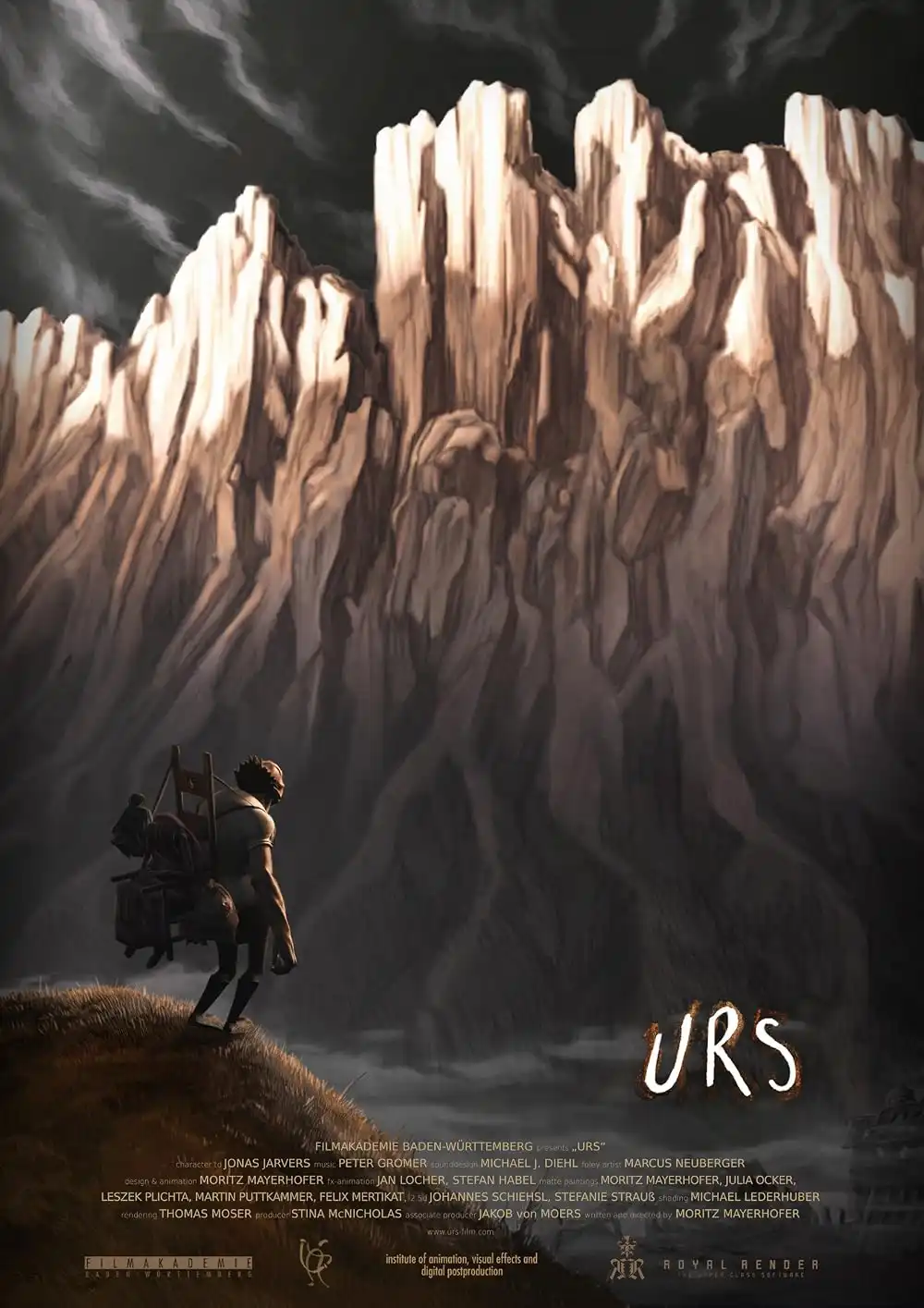
Film Information: Urs (2009)
| Category | Details |
|---|---|
| Film title | Urs |
| Release year | 2009 |
| Director | Moritz Mayerhofer |
| Screenwriter | Moritz Mayerhofer |
| Country | Germany |
| Genre | Animation, Drama, Adventure |
| Runtime | Approximately 10 minutes |
| Production | Filmakademie Baden-Württemberg |
| Producer | Stina McNicholas |
| Music | Peter Thomas Gromer |
| Sound design | Michael Diehl and Marcus Neuberger |
| Main voices | Thomas Hinke, Ellen Schäuble, Martin Weigel |
| Running Tim | 10 Minutes |
The film was produced at Filmakademie Baden-Württemberg, one of Germany’s established film education institutions. Its official production credits identify Mayerhofer as the writer and director, with a creative team responsible for animation, character development, visual effects, lighting, and compositing. studioNICE creative+1
The Story of Urs: A Dangerous Journey in Search of a Better Life
At the center of the film is Urs, a man who has spent much of his life looking after his elderly mother. Their existence is difficult, and the environment around them offers little comfort or security.
Eventually, Urs reaches a point where he believes something must change.
He decides to take his mother away from their familiar surroundings and carry her up a mountain. His intention is to find a better place where they can build a more sustainable future.
However, there is one significant problem: his mother does not want to leave home.
For Urs, the mountain represents hope, opportunity, and the possibility of a better life. For his mother, home represents familiarity, personal history, security, and the independence she still wants to preserve.
This disagreement transforms a physical journey into an emotional struggle.
The film’s central conflict is not simply whether Urs can complete the climb. It is whether his understanding of a better future is compatible with his mother’s wishes.
Understanding the two central characters
Urs: The responsibility of caregiving
Urs represents the emotional and physical responsibilities experienced by people who care for aging family members.
His decision to carry his mother suggests determination, strength, and devotion. Yet it also reveals an important limitation: he assumes that his own judgment about what is best should determine their future.
His intentions may be compassionate, but good intentions do not automatically guarantee the right decision.
The Mother: The importance of independence
The mother represents an older generation that may value familiarity and personal autonomy more than the improvements imagined by younger family members.
Her refusal to leave should not automatically be interpreted as stubbornness. A familiar home can represent identity, memories, emotional stability, and a lifetime of personal experiences.
Her position introduces an important question about aging: should older people be expected to accept major life changes simply because younger relatives believe those changes are beneficial?
The film does not reduce this disagreement to a simple conflict between a right and a wrong character. Instead, it allows both perspectives to remain emotionally understandable.
The Deeper Meaning of Urs: Love, Responsibility, and Personal Freedom
One of the most compelling aspects of Urs is its treatment of responsibility.
In many stories about family relationships, sacrifice is presented as an uncomplicated expression of love. A person works hard, makes difficult decisions, and puts another person’s needs first.
But Urs introduces a more complicated perspective.
What happens when the person receiving that sacrifice does not want what is being offered?
This question makes the film relevant beyond its immediate story.
Love does not always mean knowing what is best
Urs believes that relocating his mother will improve their lives. His motivation is understandable because he wants to escape an increasingly difficult situation.
Nevertheless, his mother’s refusal exposes a fundamental difference between providing care and making decisions on another person’s behalf.
In practical caregiving situations, families can encounter similar disagreements:
- An adult child believes an elderly parent should move into assisted living.
- A parent prefers to remain in a familiar family home.
- Family members prioritize physical safety, while the older person prioritizes independence.
- Relatives believe that changing environments will improve someone’s quality of life, but underestimate the emotional impact of relocation.
These situations demonstrate why caregiving requires more than physical assistance. It also involves listening, communication, respect, and an understanding of individual preferences.
The difference between protection and control
Another important theme is the boundary between protection and control.
Protecting someone means considering their safety and well-being. Controlling someone means making decisions without adequately respecting their wishes.
The distinction is particularly important when caring for older adults.
A caregiver may have legitimate concerns about dangerous living conditions, mobility, nutrition, or access to medical services. However, these concerns should be addressed through communication and appropriate support rather than assuming that every decision must be made by the caregiver.
The film uses the physical act of carrying his mother to make this conflict visible. Urs can physically transport her, but physical strength cannot resolve their disagreement.
That contrast gives the story much of its emotional weight.
Visual Storytelling and Animation: Why the Mountain Matters
The mountain is more than a background setting. It functions as a visual metaphor for the difficulties facing the characters.
The journey upward represents the effort required to escape difficult circumstances. Every step becomes part of a larger struggle involving physical endurance, responsibility, uncertainty, and emotional conflict.
The mountain as a symbol of hope
From Urs’s perspective, reaching the mountain represents progress.
He imagines a different future and is willing to endure physical hardship to achieve it.
This creates a clear visual relationship between movement and aspiration. The higher he travels, the closer he believes he is getting to a better existence.
However, the journey also raises an important question: does reaching a destination necessarily mean achieving happiness?
The film challenges the assumption that changing someone’s physical environment will automatically improve their emotional circumstances.
Cinematic composition and visual atmosphere
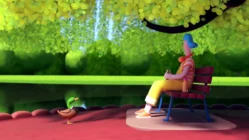
The official production information identifies Urs as a 10-minute, color, Cinemascope production. Its visual approach combines computer-generated characters with detailed environments and matte paintings.
The production credits also identify dedicated artists working on character development, shading, effects, modeling, and lighting. studioNICE creative+1
This combination of techniques allows the film to create a cinematic environment without relying on conventional live-action photography.
The wide-screen composition is particularly appropriate for a story involving a journey through an expansive landscape. It gives the environment an important role in communicating the characters’ circumstances.
Rather than treating animation as a medium exclusively associated with comedy or children’s entertainment, Mayerhofer uses it to explore an emotionally mature subject.
Animation Techniques and Creative Direction
Urs demonstrates how a short animated film can combine technical execution with a clearly defined dramatic purpose.
The production credits reveal several important creative components.
| Production element | Contribution to the film |
|---|---|
| 3D character animation | Communicates movement and character interaction |
| Matte paintings | Helps create the surrounding mountain environment |
| Lighting | Establishes atmosphere and visual depth |
| Shading | Develops the appearance of animated characters |
| Visual effects | Supports the visual environment |
| Compositing | Combines individual visual elements |
| Sound design | Adds atmosphere and supports the narrative |
| Music | Contributes to the emotional experience |
An interesting aspect of the production is that Mayerhofer was involved in several major creative roles, including writing, directing, storyboarding, animation, compositing, and editing.
This degree of creative involvement helps establish a consistent relationship between the film’s story and its visual presentation. studioNICE creative+1
Why animation works particularly well for this story
Animation gives filmmakers the freedom to create environments and visual metaphors that might be more difficult or expensive to achieve through live-action production.
For Urs, the mountain landscape can function simultaneously as a physical obstacle and an emotional representation of the characters’ struggles.
The animated format also creates a degree of visual distance from realistic depictions of family hardship. This can allow audiences to engage with difficult subjects through symbolism and visual interpretation.
The result is a short film that uses animation as a storytelling language rather than simply as a visual attraction.
Awards and International Recognition
One of the strongest indicators of the film’s professional recognition is its international festival history.
According to studioNICE’s official production page, Urs received numerous awards and distinctions at international animation and film festivals. studioNICE creative
Some notable achievements include:
| Festival or organization | Recognition |
|---|---|
| Santa Barbara International Film Festival 2010 | Best Animation Short Film |
| Palm Springs ShortFest 2010 | Second Place – Best Student Animated Short |
| 8th Visual Effects Society Awards | Nomination for Outstanding VFX in a Student Project |
| Melbourne International Animation Festival | Best of Next – International, Judges Award |
| Tokyo Animation Awards | Special Award |
| Prix Ars Electronica | Honorary Mention |
| Murnau Foundation | Murnau Short Film Award |
| FEST | Best Academic Work |
| Animation Block Party | Best Computer Animation Award |
| Animayo | Best 3D Film |
The Santa Barbara International Film Festival’s 2010 awards announcement independently confirms that Urs won the Bruce Corwin Award for Best Animation Short Film. TheWrap
The film’s recognition is also reflected in its selection for the Student Competition at the 2010 World Festival of Animated Film in Zagreb, as documented by Animafest. Animafest
This festival history is significant because it demonstrates that the film was recognized across several areas of animation, including direction, visual effects, technical production, and storytelling.
A note on awards: The studio’s official page also lists an Academy Awards shortlist distinction for Best Animated Short. This is a production-company credit; it should not be confused with an Oscar nomination or win.
Moritz Mayerhofer: The Filmmaker Behind Urs
Moritz Mayerhofer, German animation filmmaker and director known for his work in animated short films, including Urs, Amen!, and Father.
Moritz Mayerhofer developed Urs during his filmmaking education at Filmakademie Baden-Württemberg. The project became an important early achievement in his animation career.
According to Animafest’s filmmaker biography, Mayerhofer is based in Berlin, co-founded the animation studio studioNICE, and has worked on several animated productions. His other works include:
- Urs (2009): An animated drama about caregiving, family responsibility, and personal freedom.
- Amen! (2009): Another animated short associated with his early filmmaking career.
- Father (2012): A collective animated documentary exploring the subject of fatherhood.
His professional background demonstrates an interest in animation as a medium for communicating human experiences and socially meaningful subjects. Animafest+1
What Makes Urs Relevant to Modern Audiences in 2026?
Although Urs was released in 2009, its central themes remain relevant in 2026.
Many societies are experiencing population aging, changes in family structures, and increasing demand for elderly care services.
The World Health Organization identifies healthy aging as a process involving the development and maintenance of functional ability that enables well-being in older age.
This perspective is important when interpreting Urs.
A person’s quality of life cannot be evaluated exclusively through physical safety or access to better facilities. Personal independence, meaningful relationships, familiar surroundings, and the ability to make decisions also matter.
Three lessons that modern families can take from the film
1. Listen before making major decisions.
When an elderly parent faces difficulties, family members should understand their preferences and concerns before proposing major lifestyle changes.
2. Recognize the emotional demands of caregiving.
Caregiving can involve physical exhaustion, financial pressure, and emotional stress. Support systems are important for both the caregiver and the person receiving care.
3. Understand that a better environment does not automatically mean a better life.
Moving to a different home or community may improve some circumstances while creating new emotional challenges. Decisions should consider the individual’s overall well-being.
These lessons should not be interpreted as suggesting that relocation or professional care is inherently wrong. Rather, they highlight the importance of balancing safety, autonomy, and personal circumstances.
Film Review: Strengths and Limitations of Urs
Recommended for animation and short-film audiences
Urs is particularly interesting because it builds its emotional conflict around a relatively simple premise.
Instead of introducing multiple storylines or extensive character development, Mayerhofer concentrates on one relationship and one difficult decision.
What works particularly well
A universally understandable subject
The relationship between parents and children is recognizable across cultures. The conflict between caring for an aging parent and respecting their independence gives the film broad emotional relevance.
Strong visual symbolism
The mountain journey provides a clear visual representation of struggle, ambition, and uncertainty. It allows the physical landscape to contribute directly to the storytelling.
An emotionally complex central conflict
Neither character needs to be portrayed as entirely right or wrong. The disagreement becomes more meaningful because both perspectives can be understood.
Efficient storytelling
At approximately 10 minutes, the film demonstrates how animation can communicate a substantial emotional idea without requiring feature-length storytelling.
What some viewers may find challenging
The short runtime limits the opportunity to explore the characters’ histories and motivations in detail.
Viewers who prefer dialogue-heavy narratives or clearly explained character development may find the storytelling relatively restrained.
However, this approach is consistent with the short-film format. The audience is invited to interpret the relationship and its emotional implications rather than receive an exhaustive explanation.
Overall assessment
Urs is a meaningful example of independent animated storytelling. Its greatest strength is the way it transforms a straightforward physical journey into a discussion about responsibility, love, and individual freedom.
It is especially suitable for viewers interested in animated dramas, festival short films, visual storytelling, and narratives about family relationships.
Final Verdict: A Short Animated Film with a Lasting Human Message
Urs is more than a story about a man carrying his elderly mother up a mountain. It is a reflection on one of the most difficult aspects of human relationships: making decisions for someone you love while trying to respect their independence.
Moritz Mayerhofer uses animation, cinematic composition, and a straightforward narrative to explore the complicated relationship between protection and personal freedom.
The film’s international festival recognition reflects its achievements as an animated production, while its central subject gives it relevance beyond the technical accomplishments of its creators.
Its most important question remains surprisingly simple:
When we believe we are doing something for someone else’s benefit, have we actually considered what that person wants?
That question makes Urs a worthwhile short film for audiences interested in meaningful animation, family relationships, and stories that encourage reflection long after the screen goes dark.




Add Short Film Review