


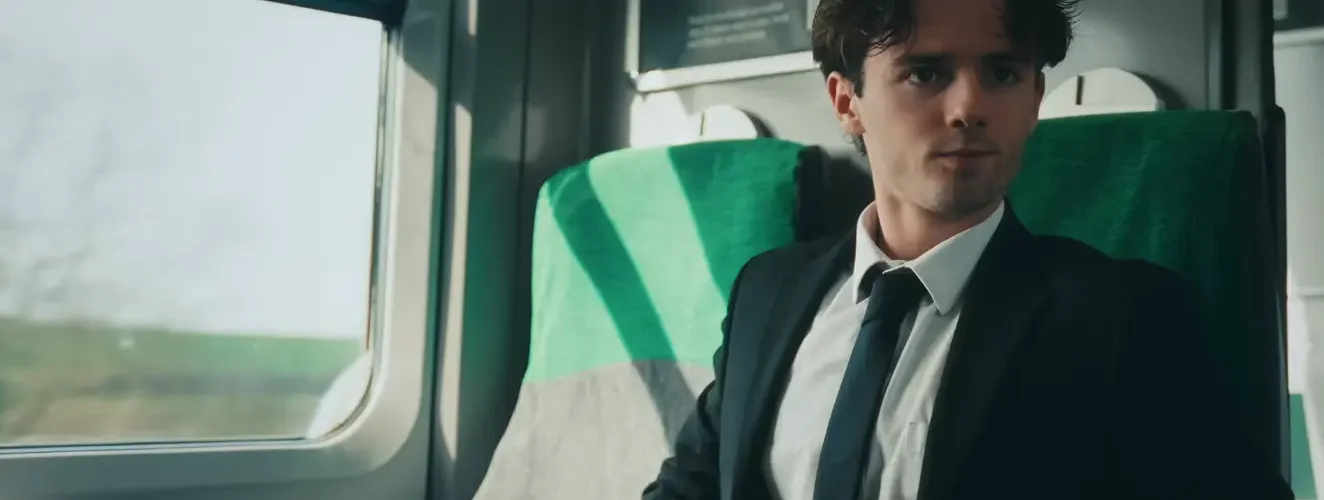

ONE SECOND LATE is a five-minute British short film by Noah Berridge and Yuli Freed, exploring how a single moment can change people’s lives. Following a man rushing to catch a train for a job interview, the film examines timing, missed connections, alternative realities, and unexpected human relationships.
cMovie.Asia
ONE SECOND LATE (2026) is a five-minute British drama short film directed by Noah Berridge and Yuli Freed. Built around a deceptively simple situation—a man rushing to catch a train for a job interview—the film explores how a seemingly insignificant moment can change the direction of two people’s lives. Through an inventive narrative involving two strangers and three possible realities, ONE SECOND LATE examines timing, missed connections, personal decisions, and the unpredictable consequences of everyday choices.
Written and produced by Noah Berridge, the short film demonstrates how a compelling cinematic idea can be developed within a very limited runtime. Rather than relying on an elaborate storyline, it uses an ordinary encounter to raise a universal question: How different might our lives become if we had arrived just one second earlier or later?
Table of Contents
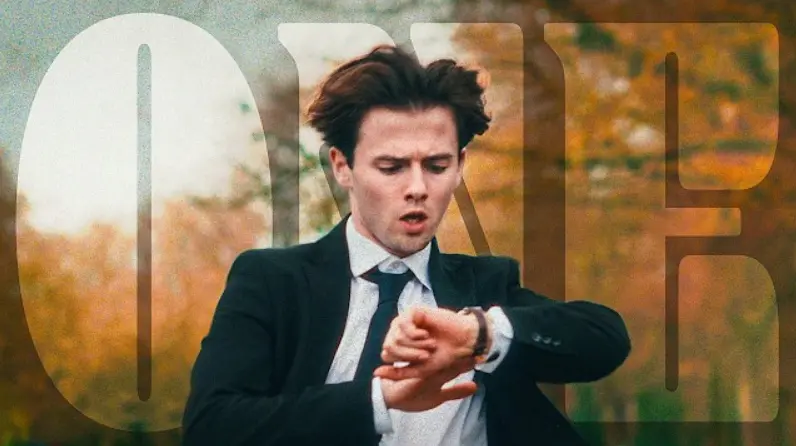
ONE SECOND LATE (2026): Film Overview
- Country: United Kingdom
- Initial Release: April 15, 2026
- Film Directors: Noah Berridge, Yuli Freed
- Genre: Drama
- Original Language: English
- Running Time: 5 Minutes
The film was released online on April 15, 2026, through Breathing Films, the independent filmmaking studio and YouTube channel co-founded by Noah Berridge and Yuli Freed.
Its central premise is straightforward but emotionally engaging: a man attempts to catch a train before attending a job interview, while the timing of an encounter introduces different possibilities for what might happen next.
What Is ONE SECOND LATE About?
ONE SECOND LATE follows a man named Ben, played by Ollie Evans, who is rushing to catch a train because he has an important job interview.
During this ordinary journey, he becomes connected to another passenger, Jess, played by Peggy Barnes.
What initially appears to be a simple situation involving two strangers develops into an exploration of alternative possibilities.
The film introduces three different realities, examining how a small difference in timing or a single decision can change the direction of an encounter.
What happens if Ben catches the train? What if he misses it? And what if the people involved experience an entirely different outcome because of a decision made only moments earlier?
These possibilities form the foundation of the story.
Rather than presenting life as a straightforward sequence of events, ONE SECOND LATE encourages viewers to consider the many possible versions of their own experiences.
The central idea is particularly relatable because almost everyone has experienced a moment when arriving late, missing an opportunity, changing direction, or making an unexpected decision seemed to alter what happened next.
The film transforms that familiar experience into a short cinematic examination of coincidence, timing, and human connection.
The Meaning Behind ONE SECOND LATE: Can One Second Change Your Life?
The central theme of ONE SECOND LATE is the relationship between time and personal decisions.
In everyday life, people frequently underestimate the significance of small moments.
Missing a train by a few seconds, choosing a different route, arriving at an appointment early, or deciding to speak to someone can produce consequences that extend far beyond the original situation.
The film uses this concept to explore a question that has fascinated writers, philosophers, and filmmakers for generations: How much of our lives is determined by the decisions we make, and how much is influenced by circumstances outside our control?
1. The Butterfly Effect of Everyday Decisions
The butterfly effect is commonly used to describe how a small change in an initial condition can produce substantially different outcomes in a complex system.
Although the term originated in chaos theory, it has become a familiar metaphor in storytelling.
ONE SECOND LATE uses a similar idea within an ordinary human situation.
A difference of one second may seem insignificant. However, when that moment determines whether two people meet, miss each other, or experience an unexpected encounter, its emotional significance becomes much greater.
Consider a familiar example.
Someone leaves home one minute earlier than usual and catches a train they would otherwise have missed. That decision changes their arrival time, their interactions with other passengers, and potentially the events that follow.
The film explores this type of possibility through its alternative realities.
Importantly, the butterfly effect is a storytelling metaphor here, rather than a scientific claim that every minor decision inevitably changes someone’s destiny.
2. Missed Opportunities and Human Connection
Another important theme is the idea of people we almost meet.
Many relationships begin through ordinary circumstances. Two people may share a train, enter the same building, attend the same event, or walk along the same street without realizing how close their paths have come.
Sometimes they meet. Sometimes they do not.
ONE SECOND LATE examines this uncertainty through Ben and Jess.
Their encounter represents more than a conventional meeting between two strangers. It raises the possibility that different circumstances might create completely different relationships and experiences.
This makes the film particularly relevant to viewers who have experienced missed connections, unexpected encounters, or opportunities that appeared and disappeared without warning.
3. The Weight of Decisions
The film also invites viewers to consider how decisions influence their understanding of the past.
People frequently look backward and imagine what might have happened if they had chosen differently.
What if I had taken another job?
What if I had moved to another city?
What if I had spoken to that person?
What if I had arrived earlier?
These questions are part of ordinary human reflection.
However, there is an important distinction between considering alternative possibilities and believing that every decision has a single identifiable correct answer.
ONE SECOND LATE uses its multiple realities to explore that distinction, leaving viewers to consider the relationship between choice, coincidence, and consequence.
ONE SECOND LATE Review: How the Short Film Uses a Simple Idea to Create Emotional Impact
One of the most interesting aspects of ONE SECOND LATE is its approach to storytelling.
At approximately five minutes, the film operates under considerable narrative limitations.
A feature film can spend considerable time establishing characters, explaining their backgrounds, and developing multiple storylines. A five-minute short film has much less room.
Every scene must contribute meaningfully to the central concept.
This is where the film’s premise becomes particularly effective.
Instead of introducing a complicated fictional world, it begins with a situation that requires almost no explanation: a person trying to catch a train.
The audience immediately understands the urgency.
The job interview provides a recognizable motivation, while the train creates a clear deadline. This gives the story an accessible starting point before introducing its more imaginative narrative possibilities.
The three-reality structure then expands the original situation without requiring an extensive backstory.
This is an effective short-film storytelling technique because it allows a relatively small event to support a much larger thematic discussion.
A Strong Concept with a Universal Message
A successful short film does not necessarily need a complicated plot.
Some of the most effective short-form stories are built around a single question, situation, or unexpected realization.
ONE SECOND LATE demonstrates the potential of this approach.
Its premise is immediately understandable to an international audience because trains, appointments, missed connections, and important decisions are familiar experiences across cultures.
The underlying message does not depend on a particular country, generation, or profession.
Whether someone is attending a job interview, meeting a potential partner, traveling to another city, or making an important personal decision, the uncertainty surrounding life’s turning points is universally recognizable.
Why the Three-Realities Structure Matters
The film’s three-reality concept is particularly important because it moves the story beyond a simple missed-train scenario.
A conventional short film might focus entirely on whether Ben successfully catches the train.
ONE SECOND LATE uses that situation as the starting point for considering different possible outcomes.
This changes the audience’s relationship with the story.
Instead of asking only what happens next, viewers are encouraged to consider how the same starting situation could produce different experiences.
This approach also creates an opportunity for repeated viewing.
On a second viewing, audiences may pay closer attention to the significance of the small decisions and differences that shape the alternative scenarios.
Noah Berridge: The Young Filmmaker Behind ONE SECOND LATE
Noah Berridge is a British writer, director, and producer whose filmmaking work focuses on narrative storytelling and digital audiences.
Based in Bristol, United Kingdom, Berridge began making films at an early age.
His previous projects include Timepiece (2024) and Mordros (2025), demonstrating an interest in developing original stories for short-form cinema.
According to his official filmmaker website, he co-founded Breathing Films with filmmaker Yuli Freed in 2024.
The studio’s narrative films have accumulated more than three million views, while its YouTube audience has grown to over 25,000 subscribers. The website reports approximately 3.8 million total views and 27,000 subscribers.
Berridge was also selected as one of 12 filmmakers for the first NFTS x YouTube Creator Incubator, a programme designed to support emerging creators through filmmaking, storytelling, and digital audience development.
These experiences provide useful context for understanding ONE SECOND LATE.
The film is not simply an isolated creative exercise. It is part of a broader body of work developed within an independent filmmaking environment that combines traditional narrative techniques with online distribution.
For emerging filmmakers, this approach offers an interesting example of how short-form storytelling can reach audiences beyond conventional cinema and film festival circuits.
Yuli Freed: Co-Director and Cinematographer
Yuli Freed shares directing responsibilities on ONE SECOND LATE and is also credited as its cinematographer.
This combination of responsibilities is significant in independent filmmaking.
When a filmmaker contributes to both the direction and cinematography of a project, the visual approach can be closely connected to the intended storytelling structure.
For a film involving alternative realities and small differences in timing, visual consistency and clarity are particularly important.
The audience needs to understand the relationship between the different versions of events without becoming confused about the central situation.
Freed’s involvement in both creative roles makes cinematography an important part of the film’s overall production identity.
His collaboration with Berridge also extends beyond this individual project through their work at Breathing Films.
ONE SECOND LATE Cast and Performances
The film features three credited performers: Ollie Evans, Peggy Barnes, and Kate Penning.
Ollie Evans as Ben
Ollie Evans plays Ben, the man rushing to catch a train for an important job interview.
Ben provides the audience with a recognizable point of entry into the story.
His situation is immediately understandable: he has somewhere important to be, time is limited, and the outcome of his journey is uncertain.
This everyday motivation helps establish the emotional foundation for the film’s exploration of alternative possibilities.
Peggy Barnes as Jess
Peggy Barnes plays Jess, the other central figure connected to the film’s encounter between two strangers.
Her character is important to the story’s exploration of missed connections and the possibility that a small difference in timing can influence whether two people meet.
Kate Penning as the Woman
Kate Penning is credited as Woman.
Her supporting role contributes to the film’s ensemble of characters and its different narrative possibilities.
Although the film has a small cast, this is consistent with its concentrated storytelling approach.
Short films frequently benefit from a limited number of characters because they can devote more attention to the central premise without requiring extensive secondary storylines.
Why Five-Minute Short Films Can Be So Effective
The runtime of ONE SECOND LATE is approximately five minutes.
This is an interesting format because it requires a different approach to storytelling from a traditional feature film.
A short film cannot rely on lengthy character development or extensive exposition.
Instead, it needs to communicate its central idea quickly and create an experience that remains meaningful after the credits appear.
There are several important principles involved.
1. Establish the situation immediately.
The audience should understand the main character’s immediate objective. In this case, Ben needs to catch a train for a job interview.
2. Introduce a clear source of tension.
Time pressure creates an immediate reason for viewers to pay attention.
3. Develop the central concept.
The alternative realities expand the initial situation and introduce the film’s central question.
4. Create an emotional connection.
The story becomes more meaningful when viewers recognize experiences from their own lives.
5. Leave room for interpretation.
A short film can be particularly effective when it gives the audience something to consider after the viewing experience ends.
ONE SECOND LATE follows a concept well suited to this format.
Its limited runtime encourages concentration, while its subject matter offers considerably more to discuss than the initial train journey might suggest.
ONE SECOND LATE and the Growing Importance of Digital Short Films
The distribution of short films has changed significantly with the growth of online video platforms.
Independent filmmakers no longer need to depend entirely on traditional theatrical distribution to reach an international audience.
YouTube and other digital platforms provide opportunities to publish original films, develop audiences, and connect with viewers across geographical boundaries.
Breathing Films is an example of this independent production and distribution model.
By combining filmmaking with an established digital audience, the studio can present original narrative projects directly to viewers.
This is particularly relevant to short films because their length makes them accessible to people who may not have time to watch a feature-length production.
However, online accessibility does not eliminate the importance of cinematic storytelling.
A short film still needs a recognizable creative identity, an engaging premise, effective performances, and a satisfying relationship between its narrative and visual elements.
ONE SECOND LATE illustrates how an accessible concept can serve as the foundation for an internationally understandable short-form story.
ONE SECOND LATE at the London Breeze Film Festival 2026
ONE SECOND LATE was included in the official selection for the inaugural 19–25 Young Adult Shorts Competition at the London Breeze Film Festival.
The competition took place on October 25, 2026, at The Garden Cinema in London.
The festival programme featured emerging filmmakers working across different genres, including animation, documentary, comedy, thriller, and drama.
ONE SECOND LATE was listed alongside films by other emerging filmmakers, including Surface Tension by Benjamin Wright, Dinner Guest by Josh Workman, and The Hero by Oliver Woolridge.
The competition’s winners were to be selected by an industry panel that included Chantal Rickards OBE, Damian Keogh, and filmmaker Louisa Connolly-Burnham.
Selection for this programme is a relevant milestone for the film because it places the work within a curated environment dedicated to emerging young filmmaking talent.
It is important to distinguish official selection from an award win. Inclusion in the competition confirms that the film was programmed, but does not independently establish that it received a prize.
For audiences interested in discovering new filmmakers, festival selections can provide a useful starting point for exploring independent short films beyond the most widely distributed productions.
Final Verdict: Why ONE SECOND LATE Is Worth Watching
ONE SECOND LATE is a concise British short film built around a question that almost everyone can understand: What if one small moment had happened differently?
Through the story of Ben and Jess, directors Noah Berridge and Yuli Freed explore the relationship between timing, coincidence, missed opportunities, and human connection.
The film’s greatest strength is its accessible central idea. A man rushing to catch a train for a job interview becomes the starting point for a broader exploration of alternative realities and the consequences of everyday decisions.
Its five-minute runtime also demonstrates the possibilities of short-form filmmaking. A story does not need an elaborate setting, a large cast, or a complicated plot to raise meaningful questions.
For audiences interested in independent British short films, emerging filmmakers, and stories that encourage reflection, ONE SECOND LATE is a worthwhile discovery.
It also offers an opportunity to follow the developing creative work of Noah Berridge and Yuli Freed through their collaboration at Breathing Films.
Ultimately, the film leaves viewers with a simple but lasting thought: We often remember the moments that changed our lives, but we rarely know how many other possibilities disappeared because of a single second.
FAQs
What is ONE SECOND LATE short film about?
ONE SECOND LATE is a five-minute British short film by Noah Berridge and Yuli Freed. It follows Ben, a man trying to catch a train for a job interview, and explores three possible realities shaped by timing, missed connections, and unexpected decisions.
Who directed ONE SECOND LATE by Noah Berridge?
ONE SECOND LATE was directed by Noah Berridge and Yuli Freed. Noah Berridge also wrote and produced the short film, while Yuli Freed worked as its cinematographer. The project was released through their independent production studio, Breathing Films.
Who are the actors in ONE SECOND LATE (2026)?
The main cast of ONE SECOND LATE includes Ollie Evans as Ben, Peggy Barnes as Jess, and Kate Penning as Woman. Their performances help bring the film’s story of missed connections and alternative possibilities to life.
What is the message behind ONE SECOND LATE short film?
The central message of ONE SECOND LATE is that small moments and unexpected decisions can influence the direction of our lives. Through its three-reality storytelling structure, Noah Berridge explores coincidence, alternative possibilities, missed opportunities, and the importance of timing in human relationships.
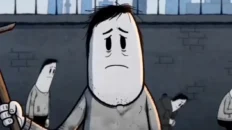


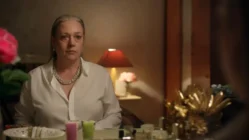
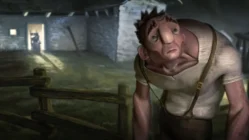


ONE SECOND LATE is a thought-provoking British short film that explores how a single moment can change the course of two people’s lives. Directed by Noah Berridge and Yuli Freed, this five-minute drama uses three possible realities to examine timing, missed connections, and unexpected encounters. With a relatable premise and an intriguing narrative, it reminds viewers that even the smallest decisions can lead to completely different outcomes. A compelling short film for anyone who enjoys meaningful storytelling.