


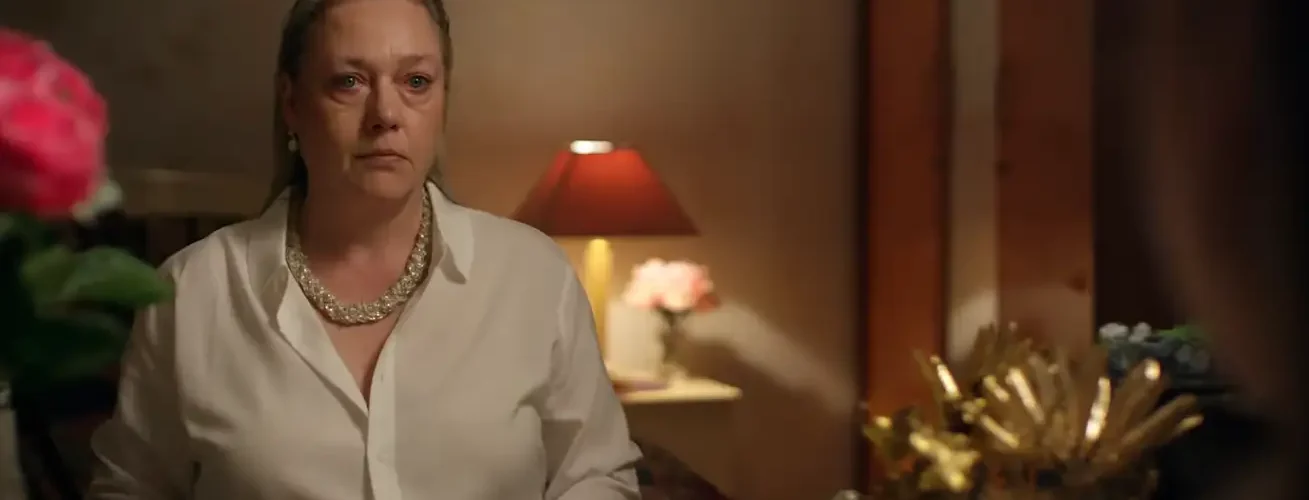

Serving Joy is a 2017 award-winning Australian dark comedy short film written and directed by Martin Sharpe. Running approximately 14 minutes, the film follows Joy as an important dinner party takes an unexpected turn, exposing hidden secrets, uncomfortable relationships, and the absurdity behind perfect social appearances.
cMovie.Asia
Serving Joy is an award-winning Australian dark comedy short film that transforms an elegant dinner party into an unexpectedly revealing evening of secrets, social tension, and uncomfortable humor. Written and directed by Martin Sharpe, this 2017 short film explores the contrast between public appearances and private realities, using sharp character-driven comedy to expose the absurdities of everyday relationships. With its festival recognition, engaging ensemble performances, and distinctive approach to black comedy, Serving Joy is an intriguing example of independent Australian filmmaking.
Table of Contents

Serving Joy (2017): Film Overview and Key Details
| Film detail | Information |
|---|---|
| Title | Serving Joy |
| Release year | 2017 |
| Country | Australia |
| Genre | Dark Comedy, Comedy-Drama |
| Running time | 14 minutes |
| Director | Martin Sharpe |
| Writer | Martin Sharpe |
| Producer | Ivan Bradara |
| Production company | Nebula Pictures |
| Cinematography | Eric Maddison |
| Editing | Katerina Borys |
| Lead performer | Andrea Swifte as Joy |
The film was featured in several international film festivals, including the 2018 Palm Springs International ShortFest and the Brooklyn Film Festival. Its awards include Best Comedy at the Edmonton International Film Festival and Best Short Film at the Canberra International Film Festival, while Andrea Swifte received Best Actress recognition at Canberra. MartinJSharpe+2
What Is Serving Joy About?
At its heart, Serving Joy is about the pressure to maintain a perfect public image when private relationships are far from perfect.
Joy is preparing an elaborate dinner party that carries considerable personal importance. The roast is ready, the soufflés are rising, and the table is carefully arranged. Every detail matters because the evening represents more than a social gathering. It becomes a test of composure, reputation, and the ability to keep everything under control.
However, the guests bring their own histories, tensions, and unspoken truths.
As the evening progresses, conversations become increasingly uncomfortable. Social politeness gives way to revealing exchanges, and the atmosphere changes from sophisticated hospitality to an increasingly unpredictable situation.
The central dramatic tension comes from the contrast between the dinner party’s carefully constructed appearance and the emotional disorder developing beneath it.
Rather than relying on an elaborate external plot, the film uses a familiar social situation to expose the fragile nature of relationships and the expectations people place on themselves and others.
Why Serving Joy Is an Effective Dark Comedy
Dark comedy works by finding humor in situations that are uncomfortable, socially sensitive, emotionally complicated, or even disturbing.
Unlike conventional comedy, which often relies on obvious punchlines, physical humor, or exaggerated characters, black comedy frequently builds its humor through contradiction.
A character might behave politely while experiencing intense frustration. A seemingly innocent conversation may expose an uncomfortable truth. An ordinary social gathering can become an increasingly absurd situation because nobody wants to acknowledge what is happening.
Serving Joy uses several recognizable elements of this genre.
1. The Contrast Between Appearance and Reality
One of the film’s most important themes is the difference between social appearances and private reality.
Dinner parties are traditionally associated with hospitality, good manners, conversation, and carefully prepared food. Guests are expected to behave appropriately, avoid unnecessary confrontation, and respect social boundaries.
But these expectations can also create pressure.
People may conceal disagreements, avoid difficult conversations, or pretend that relationships are functioning normally. The result is an environment in which everyone understands that something is wrong, but nobody necessarily wants to be the first person to acknowledge it.
The comedy emerges from this contradiction.
2. Social Etiquette as a Source of Comedy
Social etiquette provides an especially effective foundation for dark humor because it establishes rules that characters are expected to follow.
Consider a familiar situation: someone makes an inappropriate comment during dinner. Other guests recognize the problem, but instead of addressing it directly, they attempt to continue the conversation.
That uncomfortable pause can become funnier than an obvious joke.
In Serving Joy, the formal dinner-party setting provides an opportunity to explore the tension between maintaining good manners and responding honestly to uncomfortable circumstances.
3. Escalating Tension Through Dialogue
Dialogue-driven comedy depends on what characters say, what they avoid saying, and how their words change the atmosphere.
In an ensemble film, different personalities create opportunities for misunderstandings, conflicting perspectives, and unexpected revelations.
The effectiveness of this approach depends on timing. A conversation that initially appears harmless can gradually become uncomfortable as additional information emerges.
For short films, this is particularly important. A filmmaker has limited time to establish relationships, communicate motivations, and develop a satisfying dramatic progression.
By concentrating on a single dinner-party setting, Serving Joy gives its characters and dialogue room to drive the comedy.
Cast and Performances: The Ensemble Behind the Dinner Party
The ensemble cast is central to the film’s storytelling. Rather than depending on one performer to carry every comedic moment, Serving Joy builds its atmosphere through interactions among several characters.
The principal cast includes:
- Andrea Swifte as Joy: The central character whose dinner-party preparations provide the film’s narrative foundation.
- Kate Fitzpatrick as Sue: A member of the ensemble contributing to the social dynamics of the gathering.
- Paul Dawber as Graham: One of the guests involved in the unfolding interpersonal tensions.
- Tom Gutteridge as Peter: Another member of the dinner-party ensemble.
- Ian Rooney as Malcom: Part of the group whose interactions contribute to the film’s increasingly complicated atmosphere.
- Carole Patullo as Marg: A supporting character in the gathering.
- Marita Wilcox as Denise: Another member of the ensemble.
- Roger Oakley: Also featured in the cast.
Andrea Swifte’s performance is particularly significant because Joy serves as the emotional center of the story. The character’s situation gives the audience a consistent perspective through which to experience the increasingly uncomfortable evening.
The ensemble format also creates opportunities for contrasting personalities. In dark comedy, the relationship between characters is often as important as the individual jokes. A seemingly ordinary exchange can become memorable when the audience understands the tension behind it.
Martin Sharpe: The Writer and Director of Serving Joy
Martin Sharpe is an Australian filmmaker, actor, writer, and director whose background includes work in television, acting, and filmmaking.
Before directing Serving Joy, Sharpe appeared in Australian television productions and films, including Lake Mungo. His experience as a performer provides an additional perspective on character development, dialogue, and screen performance.
According to his official film portfolio, Serving Joy was developed as a narrative short and a creative project intended to explore comedic direction, dialogue, tension, and dark humor.
This creative objective is important to understanding the film’s structure.
Rather than building a comedy around a series of unrelated jokes, Sharpe places the characters in a socially recognizable situation and allows tension to develop through their interactions.
The film’s production team also includes experienced creative professionals:
- Ivan Bradara: Producer.
- Eric Maddison: Director of Photography.
- Katerina Borys: Editor.
- Dorian Lazar: Production Designer.
- Ryan Granger: Supervising Sound Editor.
- Adam Hunt: Sound Editor.
- Chloe Greaves: Costume Designer.
The cinematography, production design, editing, and sound contribute to the controlled dinner-party environment in which the characters’ social behavior becomes the focus.
For a 14-minute film, coordination between these departments is particularly important. Every scene must communicate information efficiently without slowing the narrative.
Awards and International Film Festival Recognition
Its festival history demonstrates how a relatively short independent production can reach audiences beyond its original market.
The following are notable documented recognitions:
| Festival | Recognition |
|---|---|
| Edmonton International Film Festival | Best Comedy |
| Canberra International Film Festival | Best Short Film |
| Canberra International Film Festival | Best Actress – Andrea Swifte |
| Palm Springs International ShortFest | 2018 festival selection |
| Brooklyn Film Festival | 2018 East Coast Premiere |
The distinction between an award and an official selection matters. Palm Springs International ShortFest provided an important international screening opportunity, but its archive lists the Edmonton and Canberra awards separately. MartinJSharpe+2
The director’s later 2026 description also reports a Best Film award at the Dalmatia International Festival in Croatia and more than 20 official selections. These additional achievements are attributed to the filmmaker’s own published description. Zolotube
Why Film Festival Recognition Matters
Film festivals provide independent filmmakers with opportunities to present their work to audiences, programmers, critics, distributors, and other industry professionals.
For short films, recognition can serve several purposes:
- Industry visibility: Festival screenings introduce filmmakers to international audiences and creative professionals.
- Professional credibility: Awards provide external recognition of a film’s creative achievements.
- Audience development: International selections allow films to reach viewers who might not otherwise encounter independent productions.
- Career opportunities: Recognition can help directors and producers build relationships for future projects.
For Serving Joy, its festival history is an important part of its identity as an internationally recognized Australian short film.
What Makes Serving Joy Different From a Conventional Comedy?
A conventional comedy often establishes a humorous premise and develops it through jokes, misunderstandings, and amusing outcomes.
Dark comedy uses a different approach.
It frequently explores uncomfortable human behavior and allows audiences to recognize humor in situations that would ordinarily produce embarrassment, frustration, or social discomfort.
There are three particularly relevant storytelling techniques.
Character-driven humor: The comedy develops through personality differences and relationships rather than relying exclusively on physical humor.
Situational irony: The characters’ attempts to preserve an appearance of normality can become increasingly absurd as circumstances change.
Social observation: Familiar social rituals provide the foundation for humor because audiences recognize the expectations being challenged.
These techniques help explain why a dinner party is such an effective setting for this genre. It is an environment with established rules, expectations, and social boundaries. When those boundaries begin to break down, even small interactions can carry significant dramatic weight.
The Importance of Setting: Why a Dinner Party Works So Well
The dinner-party setting is more than a convenient location. It functions as a storytelling device.
A dinner party brings people together in a relatively confined social environment. Guests are expected to remain seated, participate in conversations, and demonstrate appropriate behavior.
Unlike an action film, where the story can move between multiple locations and dramatic events, a dinner-party comedy can concentrate on facial expressions, awkward pauses, changes in tone, and interpersonal reactions.
This creates several storytelling advantages:
- Limited setting: Keeps the narrative focused and helps establish a consistent atmosphere.
- Ensemble interactions: Allows multiple characters to influence the direction of the story.
- Social expectations: Creates opportunities for humor based on politeness and public behavior.
- Gradual tension: Allows seemingly insignificant conversations to develop into more meaningful confrontations.
- Character-driven storytelling: Gives performers opportunities to communicate emotion through dialogue and subtle reactions.
For independent filmmakers, this approach also illustrates how a contained setting can support an engaging narrative without requiring extensive locations or large-scale production elements.
Is Serving Joy Worth Watching?
For audiences who enjoy independent cinema, character-driven comedy, and stories that explore the uncomfortable side of social relationships, Serving Joy offers an interesting viewing experience.
Its short runtime is another advantage. At approximately 14 minutes, the film provides a compact narrative rather than requiring the commitment of a full-length feature.
The film is particularly relevant to viewers who appreciate:
- Australian independent short films.
- British-style and international black comedy traditions.
- Ensemble performances and dialogue-driven storytelling.
- Satirical examinations of middle-class social behavior.
- Comedy built around awkward social situations.
- Short films with a festival-recognized creative background.
Viewers expecting conventional slapstick comedy or a straightforward feel-good dinner-party story should approach it with different expectations. Its appeal comes from social tension, uncomfortable humor, and the contrast between appearances and reality.
Final Thoughts: A Dinner Party Where Nothing Stays Perfect
Serving Joy demonstrates how an ordinary social gathering can become the foundation for an engaging dark comedy.
Through its dinner-party setting, ensemble cast, and focus on the contradictions of social behavior, the film explores the uncomfortable distance between public appearances and private realities.
Martin Sharpe’s approach to character-driven storytelling makes the 14-minute production an interesting example of Australian independent short filmmaking. Its international festival recognition, including awards at Edmonton and Canberra and its selection for Palm Springs International ShortFest, further establishes its place within the international short-film circuit.
For viewers interested in dark comedy, independent Australian cinema, and stories that expose the absurdity of everyday social interactions, Serving Joy is a short film worth discovering.










An entertaining and cleverly crafted dark comedy that turns an ordinary dinner party into a delightfully uncomfortable social spectacle. Serving Joy combines sharp dialogue, strong ensemble performances, and unexpected twists to expose the gap between social appearances and private realities. Martin Sharpe’s direction delivers a witty and engaging story that balances awkward humor with underlying tension. A memorable Australian short film worth watching for fans of intelligent black comedy.