










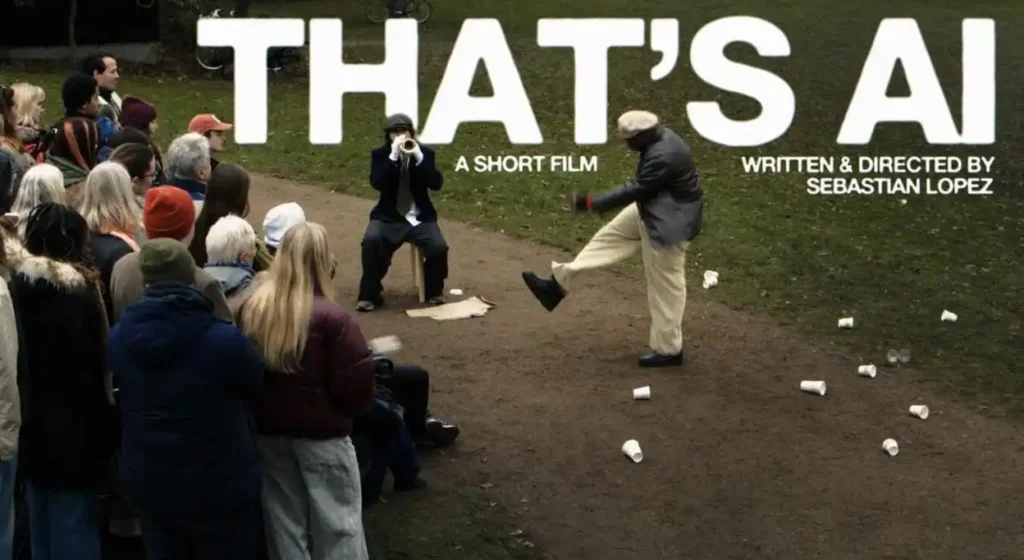
That’s AI (2026) is a two-minute comedy short film directed by Sebastian Lopez that satirizes society’s growing tendency to dismiss impressive real-life events as AI-generated. Through humor and sharp social commentary, the film explores digital trust, human creativity, and the challenge of distinguishing reality from artificial media.
cMovie.Asia
Artificial intelligence has transformed the internet at an astonishing pace. From photorealistic images to convincing videos, it has become increasingly difficult to separate authentic human creations from machine-generated content. Few films capture this modern dilemma as effectively—and as humorously—as That’s AI (2026), a two-minute comedy short written and directed by Sebastian Lopez.
Rather than criticizing artificial intelligence itself, the film examines something arguably more important: our growing inability to trust what we see.
Despite its incredibly short runtime, That’s AI delivers a sharp social commentary that resonates with audiences navigating an online world dominated by AI-generated media.
Table of Contents
Plot Summary
The story begins with two men sitting on a park bench watching a young athlete perform extraordinary acrobatic tricks nearby.
Instead of admiring the performance, one immediately dismisses it.
“That’s AI.”
What follows is an escalating debate where increasingly more bystanders question whether the performance is genuine. Ironically, the audience is witnessing the event with their own eyes, yet years of exposure to AI-generated videos have conditioned them to distrust reality itself.
The simple premise becomes an insightful exploration of modern skepticism.
Rather than asking whether AI can fool humans, the film asks a more unsettling question:
Have humans become incapable of believing reality anymore?
Sebastian Lopez Turns a Meme Into Social Commentary
One reason the film became widely shared online is its relatable premise.
Anyone who spends time on social media has likely experienced comments such as:
- “That’s AI.”
- “Fake.”
- “Generated.”
- “No way that’s real.”
Even authentic photographs, sports performances, artwork, or wildlife videos are frequently accused of being artificial.
Lopez cleverly exaggerates this behavior until it becomes absurd.
Instead of presenting futuristic technology or dystopian science fiction, the film satirizes today’s internet culture, where disbelief spreads faster than evidence.
This grounded approach makes the comedy surprisingly effective.
AI Isn’t the Villain
Many films about artificial intelligence focus on robots, machine consciousness, or existential threats.
That’s AI chooses a completely different direction.
The AI itself never appears.
Instead, the audience witnesses the psychological consequences of living in an age where synthetic media has become commonplace.
The real subject is human perception.
As viewers consume more AI-generated content online, skepticism gradually shifts from healthy critical thinking to automatic disbelief.
The film suggests that this cultural shift may eventually diminish appreciation for genuine human talent.
Humor That Feels Surprisingly Real
The comedy works because the conversations sound authentic.
The dialogue resembles everyday exchanges found on social media platforms, YouTube comments, and family group chats.
Many viewers have likely found themselves explaining that a real photograph or video wasn’t AI-generated.
That familiarity gives the film remarkable comedic timing despite lasting only two minutes.
Critics have praised how efficiently the short captures this growing social phenomenon through simple dialogue and escalating reactions rather than elaborate visual effects.
The Irony Behind “No AI Was Used”
Perhaps the film’s funniest detail appears after it ends.
A title card proudly states:
“No AI was used in the process of making this film.”
This statement serves multiple purposes.
It reassures skeptical viewers while simultaneously extending the joke.
After spending two minutes questioning reality alongside the characters, audiences are almost conditioned to doubt the filmmaking itself.
The disclaimer becomes the film’s perfect final punchline.
Cinematography and Technical Quality
Although extremely short, That’s AI displays polished production values.
Filmed in Copenhagen using an ARRI ALEXA 35, the visuals are clean, cinematic, and naturalistic.
Director of Photography Johan Back avoids flashy camera work, allowing the performances and dialogue to remain the central focus.
The park setting feels intentionally ordinary, reinforcing the idea that extraordinary skepticism can emerge even during everyday experiences.
Themes Explored
Digital Trust
The internet once encouraged viewers to believe visual evidence.
Today, the opposite is becoming true.
The film explores how AI-generated media has fundamentally altered our relationship with visual information.
Human Creativity
Rather than celebrating artificial intelligence or condemning it, the story defends authentic human achievement.
When everything impressive is labeled AI, genuine skill risks being overlooked.
Confirmation Bias
People in the film quickly convince one another that the impossible explanation must be correct.
Their certainty spreads socially rather than logically.
This reflects how misinformation—and skepticism itself—can become contagious.
Why the Film Went Viral
Several factors contributed to the short’s rapid online popularity:
- Extremely relatable premise
- Universal concern surrounding AI-generated media
- Clever comedic pacing
- Memorable ending
- Highly shareable two-minute runtime
The film accumulated millions of online views shortly after release, with audiences praising its ability to summarize a major cultural shift using a remarkably simple concept.
Final Verdict
Rating: ★★★★★ (5/5)
That’s AI (2026) demonstrates how powerful short filmmaking can be.
Sebastian Lopez transforms a familiar internet joke into an intelligent reflection on trust, technology, and modern perception.
Rather than predicting the dangers of artificial intelligence, the film highlights something already happening today: people increasingly question authentic reality because artificial reality has become so convincing.
In just over two minutes, That’s AI manages to be funny, timely, thought-provoking, and surprisingly profound.
It stands as one of the most memorable AI-themed short films of 2026—not because of spectacular technology, but because it reminds audiences that the greatest challenge may not be recognizing fake images, but remembering how to recognize what’s real.




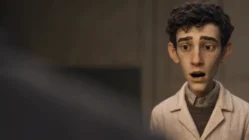


That’s AI (2026), directed by Sebastian Lopez, is a brilliantly crafted comedy short that captures one of today’s biggest cultural shifts: our growing tendency to question whether everything we see is AI-generated. Set around a simple conversation in a park, the film uses witty dialogue, relatable humor, and clever satire to explore digital trust, authenticity, and the value of human creativity. Despite its two-minute runtime, it delivers a surprisingly thoughtful message about how artificial intelligence is reshaping our perception of reality. Funny, timely, and insightful, That’s AI proves that even the shortest films can leave a lasting impression.