










BoxBallet is an Oscar®-nominated animated short film that tells the story of an unlikely romance between a hardened boxer and a delicate ballerina. Directed by Anton Dyakov, the film uses stylized character design, minimal dialogue, and symbolic storytelling to explore themes of contrast, empathy, and emotional transformation. Its critical acclaim stems from its ability to communicate complex human relationships through visual metaphor and movement rather than traditional narrative exposition.
cMovie.Asia
- Country: Russia
- Initial release: February 25, 2022 (United States)
- Film Director: Anton Dyakov
- Genre: Animated
- Running Time: 15 Minutes
- IMDB: 6.7 /10
In the crowded field of animated shorts, BoxBallet distinguishes itself through conceptual clarity and artistic restraint. The premise—a boxer falling in love with a ballerina—may appear simple, but the execution reveals a layered study of opposites: strength versus fragility, aggression versus grace, isolation versus connection.
From a professional film analysis perspective, BoxBallet exemplifies how short-form animation can achieve narrative depth without relying on dialogue-heavy storytelling. Instead, it leverages movement, rhythm, and visual contrast to construct meaning.
Table of Contents
What Is BoxBallet About?
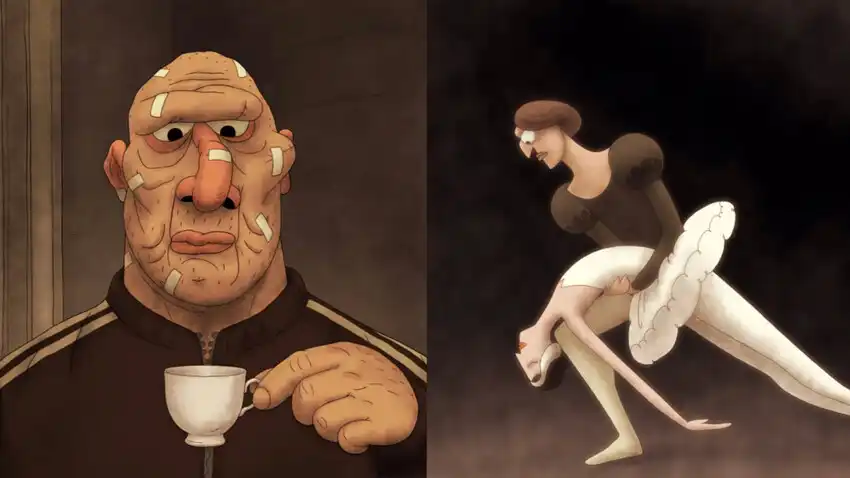
At its core, BoxBallet is a symbolic narrative about emotional duality and human connection.
Key Elements:
- Protagonists: A socially isolated boxer and a disciplined ballerina
- Conflict: Their contrasting worlds and internal barriers
- Resolution Arc: Emotional softening through mutual understanding
The story unfolds through parallel routines—training sequences, daily habits, and encounters—until the characters’ lives intersect. The relationship becomes a mechanism for transformation rather than a conventional romantic plot.
Narrative Mechanics: How the Story Works
1. Parallel Structure
The film uses a mirrored narrative structure, where:
| Boxer | Ballerina |
|---|---|
| Physical force | Controlled elegance |
| Chaotic environment | Structured discipline |
| Emotional repression | Expressive movement |
This structural design allows viewers to intuitively grasp contrast without explicit explanation.
2. Minimal Dialogue, Maximum Visual Communication
Unlike mainstream animation, BoxBallet relies almost entirely on:
- Body language
- Rhythm and pacing
- Environmental cues
This aligns with established animation theory, where movement becomes language. In professional practice, this technique is often used to enhance cross-cultural accessibility and emotional universality.
Character Design: Symbolism Through Form
The Boxer
- Angular, exaggerated features
- Heavy, rigid movement
- Limited emotional range initially
These design choices visually encode aggression and isolation.
The Ballerina
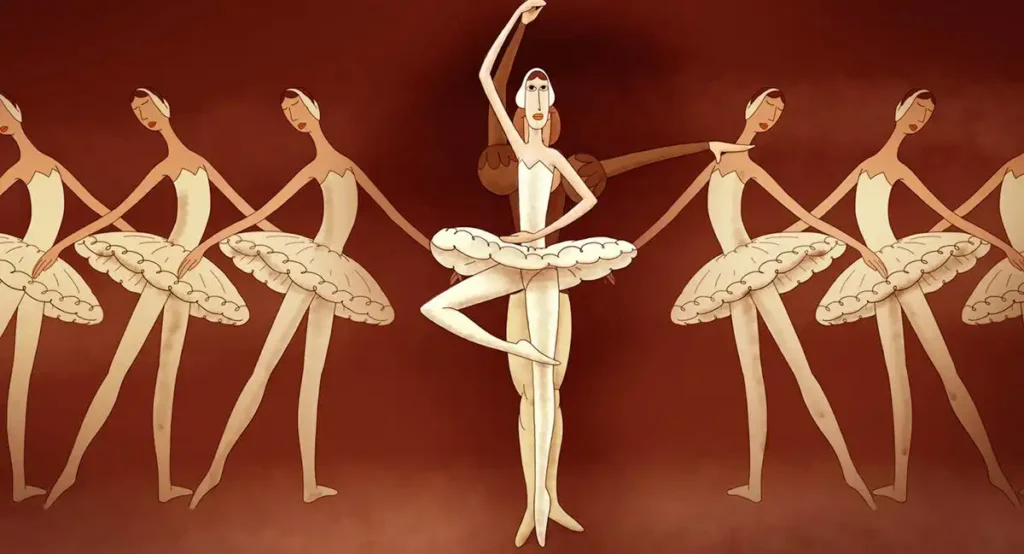
- Soft, rounded lines
- Fluid, continuous motion
- High emotional expressiveness
Her design reflects discipline, sensitivity, and internal balance.
Why This Matters
In animation, character design is narrative. The contrast between geometric rigidity and fluid curves is not aesthetic alone—it directly communicates psychological states.
Themes Explained
1. Opposites as Complementary Forces
The film reflects a widely recognized psychological principle: complementarity in relationships. Individuals with contrasting traits can create balance when mutual understanding is achieved.
2. Emotional Regulation Through Connection
The boxer’s transformation illustrates:
- Reduced aggression
- Increased emotional awareness
- Behavioral adaptation
This aligns with real-world behavioral science, where interpersonal relationships influence emotional regulation.
3. Discipline vs. Instinct
The ballerina represents structured discipline, while the boxer embodies instinctual reaction. Their interaction demonstrates how:
- Discipline can refine raw energy
- Instinct can add authenticity to rigid systems
Visual Style and Animation Technique
Handcrafted Aesthetic
BoxBallet uses a deliberately textured, handcrafted animation style, avoiding hyper-realistic rendering. This approach:
- Enhances emotional abstraction
- Focuses attention on movement rather than detail
- Reinforces artistic identity
Movement as Narrative Driver
In professional animation analysis, BoxBallet is a strong example of:
- Kinetic storytelling (story told through motion)
- Rhythmic editing (timing aligned with emotional beats)
Why Was BoxBallet Oscar® Nominated?
The film’s nomination for the Academy Award for Best Animated Short Film can be attributed to several measurable strengths:
1. Conceptual Clarity
A simple premise executed with precision and depth.
2. Universal Accessibility
Minimal dialogue allows global audiences to engage equally.
3. Technical Cohesion
Every element—design, animation, pacing—supports the central theme.
4. Emotional Efficiency
The film delivers a complete emotional arc within a short runtime.
Strengths and Limitations
Strengths
- Strong visual symbolism
- Clear thematic focus
- Efficient storytelling
- Distinct artistic style
Limitations
- Limited narrative complexity for viewers seeking plot depth
- Abstract storytelling may reduce immediate accessibility
- Minimal dialogue can require higher viewer interpretation
Real-World Applications: Why This Film Matters
1. For Filmmakers and Animators
BoxBallet demonstrates:
- How to build narrative through contrast
- The effectiveness of visual metaphor
- The value of stylistic consistency
2. For Storytelling Professionals
The film serves as a case study in:
- Character-driven storytelling
- Emotional pacing
- Non-verbal communication
3. For General Audiences
It provides insight into:
- Relationship dynamics
- Personal growth through connection
- The balance between opposing traits
Comparison With Other Animated Shorts
While many animated shorts rely on humor or dialogue, BoxBallet aligns more closely with:
- Symbolic European animation traditions
- Movement-based storytelling frameworks
- Minimalist narrative design
Its uniqueness lies in combining emotional storytelling with abstract visual language.
Final Evaluation
BoxBallet is a technically refined and conceptually focused animated short that exemplifies the power of visual storytelling. Under the direction of Anton Dyakov, the film transforms a simple premise into a layered exploration of identity, connection, and emotional growth.
Its Oscar® nomination is not incidental—it reflects a high level of craftsmanship, thematic clarity, and narrative efficiency that aligns with the evolving standards of global animation in 2026.





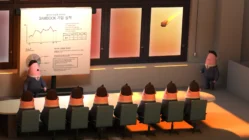


BoxBallet is a visually striking, Oscar®-nominated animated short directed by Anton Dyakov that tells a simple yet emotionally resonant story: a hardened boxer and a graceful ballerina form an unexpected connection.
Rather than relying on dialogue, the film communicates through movement, rhythm, and contrast. The boxer’s rigid, angular presence is set against the ballerina’s fluid elegance, creating a clear visual language that reflects their emotional worlds. This contrast is not just stylistic—it drives the narrative, showing how two opposing personalities can influence and transform one another.
What makes BoxBallet particularly effective is its efficiency. In a short runtime, it delivers a complete emotional arc, moving from isolation to connection without unnecessary complexity. The handcrafted animation style reinforces its themes, emphasizing expression over realism.
While its abstract approach may feel minimal for viewers expecting a detailed plot, the film succeeds as a symbolic and accessible piece of storytelling. It stands out as a strong example of how animation can convey depth through simplicity.
Overall, BoxBallet is a concise, thoughtfully constructed short that highlights the power of visual storytelling and earned its Oscar® nomination through clarity, cohesion, and emotional precision.