








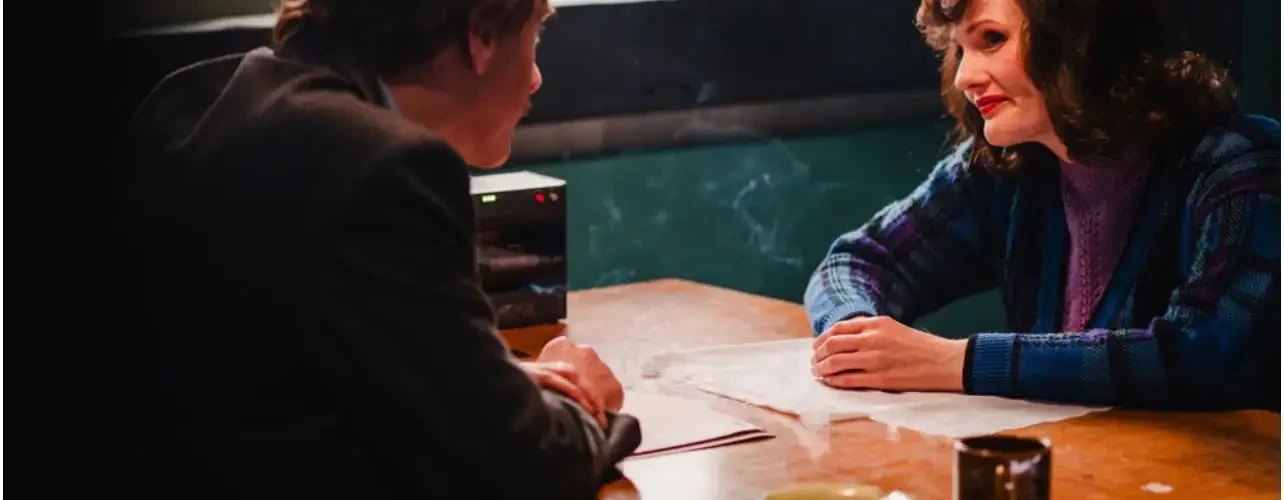

Laura Living Backwards (2024), directed by Kate Horlor, is an emotional indie sci-fi short film about a woman experiencing time in reverse while trying to change the fate of a police officer connected to her future. The film combines thoughtful storytelling, strong performances, and philosophical themes about regret, identity, and second chances.
cMovie.Asia
Independent science-fiction cinema often succeeds not through spectacle, but through imagination and emotional honesty. Laura Living Backwards (2024), directed by Kate Horlor, is a perfect example of how a small-scale production can deliver a deeply affecting cinematic experience without relying on blockbuster budgets or heavy visual effects.
This British sci-fi drama tells the story of Laura, a woman experiencing time in reverse while attempting to alter the fate of the police officer destined to arrest her. What begins as a mysterious crime narrative slowly unfolds into a moving meditation on regret, identity, loneliness, and the desperate human desire for a second chance.
According to IMDb’s official listing for the film, the short follows Laura as she commits a bank robbery on her birthday in hopes of changing the future. While the premise sounds high-concept, the film’s true power lies in its emotional intimacy rather than its science-fiction mechanics.
Table of Contents
A Unique Time-Travel Concept With Emotional Depth
Time-travel stories are everywhere in modern cinema, but few use the concept as thoughtfully as Laura Living Backwards. Instead of focusing on paradoxes, action sequences, or complicated scientific exposition, the film explores the emotional consequences of experiencing life in reverse.
Laura’s backward movement through time becomes symbolic. The further she travels into the past, the more emotionally alive she becomes. Director Kate Horlor uses the concept not merely as a narrative hook, but as a metaphor for rediscovering purpose and confronting the moments that shape human identity.
The screenplay, co-written by Horlor and Andrew David Barker, demonstrates impressive restraint. Rather than overwhelming viewers with exposition, the film slowly reveals emotional truths through dialogue, silence, and carefully structured interactions between characters.
This approach gives the story a melancholic and reflective tone that lingers long after the credits roll.
Sarah Feltham Carries the Film Brilliantly
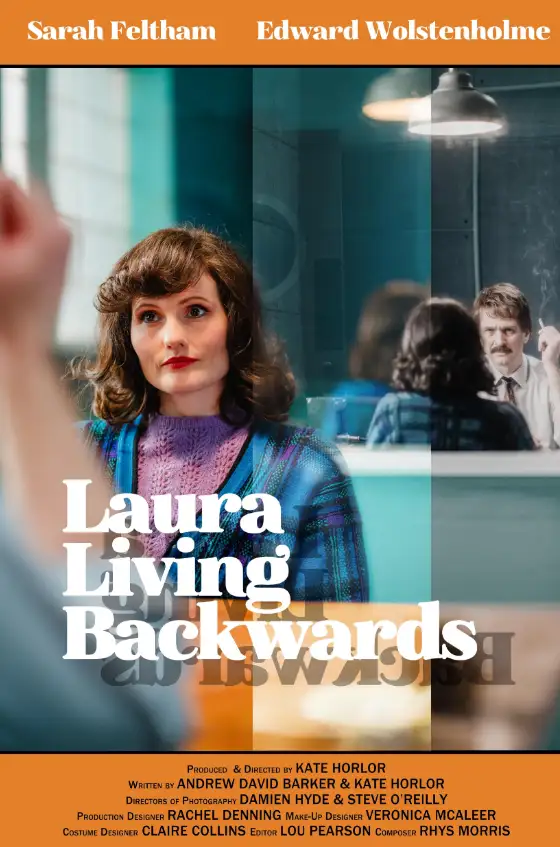
The emotional success of Laura Living Backwards depends heavily on its lead performance, and Sarah Feltham delivers one of the strongest indie sci-fi performances of the year.
Feltham portrays Laura with remarkable subtlety. She avoids melodrama entirely, instead communicating emotional exhaustion and quiet hope through restrained expressions and understated dialogue. Laura feels emotionally fractured, but never emotionally inaccessible.
The audience gradually understands her motivations not because the film explains everything directly, but because Feltham makes every scene emotionally believable.
Equally compelling is Edward Wolstenholme as Detective Moffatt. Their dynamic gives the story emotional grounding. Rather than presenting a traditional cop-versus-criminal narrative, the film explores connection, empathy, and the strange intimacy created by shared moments in time.
Despite the film’s short runtime, both characters feel fully realized.
Kate Horlor’s Direction Is Impressively Confident
For a relatively low-budget independent production, Laura Living Backwards looks remarkably polished.
Horlor demonstrates exceptional control over pacing and atmosphere. Every visual decision appears intentional. The film uses lighting and color subtly to reinforce Laura’s emotional journey, creating a dreamlike mood that enhances the sci-fi elements without distracting from the characters.
The cinematography by Damien Hyde and Steve O’Reilly deserves particular praise. Interior scenes feel intimate and emotionally charged, while the framing often emphasizes Laura’s isolation within otherwise ordinary environments.
Instead of trying to imitate Hollywood science fiction, the film embraces minimalism. That creative choice ultimately strengthens the emotional realism of the story.
The restrained editing style also works beautifully. Scenes are allowed room to breathe, creating tension through silence and anticipation rather than constant movement.
A Sci-Fi Film About Regret and Human Connection
At its core, Laura Living Backwards is less about time travel than about emotional perspective.
The film asks difficult questions:
- Can people truly change?
- Is it possible to understand life only after it begins slipping away?
- What moments actually define a person’s existence?
These philosophical themes elevate the film beyond standard indie science fiction.
There are echoes of thoughtful sci-fi classics like Arrival and Primer in how the story prioritizes emotional consequence over spectacle. At the same time, the emotional introspection recalls classic humanist dramas more than traditional genre filmmaking.
One of the film’s greatest strengths is its sincerity. It never becomes cynical or emotionally manipulative. Instead, it quietly trusts viewers to engage with Laura’s emotional journey.
That confidence gives the film unusual maturity for a short production.
Independent Filmmaking Done Right
According to production information shared on FilmFreeway, the film was reportedly produced on an extremely limited budget. Yet nothing about the final result feels cheap or unfinished.
This is where Laura Living Backwards becomes particularly inspiring for independent filmmakers. The film proves that compelling storytelling, strong performances, and creative direction matter far more than expensive visual effects.
Rather than attempting to hide budget limitations, Horlor uses simplicity as an artistic strength.
The result is intimate science fiction that feels emotionally authentic.
Festival Recognition and Critical Reception
The film has already gained attention across the festival circuit, earning praise for both its storytelling and direction.
According to the official release information on YouTube, the short received multiple awards, including recognition for Best Film and Best First-Time Director at international festivals.
That acclaim feels fully deserved.
Few short films manage to balance intellectual science-fiction ideas with genuine emotional resonance this effectively.
Final Verdict
Laura Living Backwards is one of the strongest independent sci-fi short films of 2024. Director Kate Horlor crafts an emotionally intelligent and visually elegant meditation on time, regret, and human connection.
Powered by an outstanding performance from Sarah Feltham and a thoughtful screenplay that values emotion over spectacle, the film demonstrates exactly why independent science fiction continues to thrive creatively.
For viewers who appreciate character-driven storytelling, philosophical sci-fi, and emotionally resonant cinema, Laura Living Backwards is absolutely worth watching.




Laura Living Backwards (2024), directed by Kate Horlor, is a beautifully crafted indie sci-fi drama that uses time travel to explore regret, loneliness, and the search for meaning. With a powerful performance from Sarah Feltham and emotionally grounded storytelling, the film proves that thoughtful science fiction does not need a massive budget to leave a lasting impact. Atmospheric, intelligent, and deeply human, Laura Living Backwards stands out as one of the most memorable independent short films of 2024.