








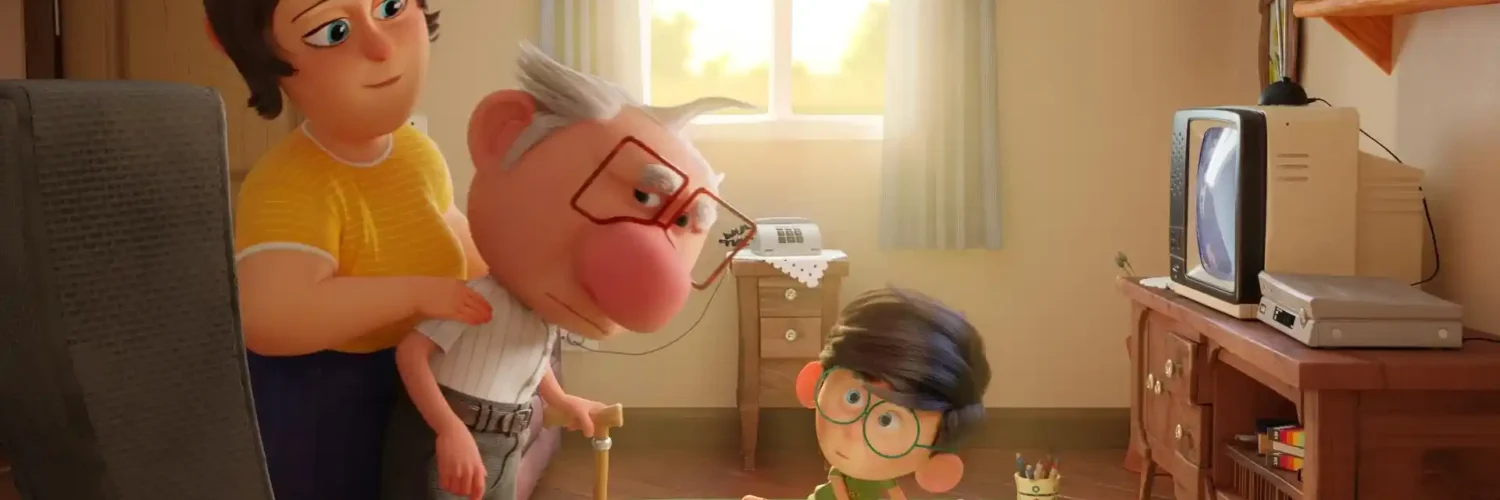

What is NAPO animated short film about?
cMovie.Asia
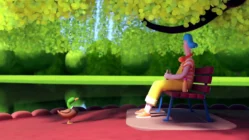
NAPO is an award-winning Brazilian animated short film about an elderly man experiencing memory loss and his relationship with his grandson. Through photographs, drawings, and imagination, the film explores Alzheimer’s, family bonds, aging, and the emotional power of memories.
- Production: Miralumo Running
- Director: Gustavo Ribeiro
- Time: 16:00
- Release Year: 2020
- Country: Brazil
- Language: Portuguese
NAPO is an award-winning Brazilian animated short film directed by Gustavo Ribeiro. Released in 2020, the 16-minute film tells the story of an elderly man whose illness causes him to move between memories of the past and the present. When he moves into his daughter’s home, his grandson discovers an old collection of photographs and begins transforming the images into drawings. Through those drawings, the boy gradually finds a way to understand his grandfather and reconnect with memories that are becoming increasingly difficult to access.
Rather than presenting memory loss only as a medical problem, NAPO explores it through the emotional relationship between three generations. The film combines 3D animation, family drama, visual storytelling, and a child’s imagination to examine what happens when memories begin to disappear—and how relationships can preserve meaning even when recollection becomes fragile.
Table of Contents
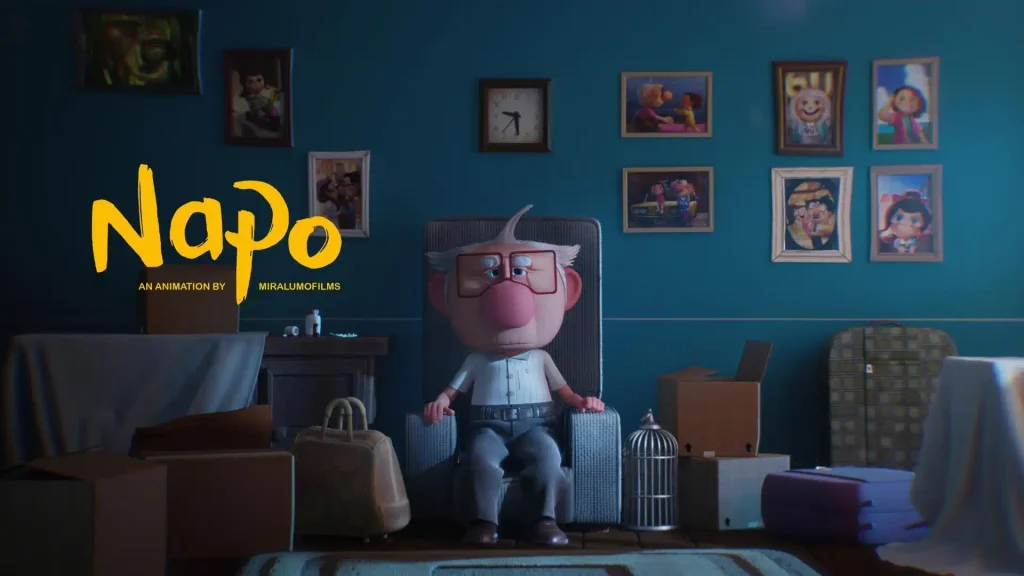
What Is NAPO About?
NAPO is a 2020 Brazilian animated short film with a runtime of approximately 16 minutes. It was directed by Gustavo Ribeiro and written by Ribeiro and Gabriela Antonia Rosa.
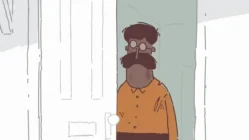
At the center of the story is Napo, an elderly man experiencing a progressive illness associated with memory loss. As his condition becomes more difficult for his family to manage, he moves into the home of his daughter, where he lives with his grandson, João.
João does not initially understand why his grandfather behaves differently or why his memories seem to shift between different periods of his life.
An old photo album becomes the bridge between the two generations.
Instead of simply looking at the photographs, João begins reinterpreting them through drawings. His imagination transforms static images from the past into something that his grandfather and grandson can share.
This simple creative act becomes an important part of their relationship.
The film’s official production description explains that the story was created around the idea of memory and forgetfulness, using a child’s perspective to approach Alzheimer’s disease in a subtle and emotionally accessible way.
The Central Theme: What Happens When Memories Fade?
One of the most important questions raised by NAPO is:
If someone can no longer remember their experiences, does that mean those experiences have lost their meaning?
The film does not treat memory as merely a collection of information stored in the brain. Instead, it connects memory with family relationships, photographs, imagination, identity, and shared experiences.
This makes the story accessible even to viewers who have never personally experienced dementia or Alzheimer’s disease.
The photographs are particularly important because they function as more than visual records. They become a way for different generations to communicate.
For João, the photographs provide clues about the grandfather he does not fully understand.
For Napo, they provide access to fragments of a life that is becoming increasingly difficult to recall.
For the audience, they create a visual connection between the past and present.
How NAPO Uses Animation to Tell Its Story
Animation gives NAPO an important storytelling advantage.
A live-action film can show an old photograph, but animation can transform the photograph itself into a living memory.
This distinction is central to the film’s visual language.
The story moves between different emotional and temporal states, allowing the audience to experience memory not simply as a chronological sequence but as something fluid.
According to the Museum of Childhood Ireland’s discussion of the film, NAPO is built around several contrasts, including youth and age, past and present, grief and happiness, and 3D and 2D visual approaches.
These contrasts help communicate the experience of remembering and forgetting without requiring lengthy explanations.
The visual transformation of photographs into drawings is therefore not simply an artistic technique. It is part of the film’s narrative structure.
NAPO and the Representation of Alzheimer’s
It is important to distinguish a fictional short film from medical education.
NAPO is not a medical documentary and should not be used as a diagnostic or clinical explanation of Alzheimer’s disease. However, the film provides an accessible emotional representation of how memory loss can affect relationships within a family.
Alzheimer’s disease is a progressive neurological disorder that can affect memory, thinking, behavior, and the ability to perform everyday activities. The experience varies considerably between individuals.
The film focuses on one family’s emotional experience rather than attempting to represent every stage or symptom of the disease.
That limitation is also part of what makes the film effective as a piece of storytelling.
Instead of overwhelming the viewer with clinical information, NAPO asks the audience to consider a more personal question:
How can we remain connected to someone when their memories are changing?
Three Generations at the Heart of the Film
Another important element of NAPO is its three-generation family structure.
The story brings together:
- Napo, the grandfather confronting memory loss
- Lenita, his daughter and caregiver within the family
- João, his grandson, who tries to understand what is happening
This creates several different perspectives on the same situation.
The older generation represents a lifetime of memories and experiences.
The middle generation faces the practical and emotional responsibilities of caring for an aging parent.
The youngest generation approaches the situation through curiosity, imagination, and play.
This structure allows the film to explore a common family challenge without reducing any character to a stereotype.
The relationship between João and Napo becomes especially important because the boy does not try to force his grandfather to behave as he once did.
Instead, he discovers another way to communicate with him.
Why the Photo Album Matters
The old photo album is one of the film’s most powerful storytelling devices.
Photographs normally preserve moments from the past. In NAPO, however, they become starting points for new memories.
João’s drawings reinterpret the photographs through a child’s imagination.
This creates an interesting cycle:
Photograph → Drawing → Imagination → Memory → Connection
The process demonstrates how visual objects can help families talk about experiences that might otherwise be difficult to explain.
It also reflects something familiar in many families: old photographs often become conversation starters, especially between generations that grew up in very different periods.
The Importance of Drawing
Drawing plays a special role in João’s relationship with Napo.
For a child, drawing can be a natural way to process emotions and experiences that are difficult to explain verbally.
In the film, drawing becomes a form of communication.
João uses images to interpret what he sees in the photographs, while Napo responds to those visual representations through his memories.
The result is a relationship that does not depend entirely on conventional conversation.
This is one of the reasons NAPO can appeal to audiences beyond traditional animation fans. Its central idea is universal: people often find different ways to communicate when ordinary language becomes insufficient.
The Visual Style of NAPO
NAPO was produced using 3D animation, but the film incorporates visual ideas associated with drawing, photographs, and memory.
The production team also faced significant technical challenges involving storytelling, character animation, hair and cloth simulation, rendering, and lighting.
The production design uses objects inspired by the 1990s, helping establish the world surrounding the characters.
These details contribute to the film’s sense of time and place without requiring extensive exposition.
The visual approach also supports the story’s central contrast between physical reality and remembered experience.
NAPO’s Festival Recognition
The film received significant recognition on the international festival circuit.
The Phoenix Film Festival lists Napo as the 2021 Best Animated Short Film winner. IMDb’s awards record also lists wins and nominations for the film at festivals and competitions including the Valdivia International Film Festival, Los Angeles Brazilian Film Festival, Skyline Indie Film Fest, Athens Animfest, Boomtown Film and Music Festival, Next Generation Indie Film Awards, and others.
Miralumo, the film’s production company, states that NAPO was screened at more than 100 festivals worldwide and received more than 50 awards for best animation.
These figures come from different sources and represent different stages of the film’s festival and distribution history, so individual festival records are the most appropriate way to verify specific awards.
The film’s festival success is notable because it demonstrates how a relatively short animated work can communicate across cultural and language boundaries through visual storytelling and universal themes.
Who Directed NAPO?
Gustavo Ribeiro directed NAPO and co-wrote the screenplay with Gabriela Antonia Rosa.
The film was produced by Thais Peixe and Gustavo Ribeiro.
Other key creative contributors include Francisco Okabe, who composed the soundtrack, Victor Spadotto, who worked on editing, and production designers Giovani Kososki and Rayner Alencar.
The project was produced in Brazil through Miralumo.
Ribeiro’s work with NAPO demonstrates an approach to animation in which technical production supports an emotionally focused story rather than existing solely for visual spectacle.
What Makes NAPO Different From a Typical Animated Short?
Many animated shorts rely on visual humor, fantasy, action, or highly stylized characters.
NAPO takes a quieter approach.
Its central conflict is emotional rather than physical.
There is no need for a conventional villain or large-scale adventure. The tension comes from the gradual change in a person’s ability to access memories and from the family’s attempt to adapt.
That makes the film particularly suitable for viewers interested in:
- Animated short films
- Family stories
- Emotional animation
- Brazilian animation
- Films about memory
- Stories about aging
- Alzheimer’s-related narratives
- Grandparent-grandchild relationships
- International animation festivals
- Award-winning independent animation
What Can Viewers Take Away From NAPO?
The strongest takeaway from NAPO is not a medical lesson about Alzheimer’s disease.
It is a reflection on connection.
Memory is important to identity, but relationships are not necessarily defined only by what a person can remember.
The film suggests that photographs, drawings, stories, creativity, and shared experiences can become bridges between generations.
For younger viewers, the film can encourage empathy toward older family members.
For adults, it can raise questions about aging, caregiving, family responsibilities, and the preservation of family history.
For filmmakers and animation students, NAPO also offers a useful example of how technical animation techniques can serve narrative purpose.
Where Can You Watch NAPO?
The official NAPO page from Miralumo includes the short film and production information. The film was also published by Miralumo Films on YouTube, where it has reached millions of views.
For viewers discovering the film for the first time, watching the complete short before reading detailed interpretations is recommended. Because the story relies heavily on visual transitions and emotional development, experiencing the animation directly provides important context that a synopsis cannot fully reproduce.
Final Thoughts
NAPO is more than an award-winning animated short about an elderly man experiencing memory loss. It is a carefully constructed story about family, memory, imagination, aging, and human connection.
Its most distinctive storytelling device—the transformation of old photographs into drawings—allows the film to visualize something that is otherwise difficult to show: the relationship between memory and emotion.
Through Napo and his grandson João, the film presents memory loss from a human and intergenerational perspective. Rather than focusing only on what is being lost, NAPO also explores what can still be created through affection, creativity, and shared experience.
With its Brazilian origins, international festival recognition, 3D animation, and emotionally accessible narrative, NAPO offers an excellent example of how a short animated film can address a serious subject without becoming a conventional medical or educational production.
For anyone interested in award-winning animation, international short films, Brazilian cinema, family stories, or films exploring memory and Alzheimer’s, NAPO is a short film worth discovering.






Add Short Film Review