








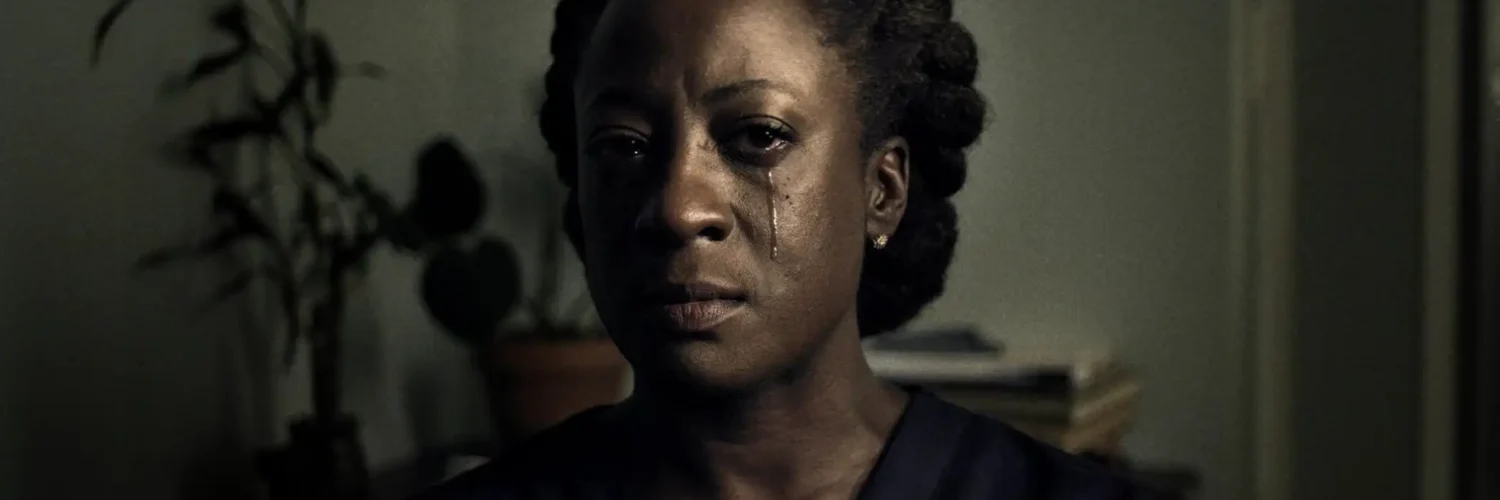

Memory Room (2025) is a thoughtful psychological thriller that explores dementia, guilt, and the unreliability of memory through the story of a caregiver investigating an elderly patient’s disturbing confession. The film combines emotional depth, moral ambiguity, and suspense to create a compelling and thought-provoking viewing experience.
cMovie.Asia
Short films often struggle to balance character depth, narrative tension, and thematic complexity within a limited runtime. Memory Room, written and directed by Raanan Hershberg and Dan McCabe, appears to accomplish exactly that. Running approximately 17–20 minutes, the film combines psychological suspense with an emotionally grounded exploration of dementia, memory, trauma, and moral responsibility.
Rather than relying on conventional thriller mechanics, Memory Room builds its tension from uncertainty. A single disturbing statement made by an elderly dementia patient becomes the catalyst for an investigation that forces both the protagonist and the audience to confront difficult questions: Can a confession be trusted when memory itself is deteriorating? And if a terrible crime did occur, what responsibility remains decades later?
The result is a short film that functions not only as a mystery but also as a meditation on aging, truth, and the fragile nature of human recollection.
Table of Contents
Plot Summary
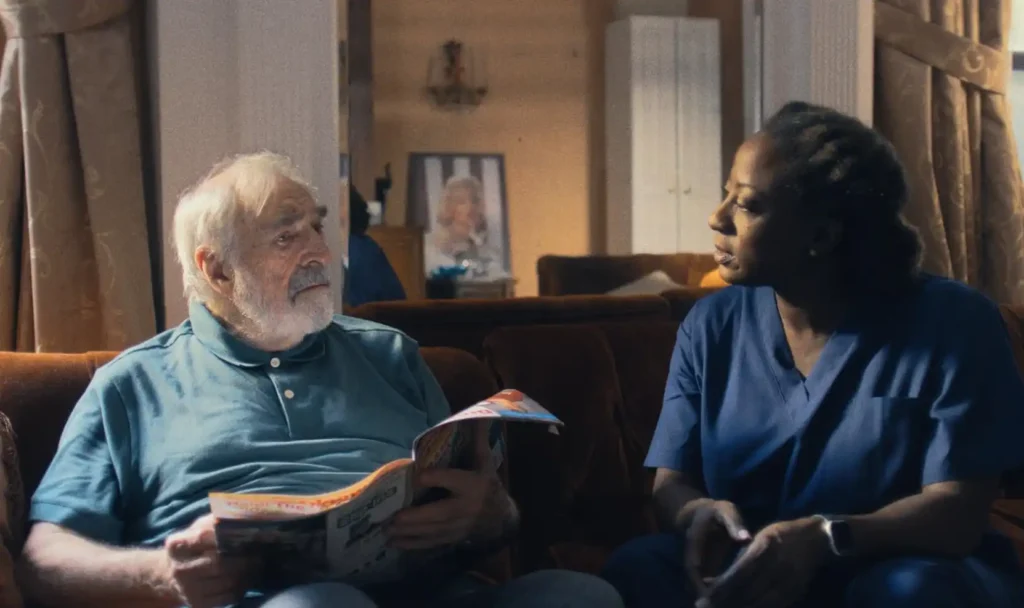
The story centers on Vivian, a middle-aged caregiver who works with Larry, an elderly patient suffering from dementia. During an ordinary moment, Vivian plays a record for Larry, who unexpectedly blurts out a shocking confession:
“This song was playing the night I strangled Rosie.”
The statement immediately transforms an otherwise routine caregiving relationship into something far more unsettling. Was Larry revealing a genuine memory? Was it a fabrication? Or was he merely repeating something he had heard elsewhere?
Unable to dismiss the possibility that Larry may be connected to a decades-old crime, Vivian begins investigating his past. As she searches for answers, the mystery expands beyond Larry’s fragmented recollections and intersects with Vivian’s own unresolved emotional wounds.
This dual narrative structure gives the film emotional weight beyond its central mystery.
A Thriller Built on Psychological Tension
One of the most compelling aspects of Memory Room is its premise. Many thrillers depend on external danger, physical threats, or escalating violence. Here, suspense emerges from uncertainty itself.
The audience is placed in the same position as Vivian. Every piece of information appears simultaneously convincing and unreliable.
Larry’s dementia becomes more than a medical condition—it becomes the film’s central narrative device.
Memory functions as both evidence and obstacle.
The screenplay understands that uncertainty can be more frightening than certainty. Instead of asking whether a murder occurred, the film asks whether truth can ever be fully recovered once memory begins to disappear.
This approach creates a more sophisticated form of suspense than many contemporary short thrillers achieve.
Dementia as Human Experience, Not Plot Device
Perhaps the film’s greatest strength lies in its apparent commitment to portraying dementia with empathy and realism.
According to the filmmakers, both Hershberg and McCabe previously worked as caregivers for elderly individuals and intentionally sought to depict dementia without sensationalism or exploitation.
That background appears to influence the film’s perspective.
Rather than reducing Larry to a mysterious suspect, the narrative presents him as a vulnerable human being whose identity is increasingly fragmented by illness.
The audience is constantly reminded that memory loss affects not only factual recollection but also personal identity.
This creates a profound moral ambiguity:
- Is Larry responsible for actions he can no longer remember?
- Can a confession made through dementia be trusted?
- Does forgetting erase guilt?
- Can justice exist without certainty?
These questions elevate Memory Room beyond genre storytelling.
Strong Character Work Within a Limited Runtime
Short films often rely on archetypes because of time constraints. Memory Room appears to resist that temptation.
Vivian is not merely an investigator. She is emotionally invested in the people she cares for, making her pursuit of the truth both professional and deeply personal.
Her investigation becomes a journey through grief, memory, and unresolved trauma.
Similarly, Larry functions as far more than a mystery figure.
His moments of lucidity and confusion create a character who is simultaneously sympathetic and potentially frightening.
This ambiguity is crucial to the film’s success.
If Larry were clearly innocent or clearly guilty, the story would lose much of its psychological complexity.
Performances That Anchor the Narrative
The effectiveness of a film built around uncertainty depends heavily on performance.
Daphne Gaines, as Vivian, reportedly delivers a grounded portrayal that captures both compassion and determination. Her performance serves as the audience’s emotional anchor throughout the investigation.
Hal Robinson’s portrayal of Larry presents a more difficult challenge.
The character requires constant shifts between vulnerability, confusion, sincerity, and possible deception.
A lesser performance could easily turn Larry into either a stereotype or an obvious villain.
Instead, the role appears designed to maintain uncertainty until the very end.
Together, the two actors create a dynamic that sustains the film’s tension despite its limited runtime.
Themes: Memory, Trauma, and Moral Accountability
While Memory Room functions effectively as a psychological thriller, its deeper concerns are philosophical.
The Reliability of Memory
The film explores memory not as a perfect recording of events but as a fragile and evolving construct.
Every recollection is potentially incomplete.
Every confession may be distorted.
Every certainty becomes questionable.
The Persistence of Trauma
Vivian’s personal journey suggests that trauma survives even when details fade.
The film implies that emotional truths often remain long after factual memories disappear.
Accountability and Aging
Perhaps the most provocative question posed by the film concerns accountability.
If an individual committed a terrible act decades ago but can no longer remember it, what form should justice take?
The film does not appear interested in easy answers.
Instead, it invites reflection on the relationship between memory and responsibility.
Direction and Atmosphere
Hershberg and McCabe demonstrate an understanding of restraint.
The premise could easily have become melodramatic or overly sensational.
Instead, the film appears to embrace ambiguity and atmosphere.
Its tension arises from silence, hesitation, fragmented recollections, and unanswered questions.
This minimalist approach is particularly effective within the short-film format.
Rather than attempting to build a sprawling mystery, the filmmakers focus on psychological intimacy.
The result is a film that feels larger than its runtime suggests.
Why Memory Room Stands Out
Many contemporary short thrillers prioritize twists.
Memory Room appears more interested in emotional and ethical complexity.
The mystery matters, but the human beings at its center matter more.
By grounding suspense in realistic caregiving experiences and the lived realities of dementia, the filmmakers create a story that resonates beyond its final reveal.
The film succeeds because it understands that memory is not merely a narrative device.
Memory shapes identity, relationships, guilt, and the stories we tell ourselves about who we are.
Final Verdict
Memory Room is an intelligent and emotionally resonant psychological thriller that uses a compelling mystery to explore deeper questions about dementia, trauma, memory, and accountability. Raanan Hershberg and Dan McCabe transform a simple premise into a thoughtful character-driven story that remains engaging long after its brief runtime concludes.
By avoiding sensationalism and focusing on human complexity, the film achieves something increasingly rare in short-form cinema: it entertains while also provoking meaningful reflection.
Rating: 8.5/10
Strengths
- Original and psychologically rich premise
- Nuanced exploration of dementia
- Strong character-driven storytelling
- Effective moral ambiguity
- Emotional depth beyond the thriller genre
Minor Limitations
- Short runtime may leave some thematic threads open-ended
- Viewers seeking conventional thriller action may find the film deliberately restrained
For audiences interested in psychological mysteries, memory studies, aging narratives, and ethically complex storytelling, Memory Room stands as a compelling example of what contemporary short filmmaking can achieve.








Directed by Raanan Hershberg and Dan McCabe, Memory Room is a gripping 17-minute psychological thriller that explores the fragile boundary between memory, truth, and guilt. The story follows Vivian, a caretaker who becomes disturbed when one of her dementia patients casually confesses to a decades-old murder. As she tries to determine whether the statement is a genuine memory, a joke, or simply confusion, the film draws viewers into an unsettling mystery.
What makes Memory Room particularly effective is its restraint. Rather than relying on conventional thriller twists, the film builds tension through uncertainty. The screenplay cleverly uses dementia not merely as a plot device but as a lens through which questions of accountability and identity are examined. The audience is left wondering whether memories can be trusted—and whether forgotten crimes ever truly disappear.
The performances are natural and emotionally grounded, giving weight to the film’s ethical dilemmas. The intimate cinematography and measured pacing create a sense of quiet unease that lingers long after the final scene. Despite its short runtime, the film successfully develops complex themes without feeling rushed.
Memory Room is a thoughtful and unsettling psychological thriller that demonstrates how powerful short-form storytelling can be. By combining suspense with emotional depth, Hershberg and McCabe deliver a memorable film that challenges viewers to consider the reliability of memory and the consequences of buried secrets. A compelling and intelligent short that earns its tension through character and ambiguity rather than shock.