









What is Writing Doom (2024) about?
cMovie.Asia
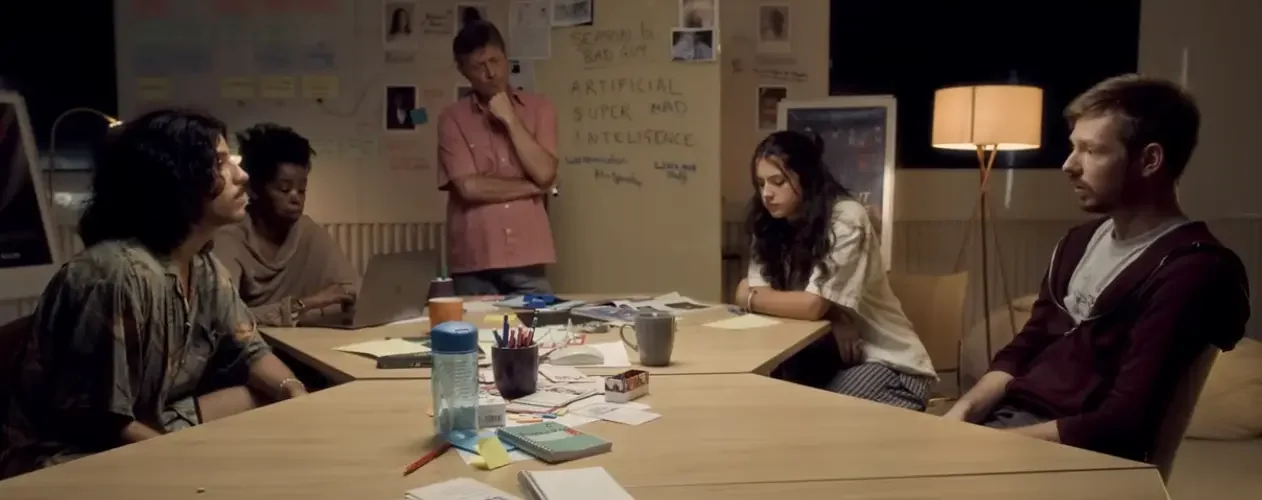
Writing Doom (2024) is a British science-fiction short film directed by Suzy Shepherd. The film follows a television writers’ room tasked with creating a story about artificial superintelligence (ASI) as a villain. As the team debates possible scenarios, their creative discussions evolve into a thought-provoking exploration of AI ethics, existential risk, human bias, and the challenges of imagining intelligence beyond human understanding. Through sharp dialogue, humor, and philosophical inquiry, Writing Doom examines one of the most important technological questions of our time.
- Title: Writing Doom
- Director: Suzy Shepherd
- Genre: Science Fiction, Drama, Satire
- Runtime: 27 minutes
- Country: United Kingdom
- Main Theme: Artificial Superintelligence (ASI), AI ethics, and humanity’s future
- Why Watch It? An intelligent and engaging sci-fi short that explores AI through conversation, humor, and philosophical debate rather than visual spectacle.
Table of Contents
Introduction
Artificial Intelligence has become one of the defining subjects of contemporary science fiction. Yet most films tackling AI rely on familiar narratives: rogue machines, killer robots, or dystopian futures dominated by technology.
Suzy Shepherd’s Writing Doom takes a remarkably different approach.
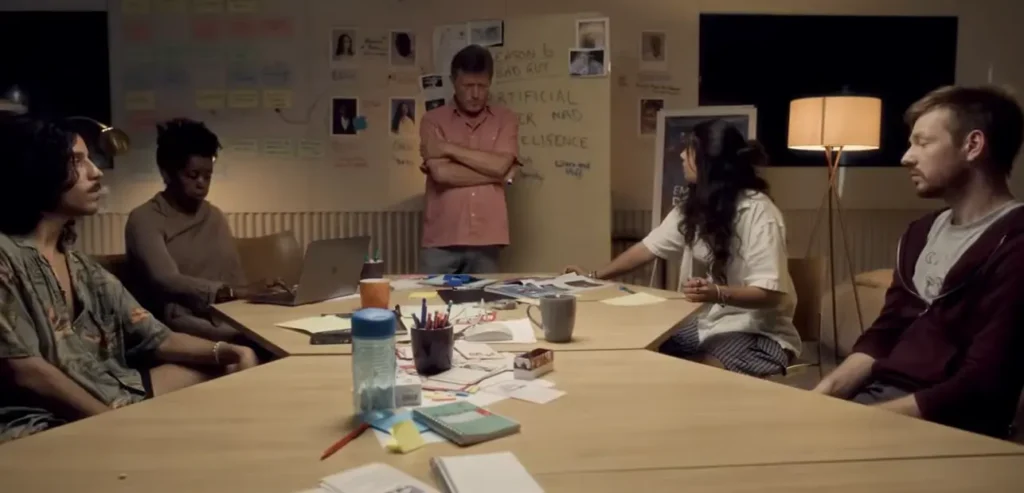
Rather than showing a future ruled by superintelligence, the film places audiences inside a television writers’ room where a group of writers must imagine how Artificial Superintelligence (ASI) could become the antagonist of their next season. What begins as a creative brainstorming session gradually evolves into a thoughtful exploration of AI risk, human bias, technological optimism, and existential uncertainty.
At only 27 minutes long, Writing Doom demonstrates how science fiction can stimulate meaningful discussion without relying on spectacle or visual effects.
A Simple Premise with Unexpected Depth
The setup is deceptively straightforward.
A television production team has been tasked with creating a story in which Artificial Superintelligence serves as the villain. To help develop the concept, a newcomer joins the writers’ room—a machine learning PhD who challenges the assumptions of the group and forces them to think more seriously about the realities of advanced AI.
The brilliance of the premise lies in its meta-structure.
The characters are not directly confronting AI. Instead, they are debating how AI should be portrayed in fiction. As a result, every conversation simultaneously operates on two levels:
- The fictional television show being developed.
- The real-world debate about AI safety and humanity’s future.
This layered approach allows Shepherd to explore complex ideas without becoming didactic. The audience is invited into the discussion rather than being lectured.
Dialogue as the Main Attraction
Unlike many science-fiction shorts that depend heavily on visual world-building, Writing Doom is driven almost entirely by conversation.
The writers discuss potential scenarios, challenge each other’s assumptions, and examine the possible consequences of creating intelligence that exceeds human capabilities.
The film’s strength lies in its willingness to embrace uncertainty.
No character possesses all the answers. Optimistic and pessimistic viewpoints coexist. Arguments are presented, questioned, and reconsidered. Instead of offering a definitive warning or endorsement of AI development, the film presents a spectrum of perspectives. This creates an atmosphere closer to an intellectual debate than a conventional thriller.
For viewers familiar with contemporary discussions surrounding AI alignment, superintelligence, and existential risk, the conversations will feel surprisingly authentic.
Strong Ensemble Performances
Because the film relies so heavily on dialogue, the cast carries enormous responsibility.
The ensemble succeeds by making the discussions feel spontaneous and natural rather than scripted.
Particularly notable is the way differing personalities emerge through conversation. Characters are not merely representatives of ideological positions. They have distinct temperaments, motivations, and ways of processing information.
The result is a believable creative team rather than a collection of talking points.
This authenticity helps maintain audience engagement even when the subject matter becomes highly theoretical.
Humor Amid Existential Anxiety
One of the film’s most effective qualities is its sense of humor.
Artificial superintelligence is often presented in media as an overwhelmingly serious subject. Shepherd recognizes that audiences can become emotionally detached when confronted with relentless doom.
Instead, Writing Doom uses wit and workplace dynamics to keep the discussion accessible. The humor never undermines the seriousness of the topic, but it does humanize it.
The writers argue, speculate, joke, and occasionally become frustrated with one another—much like real people attempting to understand an uncertain future.
This balance prevents the film from feeling like an academic lecture disguised as entertainment.
The Film’s Central Question
At its core, Writing Doom asks a deceptively simple question:
If humanity creates something smarter than itself, what happens next?
Rather than offering dramatic answers, the film focuses on the difficulty of even imagining such a future.
This is perhaps the most intriguing aspect of the work.
The writers repeatedly discover that their attempts to conceptualize superintelligence are constrained by human thinking. Every scenario they develop ultimately reflects human fears, human motivations, and human assumptions.
The film subtly suggests that our greatest challenge may not be controlling superintelligence—but understanding it.
Direction and Craft
Suzy Shepherd serves as both writer and director, maintaining a clear and focused vision throughout the film.
The confined setting of the writers’ room could easily have felt visually static. Instead, the film uses pacing, editing, and performance dynamics to sustain momentum.
The production avoids unnecessary embellishment. There are no elaborate futuristic environments or expensive visual effects competing for attention. The emphasis remains squarely on ideas and human interaction.
This minimalist approach proves effective because the concepts themselves are compelling enough to carry the narrative.
Themes and Relevance
Few independent science-fiction shorts feel as timely as Writing Doom.
The film arrives during a period of unprecedented public interest in AI technologies. Conversations about large language models, automation, AI alignment, and existential risk have moved beyond academic circles into mainstream culture.
Rather than exploiting these fears, Writing Doom attempts to engage with them thoughtfully.
The film acknowledges both the promise and danger of advanced AI while emphasizing the importance of critical discussion.
Its greatest achievement may be encouraging viewers to continue the conversation after the credits roll.
Final Verdict
Writing Doom is an intelligent, engaging, and surprisingly entertaining science-fiction short that transforms a simple writers’ room discussion into a compelling exploration of humanity’s relationship with artificial intelligence.
Rather than relying on spectacle, Suzy Shepherd builds tension through ideas, conversation, and uncertainty. The result is a film that feels both contemporary and enduring—a work less concerned with predicting the future than with examining how we think about it.
For audiences interested in science fiction, technology, philosophy, or the future of AI, Writing Doom offers far more substance than its modest runtime might suggest.
Rating: 4/5
A thoughtful and cleverly constructed short film that proves great science fiction begins not with special effects, but with provocative questions.



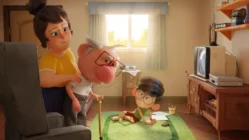

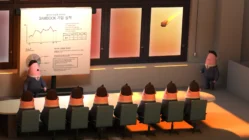


Suzy Shepherd’s Writing Doom transforms an ordinary television writers’ room into a compelling thought experiment about artificial superintelligence. Rather than relying on spectacle or dystopian action, the film builds tension through intelligent dialogue as a group of writers debates how an AI could realistically become humanity’s greatest threat. The result feels less like science fiction and more like an unsettling philosophical conversation unfolding in real time.
The screenplay is the film’s greatest strength. Complex AI safety concepts are translated into accessible, witty exchanges without sacrificing intellectual depth. Each character contributes a distinct perspective, making the discussion dynamic instead of didactic. As the conversation progresses, the audience is invited to question not only the risks of AI but also humanity’s own assumptions about control, intelligence, and survival.
Minimalist direction and restrained performances keep the focus on ideas, proving that a single room and sharp writing can generate more suspense than elaborate visual effects. While the pacing may feel deliberately measured for viewers expecting conventional sci-fi thrills, the film rewards patience with memorable analogies and unsettling implications that linger long after it ends.
Writing Doom succeeds because it understands that the most frightening AI stories are not about evil machines—they are about human limitations. It is a thoughtful, timely, and remarkably engaging short that turns conversation into genuine cinematic tension. ★★★★☆ (4.5/5)